
Panjin Prefabricated Mobile Toilet
Panjin prefabricated mobile toilets feature diverse materials, a variety of sewage disposal methods, wide applicability, high technological integration, and leasing options.
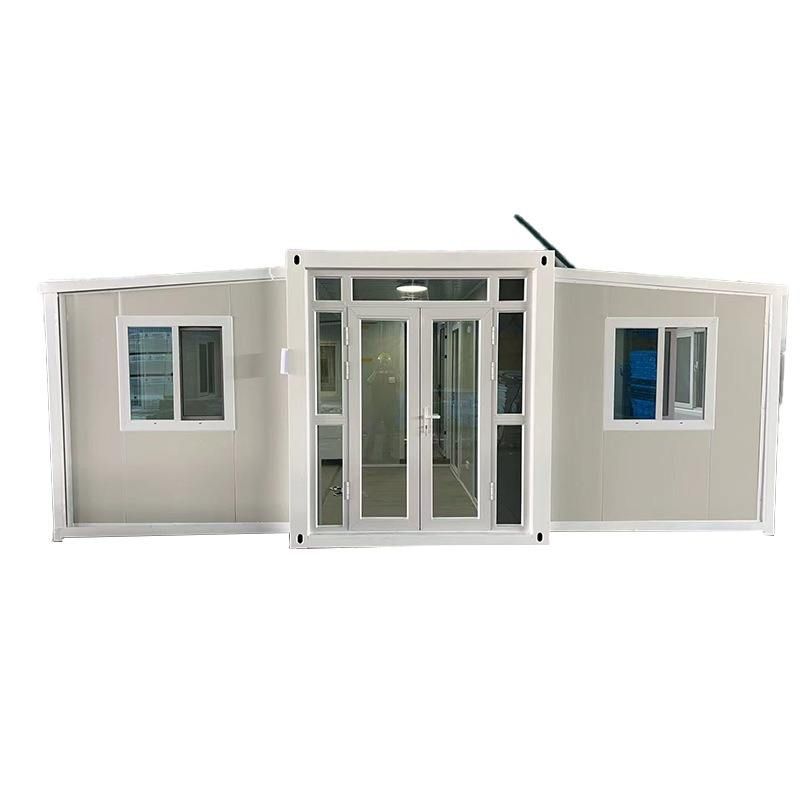
In terms of materials: The main structural materials are diverse. For example, black reinforced fiberglass is sturdy, durable, aesthetically pleasing, rust-free, and corrosion-resistant, with smooth wall panels that are easy to clean. Wall panels can also be made of polyurethane sandwich color steel plates, which offer sound insulation, heat insulation, and fire resistance, and are easy to clean and maintain. The roof often uses fiberglass or plastic decorative ceilings, which provide good heat insulation, sound insulation, and are waterproof and corrosion-resistant. The base can adopt a "field"-patterned galvanized steel keel, with a wooden board laid on the surface and a non-slip patterned aluminum plate on top.
Regarding sewage disposal methods: There are various options such as water flushing, packing, foaming, and microbial decomposition. Among them, the method of using foam plastic to block instead of water-flushing toilets has significant advantages. It can greatly reduce the spread of toilet odors. Using scented foam plastic to block excrement can isolate unpleasant odors, and the waste is less likely to stick to the toilet, nor will it attract flies and insects.
With a wide range of applications: They can be used in municipal areas, parks, scenic spots, construction sites, etc. For the problem of insufficient environmental protection toilets in scenic spots, connected environmental protection toilets are a good choice. Each toilet compartment is only 1.2 meters wide, and the number of connected compartments can be set according to the site size. They are movable as a whole, occupy a small area, have strong mobility, flexible layout, and can also be equipped with a third toilet, a management room, and a disabled toilet.
At the technological level: The operation of mobile toilets relies on the collaboration of three major systems: water supply, waste treatment, and ventilation. The water supply system uses a combination of a water storage tank and a pressure pump to achieve flushing without the need for external pipeline connections. The waste treatment system temporarily stores excrement through sealed containers or biodegradation technology, and some are equipped with chemical or enzyme decomposition devices to reduce odors and volume. The ventilation system maintains internal air circulation through a combination of mechanical exhaust and natural convection. These integrated system designs enable the equipment to operate continuously for several days to several weeks when disconnected from the municipal pipe network, with the operating cycle depending on the water storage capacity and waste treatment method.
In addition: Mobile toilets also offer leasing services. The leasing model lowers the usage threshold. Service providers usually offer supporting operations such as transportation, installation, cleaning, maintenance, and waste recycling, forming a closed-loop service process. It is suitable for low-frequency, short-term, or experimental demand scenarios.



