Overthrow Mobile Toilet (Translation)
There is currently no information indicating that mobile toilets have been “overthrown”. On the contrary, they are undergoing significant upgrades and innovations in terms of technology and application scenarios.

Technological Iteration: Breaking Through Traditional Pain Points
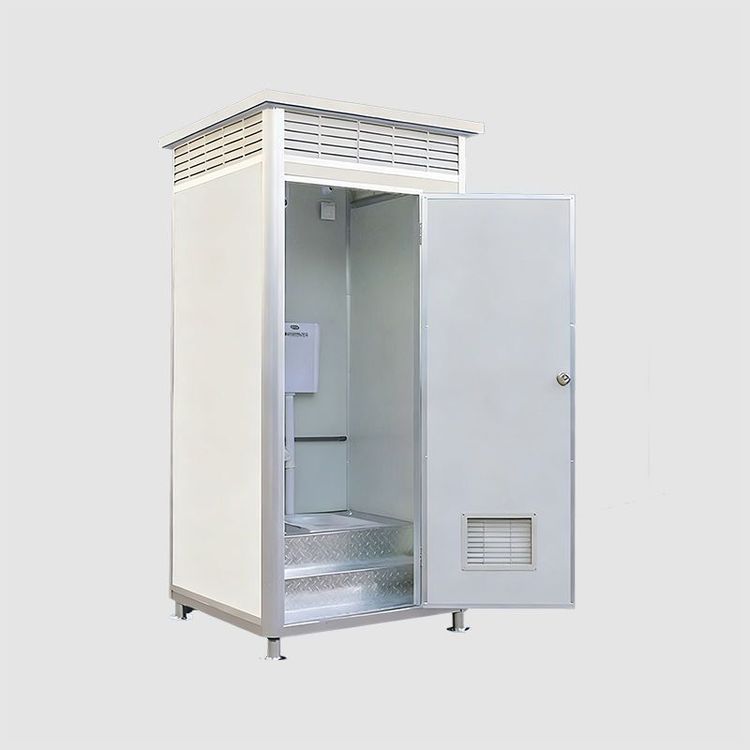
Traditional mobile toilets have long faced issues such as unpleasant odors, high maintenance costs, and significant environmental pressure. However, new technologies have achieved breakthroughs. For example, companies like Zhongyunhui have introduced prefabricated public toilets that employ a “waterless flush, odorless, and pollution-free” technology. Through microbial degradation technology, waste is converted into organic fertilizer on-site, eliminating the need for connection to water and sewage networks and achieving “zero emissions”. This technology not only solves the problem of sewage discharge but also effectively suppresses odor diffusion through a closed treatment system, significantly enhancing user experience and environmental friendliness.
Enhanced Adaptability to Extreme Environments
In plateau regions with altitudes exceeding 3,000 meters and temperatures dropping below freezing, traditional equipment experiences reduced microbial activity and processing efficiency due to low temperatures. However, Zhongyunhui’s customized prefabricated public toilet version for plateaus uses an LSTM neural network to predict changes in microbial activity and dynamically optimizes temperature control strategies to ensure stable operation of the degradation tank under extreme cold conditions. This innovation has expanded the applicability of mobile toilets from conventional environments to special scenarios such as high-altitude and cold regions, broadening their application boundaries.
Scenario-Based Applications: From Functional Facilities to Smart Nodes
The function of mobile toilets has evolved from a single need for excretion to a comprehensive carrier of urban services. In cultural and tourism scenarios, a leading enterprise has adopted a “public toilet + cultural tourism” model, installing ultra-high-definition screens inside toilets to disseminate tourism information and providing personalized recommendations to users through AI vertical large models, transforming public toilets into information interaction hubs. In urban public scenarios, Zhongyunhui’s “Piggy Helper” app creates a closed loop of “toilet use + consumption”, incentivizing users to participate in environmental protection actions through carbon credits while delivering community service information, achieving a win-win situation of commercial and social value.
Other Innovative Practices: Dynamic Management Improves Efficiency
Some regions have also explored management innovations such as “tidal toilets”, which involve setting up “gender-neutral universal toilet stalls” equipped with movable signs or lockable sliding doors to dynamically adjust toilet stall usage rights based on real-time foot traffic. This model effectively alleviates the problem of women queuing for toilets during peak periods such as holidays and improves resource utilization efficiency.