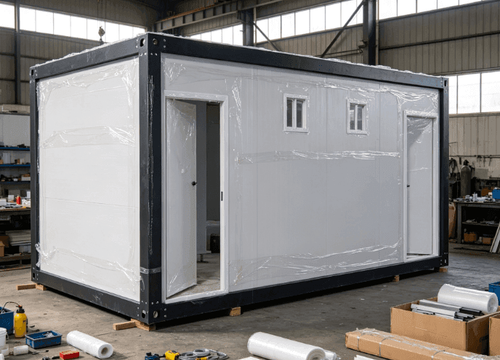
Working Principle of Outdoor Mobile Toilets
The working principles of outdoor mobile toilets mainly fall into two categories: chemical treatment and biodegradation, both centered around waste treatment and odor control, while being equipped with ventilation systems to maintain fresh air.

Chemical Treatment Principle
Chemical treatment is a relatively common type, with its core relying on chemical agents to achieve waste treatment and odor control. Inside the mobile toilet, there is a water tank for storing waste. Before use, chemical agents and clean water need to be added to the tank in specific proportions. The functions of chemical agents are mainly reflected in three aspects: First, they decompose solid waste, liquefying it to reduce accumulation and prevent blockages; second, they inhibit the growth of bacteria and viruses, controlling odor generation at the source; third, some agents produce a certain fragrance, further masking residual odors. This treatment method requires regular maintenance, with professional cleaning staff removing the full waste tanks for centralized and professional treatment, while replenishing new chemical agents and clean water to ensure continuous use. Its advantages include high treatment efficiency and relatively low cost, making it suitable for short-term events or venues with high foot traffic; however, its drawbacks are that chemical agents may have a certain impact on the environment and require frequent human intervention.
Biodegradation Principle
Biodegradation places greater emphasis on environmental protection, with its core being the use of microorganisms to decompose waste. The storage tank is filled with a degradation agent containing specific microorganisms (such as enzymes or bacteria). These microorganisms feed on excreta and decompose it into carbon dioxide, water, and a small amount of harmless residue through metabolic processes. The entire process simulates the decomposition mechanism in nature, producing waste that is environmentally friendly. Some advanced models can even convert the final products into materials suitable for composting, achieving resource recycling. This type is generally suitable for long-term fixed camps or ecological protection areas with high environmental protection requirements, such as nature reserves and field research stations. Its advantages are strong environmental protection and low maintenance frequency; however, its drawbacks are high initial costs and the fact that microbial activity is greatly influenced by environmental factors such as temperature and humidity, requiring regular monitoring of degradation effects.
Role of the Ventilation System
Whether it is a chemical treatment or biodegradation type, the ventilation system is a key supporting design. Through the top ventilation ducts, it utilizes natural air convection or forced exhaust by small fans to expel internal odors and maintain relatively fresh air. The design of the ventilation system directly affects the user experience. For example, parameters such as duct routing and fan power need to be optimized according to the toilet size and usage scenario to prevent odor retention or backflow.