
Outdoor Mobile Toilet Vehicle
The outdoor mobile toilet vehicle is a movable sanitation facility designed to meet the sanitation needs of large public events, temporary work sites, or areas lacking fixed sewage disposal facilities. Its core function is to achieve 'on-demand deployment' and 'in-situ treatment' of sanitation services.
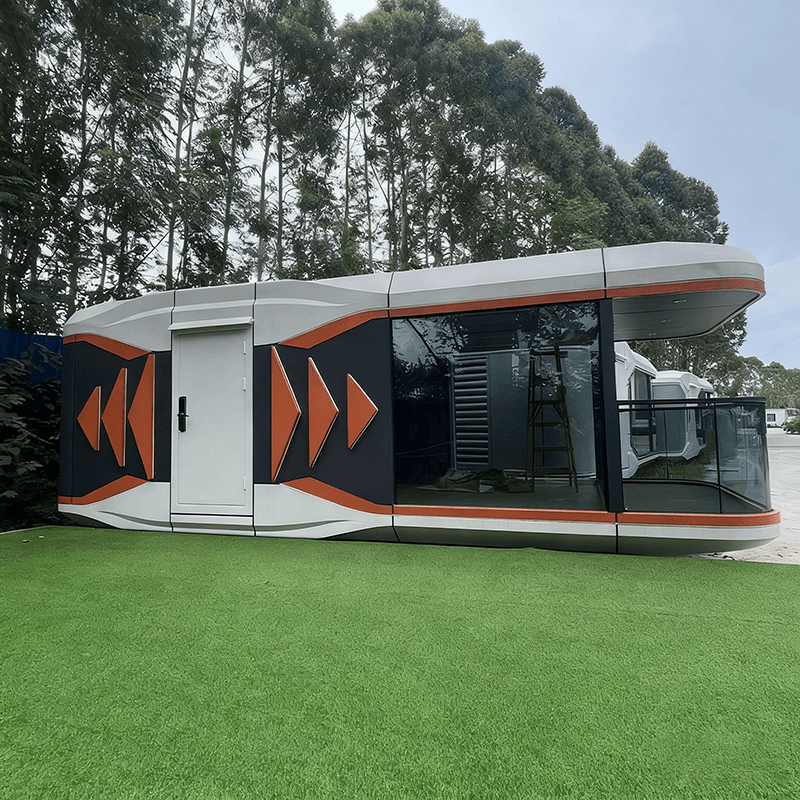
Environmental Performance and Emission Standards
The environmental performance of outdoor mobile toilet vehicles is strictly regulated by the 'China VI' emission standards. These standards set clear limits on pollutants such as carbon monoxide, nitrogen oxides, and particulate matter emitted by the vehicle, ensuring minimal impact on the external air environment during operation. This standard applies not only to exhaust emissions from the vehicle chassis but also indirectly regulates odors or volatile organic compounds that may be emitted during waste treatment, reflecting a holistic approach to environmental design throughout the vehicle's lifecycle.
Waste Treatment Technology Classifications
Recirculating Water Flush Type
This technology integrates a freshwater tank, wastewater tank, and multi-stage physical filtration and biochemical disinfection units to achieve closed-loop circulation of toilet wastewater. Used wastewater is treated in real-time to remove solid impurities and kill pathogens before being reused for flushing. This approach is suitable for water-scarce areas or locations where sewage discharge is prohibited (e.g., deserts, mountainous regions). Its main advantage is significant water conservation, but it requires regular maintenance of the water treatment unit to prevent clogging or disinfection failure.Packaging and Degradation Type
This method uses mechanical devices to automatically seal excreta in biodegradable film and pack it into collection containers for isolated storage. Some models incorporate biological enzymes or desiccants for preliminary degradation and deodorization, achieving 'zero water consumption' and 'zero emissions.' This technology is ideal for waterless environments or areas with extremely high environmental protection requirements (e.g., ecological reserves). However, it requires regular removal of packaged waste, and the cost of film materials is relatively high.Microbial Degradation Type
Specific microbial communities are cultivated in the treatment chamber to rapidly decompose excreta as a nutrient source, with final products being carbon dioxide, water vapor, and a small amount of inorganic residue. This technology eliminates the need for flushing water or chemical agents, significantly reducing waste volume and pollution. However, it requires precise control of environmental parameters such as temperature and humidity in the treatment chamber to maintain microbial activity, and the initial cost of cultivating microbial communities is relatively high.
Market Supply and Price Range
Currently, the market offers a diverse range of mobile toilet vehicles, including mobile public trailer toilets and simple temporary direct-discharge public restrooms for outdoor scenic areas. Prices vary widely depending on configuration (e.g., waste treatment technology type, vehicle chassis performance) and features (e.g., intelligent monitoring, barrier-free design). The mainstream product price range is from 750 yuan to 120,000 yuan, allowing users to select models that best fit their actual needs.



