
Outdoor Mobile Toilet
Outdoor mobile toilets are facilities that can be moved as a whole and provide toilet services to the public. They are suitable for a variety of locations and come in multiple types, structural forms, mobility methods, and sewage treatment approaches, offering advantages such as mobility, modularity, and ease of transportation.
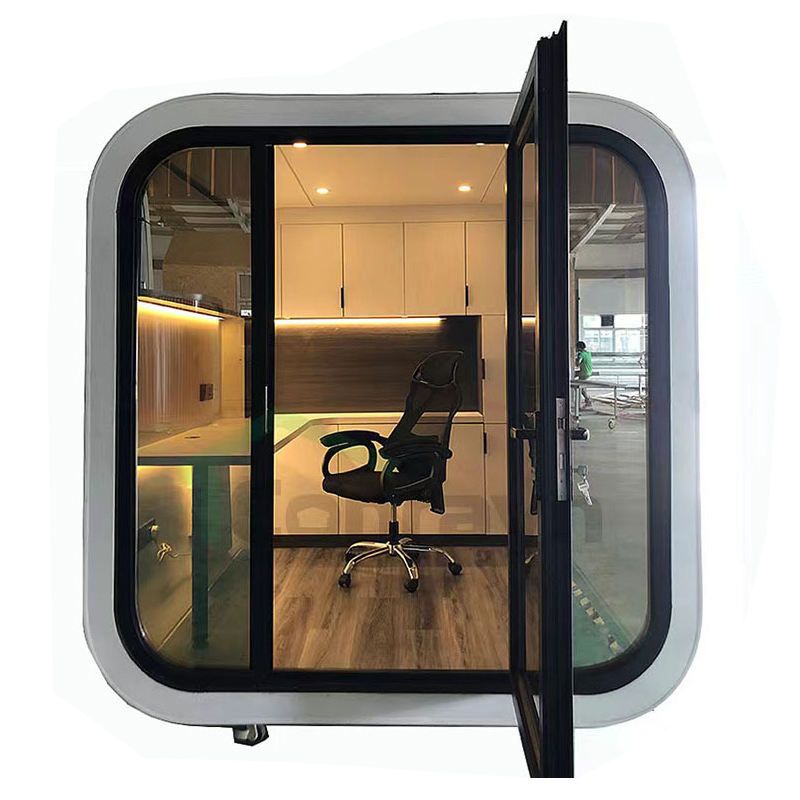
Outdoor mobile toilets have a wide range of applicable scenarios, including stations, docks, tourist attractions, villa areas, newly built residential communities, large construction sites, squares, densely populated public places, and bustling commercial streets.
There are various types of them. For example, the four-squat-position toilet produced by Dezhou Hongtu Metal Products Co., Ltd. is 4 meters long and 2.3 meters wide, with a pointed roof. Its exterior walls are made of heat-insulating metal carved panels. The men's toilet is equipped with two squat positions, urinals, and a column basin. There is also a classic model with three men's and two women's squat positions. The women's toilet has two squat positions. The whole structure is made of galvanized frames and can be used for more than 2 years. The pointed roof is covered with waterproof asphalt shingles, and the wall panels are metal carved panels. For special designs, there is the brick-patterned flat-roof mobile toilet. The entire structure is made of galvanized steel frames, which are sturdy and durable, and can be used for more than 15 years. The exterior wall panels are orange brick-patterned.
In terms of structural forms, they can be divided into single-unit mobile toilets and composite-structure mobile toilets. According to mobility methods, there are lifting and handling mobile toilets, as well as powered and towed mobile toilets. Based on sewage treatment methods, they are classified into water-flush and waterless suction-type mobile toilets, circulating water-flush mobile toilets, and dry-packing mobile toilets.
Mobile toilets generally consist of a fecal sewage storage tank (or fecal sewage treatment device), floor slabs, sanitary ware, walls, washing equipment, water tanks, roofs, and mobility devices. Their greatest advantage is that they can be easily transported to any location where toilets are needed and can be used repeatedly. With features such as mobility, modularity, and ease of transportation, they can well meet the temporary or fixed toilet needs in different scenarios.



