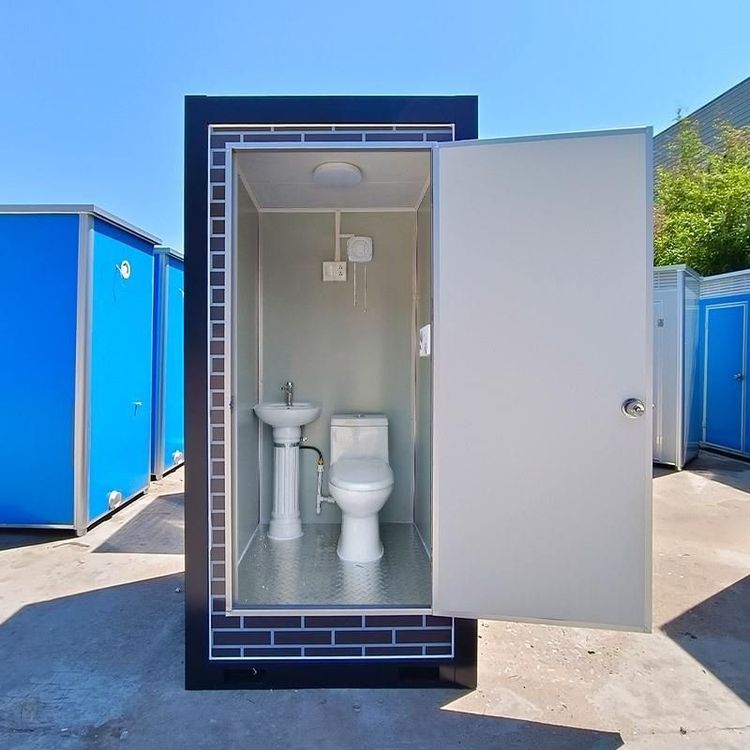
How About Outdoor Mobile Toilets
Outdoor mobile toilets are efficient facilities for addressing temporary restroom needs in public places, combining environmental friendliness, flexibility, and practicality, suitable for a variety of scenarios.

Functions and Technology: Integration of Intelligence and Ecology
Modern outdoor mobile toilets have transcended traditional designs, with core functions covering temporary restroom needs while incorporating intelligent and ecological technologies. Their sewage disposal methods are diverse, including flush-type (relying on 220V voltage to drive water pumps, requiring supporting septic tanks or municipal sewage networks), packing-type (sealing feces with biodegradable plastic bags for regular replacement), and microbial degradation-type (utilizing special bacteria to decompose excreta for waterless treatment). For example, microbial degradation technology can reduce water consumption, making it suitable for water-scarce or ecologically sensitive areas. After its application in a certain scenic spot, annual water consumption decreased by 80%, and fecal treatment costs were reduced by 60%.
Structure and Materials: Combining Durability and Aesthetics
Mobile toilets are based on a steel frame structure, offering high overall strength and stability, with a service life of up to 30 years. The floors are made of anti-slip aluminum plates or tiles to ensure safety; the walls can be customized in color and shape, with high-end interior and exterior decorations enhancing the visual experience. For example, some products use galvanized frame structures, metal carved wall panels, and waterproof asphalt shingles on the roof, balancing durability and aesthetics.
Sewage Disposal Methods: Adapting to Different Environmental Needs
- Microbial degradation-type: No water source required, zero sewage discharge, suitable for scenic spots and remote areas.
- Flush-type: Reliant on electricity and sewage networks, suitable for urban areas, hospitals, and other regions with well-established infrastructure.
- Packing-type: Easy to operate, suitable for temporary events or emergency scenarios.
Scenario Adaptability: Flexibly Responding to Diverse Needs
Mobile toilets are suitable for temperature ranges from -10°C to 60°C, with optional insulation layers of 100-1000mm to cope with extreme climates. Their inlet size is uniformly 4mm to prevent foreign objects from entering; they are delivered to the site and can be used immediately after installation. Three-star to five-star venues can choose high-end decorated versions to match architectural styles; scenic spots and amusement parks can customize themed designs to blend into the environment; hospitals, schools, and other places with high hygiene requirements are recommended to use microbial degradation or flush-type toilets to reduce odors and the spread of germs.
Advantages and Actual Performance: Enhancing Environmental Protection and User Experience
The flexibility of mobile toilets is reflected in the steel frame structure that supports rapid assembly and disassembly, allowing customization of size and layout according to drawings to adapt to narrow spaces or irregular terrains. Environmental friendliness is achieved through diverse sewage disposal methods that solve the problem of no municipal sewage networks in remote areas, with microbial degradation technology enabling zero sewage discharge. In terms of user experience, details such as anti-slip floors and high-end decorations enhance comfort, and the 30-year lifespan reduces long-term maintenance costs. For example, Dalian City flexibly deployed mobile public toilets during peak tourist seasons, and the Jinci Temple scenic spot in Shanxi Province increased its daily reception capacity by more than 60% by combining renovated fixed toilets with mobile toilets.