
Outdoor Mobile Toilet Project
The outdoor mobile toilet project involves constructing facilities that can be moved as a whole to meet fixed or temporary toilet needs. These facilities are widely used in various places and come in multiple structural forms, mobility methods, and sewage treatment approaches.
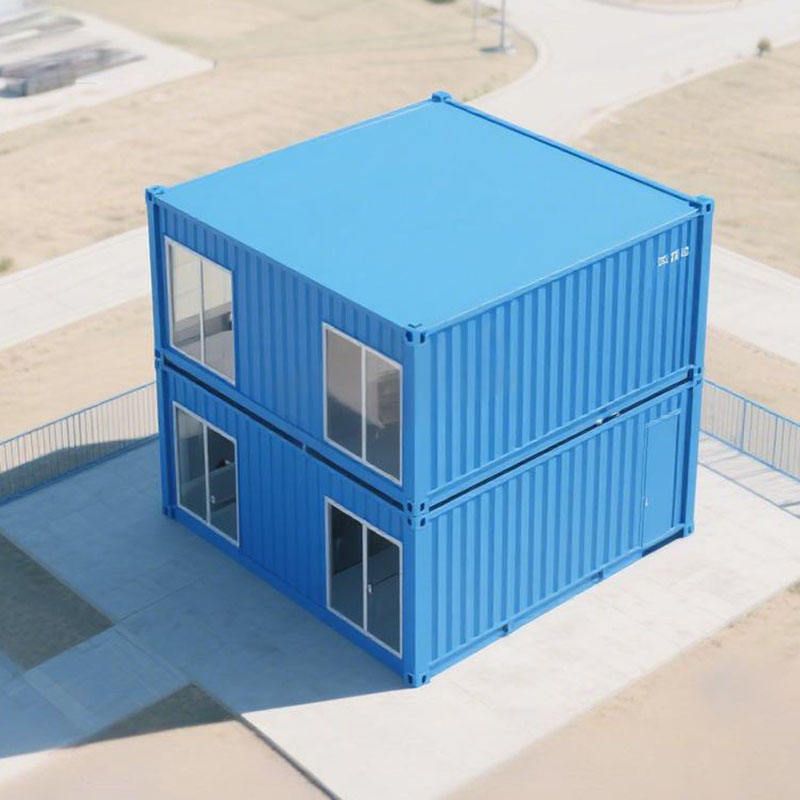
Suitable Locations
Outdoor mobile toilets are suitable for stations, docks, tourist attractions, newly built residential areas, large construction sites, squares, densely populated public places, and bustling commercial streets. These locations have high foot traffic, with concentrated and potentially time-varying demands for toilet facilities. Mobile toilets can be flexibly deployed to promptly meet people's toilet needs.
Composition Structure
Mobile toilets generally consist of fecal sewage storage tanks (or fecal sewage treatment devices), floor slabs, sanitary ware, walls, washing equipment, water tanks, roofs, and mobility devices. For example, the 30-square-meter Apple Cabin toilet produced by Dezhou Hongtu Metal Products Co., Ltd. has a galvanized frame structure. Its exterior walls are made of wood-grain-like metal carved panels, providing both insulation and heat resistance. The toilet has two arc-shaped translucent windows at the front, a public washing area, and a management area at the back.
Classification
- By structural form: Mobile toilets can be divided into single-structure and composite-structure types. Single-structure toilets are relatively simple and independent, while composite-structure toilets may be composed of multiple parts and have more complex and diverse functions.
- By mobility method: They can be classified as lifting/handling mobile toilets and powered/trailer-mounted mobile toilets. Lifting/handling types are suitable for short-distance movement or handling with simple equipment, while powered/trailer-mounted types can be moved long distances using vehicle power devices.
- By sewage treatment method: They include water-flush and waterless suction-type mobile toilets, circulating water-flush mobile toilets, and dry-packing mobile toilets. Different treatment methods are suitable for different environments and conditions. For example, water-flush types are suitable for places with a water supply, while dry-packing types do not require water and are more suitable for water-scarce areas.
Design Principles
The design of mobile toilets should adhere to the principles of mobility and convenience, economic durability, environmental protection and ecological benefits, and efficiency enhancement and humanitarian promotion. The overall structure should be lightweight, using lightweight and durable materials as much as possible while ensuring structural robustness. The height and width of the toilet should be carefully controlled during design, and the mobility device should be fully considered for completeness and rationality to ensure easy transportation and installation of the mobile toilet.



