
Ordinary Mobile Toilet
An ordinary mobile toilet is a facility that can be moved as a whole and placed at fixed or temporary locations to provide toilet services for the public and customers.
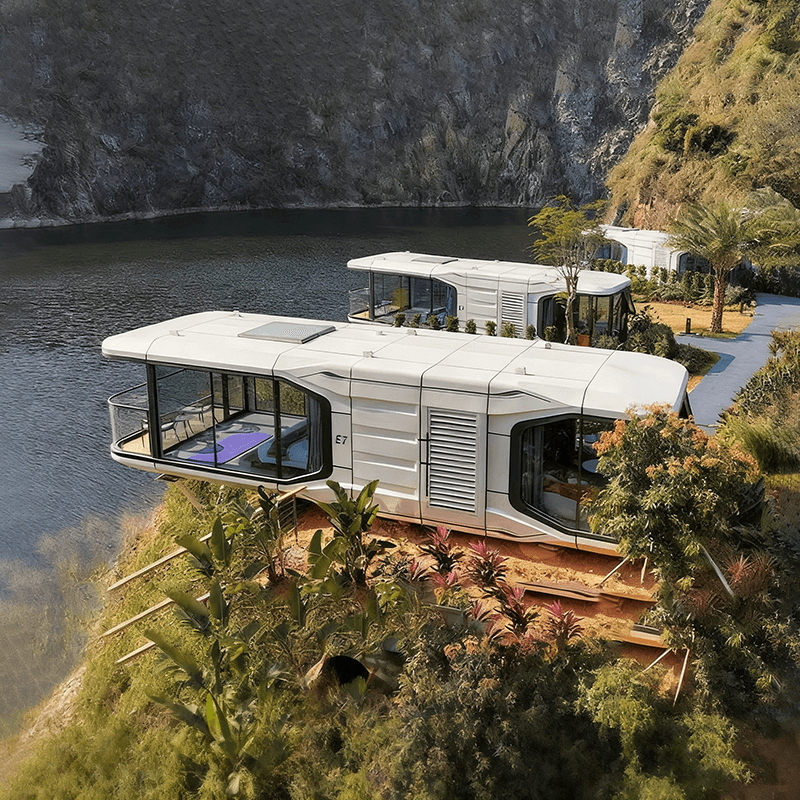
I. Basic Components An ordinary mobile toilet generally consists of a fecal sewage storage tank (or fecal sewage treatment device), floor slabs, sanitary ware, walls, washing equipment, water tanks, roofs, and mobile devices. Among them, the fecal sewage storage tank is used to collect and store excreta. Sanitary ware includes toilets or squat pans. The walls and roof provide an enclosed space, and the mobile device ensures its mobility.
II. Development History Initially, mobile toilets were made of materials such as wood, with simple structures and functions. They easily absorbed odors and had poor sanitary conditions. With technological progress, they gradually evolved to use new materials such as fiberglass-reinforced plastic and polyethylene. These materials have advantages such as corrosion resistance, ease of cleaning, and light weight, significantly improving the durability and sanitary level of mobile toilets.
III. Classification Methods
- By structural form: They can be divided into single-structure mobile toilets and composite-structure mobile toilets. Single-structure toilets are usually independent units suitable for small-scale use, while composite-structure toilets are composed of multiple units to meet larger-scale needs.
- By moving method: They include lifting and handling mobile toilets, powered and towed mobile toilets. Lifting-type toilets rely on lifting equipment for movement, handling-type toilets require manual or mechanical handling, powered-type toilets have built-in driving devices, and towed-type toilets can be towed by vehicles.
- By sewage treatment method: They are classified into water-flush and waterless suction-type, circulating water-flush type, and dry-packing type. Water-flush types require a water connection, waterless types use suction equipment to clean excreta, circulating water-flush types can reuse water resources, and dry-packing types pack excreta for disposal.
IV. Main Features Ordinary mobile toilets have advantages such as mobility, combinability, and ease of transportation. They can be quickly deployed to stations, docks, tourist attractions, large construction sites, and other locations to meet temporary or emergency toilet needs. Their modular design also supports flexible adjustment of scale and function according to actual requirements.
You may also like

Portable Toilet Eco-Friendly: MOQ, Samples & Quotation Guide
Read More
Top Portable Toilet Color Steel Manufacturers: How to Choose a Factory Partner
Read MorePortable Toilet Picture: Types, Features & Buying Tips
Read More