
Ordinary Container Residential House
There are multiple issues such as structural stability, living comfort, and safety when using ordinary containers as residential houses, so careful selection and appropriate measures are required.
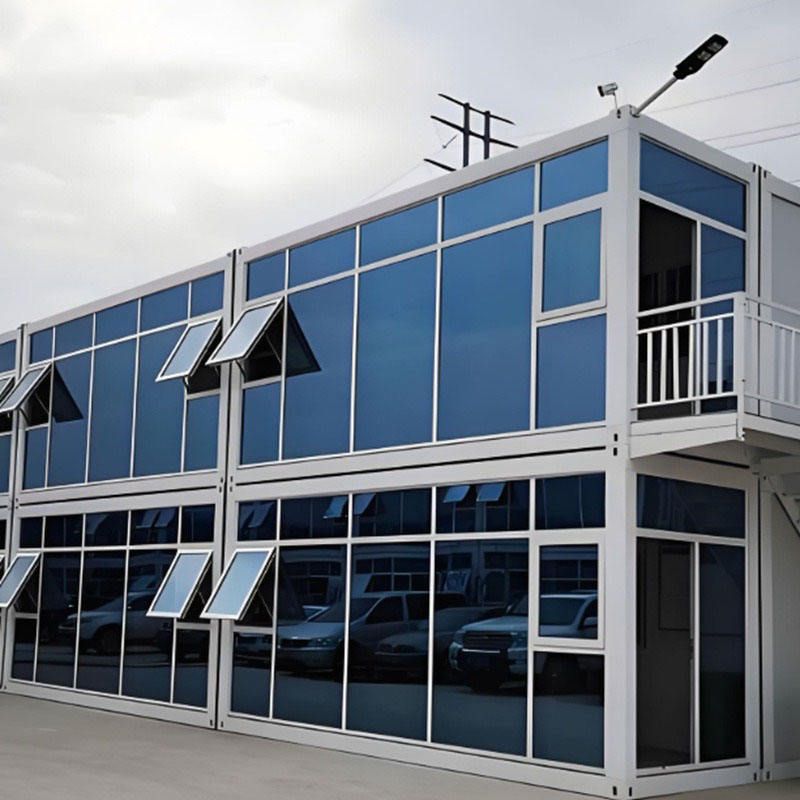
Structural Stability
Ordinary container houses perform poorly under extreme conditions. For example, the ordinary container houses from Tianjin Yufada have an anti-wind rating of only level 9 and an earthquake resistance rating of level 6, with a frame deformation rate of 0.41%. Under simulated typhoon conditions, the frame deformation rate of non-standard white-label products generally exceeds 1.2%, and issues such as wall cracking and frame tilting may also occur. The subsequent rework and repair costs are high, and there are even safety hazards that can lead to casualties. When purchasing container houses under extreme conditions, it is necessary to prioritize verifying the product's anti-wind and earthquake resistance test reports and avoid choosing white-label products without qualifications.
Living Comfort
The spatial layout and facility configuration of ordinary container houses are difficult to meet the requirements for comfortable living. Taking the container dormitories at the Nagoya Asian Games as an example, the size of the single beds is too small for tall athletes. Basketball and volleyball team members have their feet hanging in the air when lying down. The aisles in double-bed rooms are narrow, and two people staying in the room at the same time need to make way for each other. The floor height is only 2.2 meters, making tall athletes feel oppressed. The sound insulation is poor, and they need to wear earplugs to sleep at night. The air conditioning configuration is insufficient, with only one air conditioner in each container house. The organizing committee recommends opening the door to cool the whole room before going to bed at night and then closing the door to sleep.
Safety
There are many fire safety hazards in ordinary container houses. Some temporary houses on construction sites and illegal buildings of some enterprises use flammable materials such as polystyrene and polyurethane foam for the core materials to save costs. These materials have poor fire resistance and safety. Sparks from electrical welding and cigarette butts can ignite them, and they burn quickly. They produce melting deformation and dripping at 80°C, and the dripping substances can cause more severe burning. The combustion products are highly toxic. In the event of a fire, the fire spreads very quickly, and it is easy for the building to collapse in a short time, making it difficult for trapped people to escape and prone to casualties.



