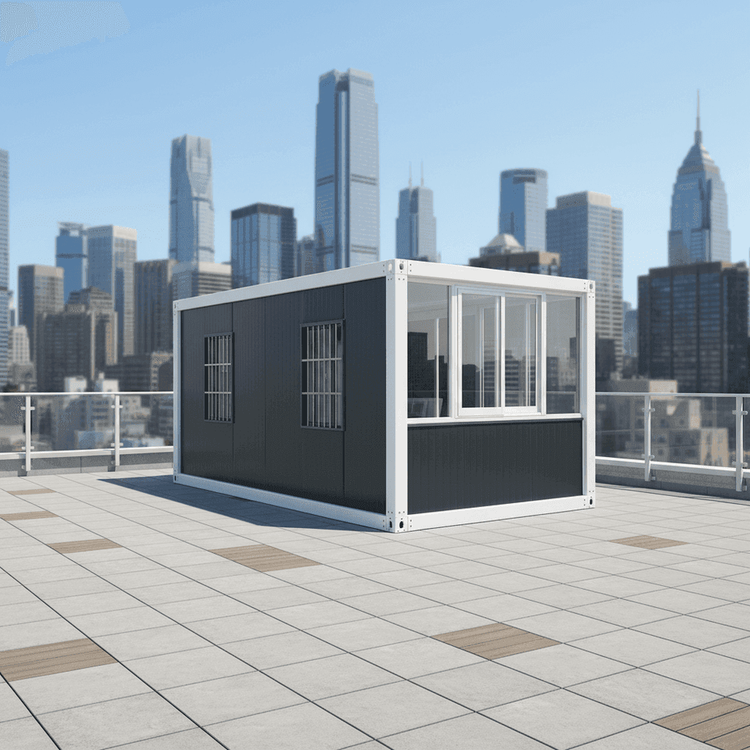
Old Mobile Toilet
Old mobile toilets generally refer to early or second-hand portable sanitation facilities constructed with traditional materials and simple designs. Their development has undergone iterations in materials, structures, mobility methods, and sewage treatment technologies, with second-hand products still circulating in the market today.

1. Material and Structural Characteristics of Early Mobile Toilets
Initially, mobile toilets were primarily made of natural materials such as wood and brick, featuring simple structures and limited functionality. Their main drawback was poor sealing, which exposed waste to the air, causing odor diffusion. Additionally, wood was prone to moisture absorption and decay, leading to reduced structural stability and higher cleaning and maintenance costs over time. These toilets were mostly used for temporary events or in remote areas, lacking modern sewage treatment systems and relying on manual periodic cleaning.
2. Classification of Mobile Toilets After Technological Iteration
With advancements in material science, mobile toilets gradually adopted synthetic materials like fiberglass-reinforced plastic, polyethylene, and stainless steel, which are corrosion-resistant and easy to clean, significantly extending their service life. They can be classified by structural form as follows:
- Single-unit structure: Designed as independent units, suitable for spaces with limited room;
- Composite structure: Modular combinations that can be expanded into multi-stall facilities to meet high-traffic demands.
By mobility method, they can be categorized as:
- Lifting and handling type: Relies on lifting equipment or manual handling, offering high flexibility but low deployment efficiency;
- Powered and towed type: Equipped with engines or wheeled chassis, capable of autonomous movement or being towed by vehicles, suitable for long-distance transportation.
By sewage treatment method, they can be divided into:
- Water-flush and waterless suction types: The former relies on a water source for flushing, while the latter uses vacuum pumps to suction waste into storage tanks;
- Recirculating water-flush type: Utilizes biological degradation or chemical treatment technologies to purify sewage, enabling water recycling;
- Dry-packing type: Uses biodegradable bags to collect waste, eliminating the need for water flushing and suitable for water-scarce areas.
3. Market Status of Second-Hand Mobile Toilets
Currently, there is a market for second-hand mobile toilets, with brands including Huazhifeng, Zhonghuan Meijing, and Xinzhang, primarily made of stainless steel and fiberglass-reinforced plastic. These products are typically resold due to the conclusion of events, site renovations, or technological upgrades. While priced lower than new products, their remaining service life, structural integrity, and sewage treatment system efficiency must be evaluated. When purchasing, key checks include:
- Material aging: Whether fiberglass-reinforced plastic is cracked or stainless steel is corroded;
- Functional integrity: Whether the flushing system, ventilation equipment, and sewage pipes are unobstructed;
- Compliance: Whether they meet local environmental emission standards to avoid subsequent modification costs.
The evolution of old mobile toilets reflects the upgrade of public sanitation facilities from "basic functionality" to "environmental protection, efficiency, and convenience." The existence of the second-hand market provides an economical option for temporary needs or projects with limited budgets.