Materials for Renovating Old Container Houses
The renovation of old container houses primarily utilizes materials such as steel, rock wool, aluminum-zinc coated steel sheets, epoxy zinc-rich primers, polyurethane topcoats, artificial boards, thermal insulation materials, solar panels, and double-glazed windows.

Steel: High-strength weathering steel (such as Q355B grade) is used as the main frame of the container house. This type of steel has a yield strength approximately 30% higher than that of ordinary carbon steel, enabling the formation of a self-balancing system through rigid connections between corner fittings and side beams, reducing the need for additional reinforcement. For example, Yiqi Company uses this type of steel to maintain stability in single containers with an aspect ratio close to 2:1, while reducing material usage by about 15%.
Envelope Structure Materials:
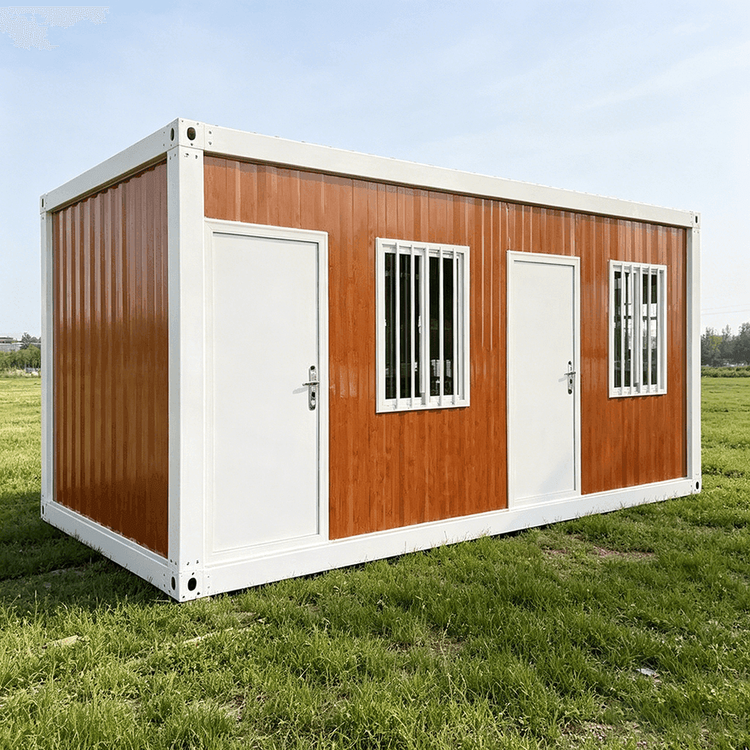
- Rock Wool: Used in a three-layer composite envelope structure consisting of 'rock wool-air layer-aluminum-zinc coated steel sheet,' with a thickness of 75-100 millimeters. The fibers are arranged perpendicular to the heat flow path, with a thermal conductivity below 0.040 W/(m·K), effectively inhibiting heat conduction.
- Aluminum-Zinc Coated Steel Sheet: As the outer layer of the composite structure, it works with the rock wool layer to reduce the overall heat transfer coefficient (U-value) to below 0.5 W/(m²·K), minimizing condensation risk in cold environments like Inner Mongolia during winter.
- Air Layer: A 5-millimeter closed air cavity further enhances the thermal performance of the envelope structure by suppressing convective heat transfer.
Connection Node Materials:
- Wedge Lock: Made from 45# steel through heat treatment, with a 15-degree inclined surface angle. It produces a self-locking effect under horizontal shear forces, controlling displacement to within 3 millimeters during a simulated 8-degree rare earthquake, which is about 40% better in terms of deformation amplitude compared to conventional welded nodes.
- High-Strength Bolts: Work in conjunction with wedge locks to form a dual-fixing mode, ensuring the adaptability of container connections in areas with a seismic design intensity of 7 degrees.
Surface Corrosion Protection Materials:
- Epoxy Zinc-Rich Primer: Contains over 80% zinc powder, protecting the base metal through the sacrificial anode principle and extending the service life of the steel structure.
- Polyurethane Topcoat: Enhanced with nano-silica particles, achieving a hardness of 3H, resisting wind and sand erosion, and passing a 1000-hour salt spray test (ASTM B117 standard) without showing red rust, equivalent to a 15-year protection cycle in coastal or industrial pollution environments.
Internal Renovation Materials:
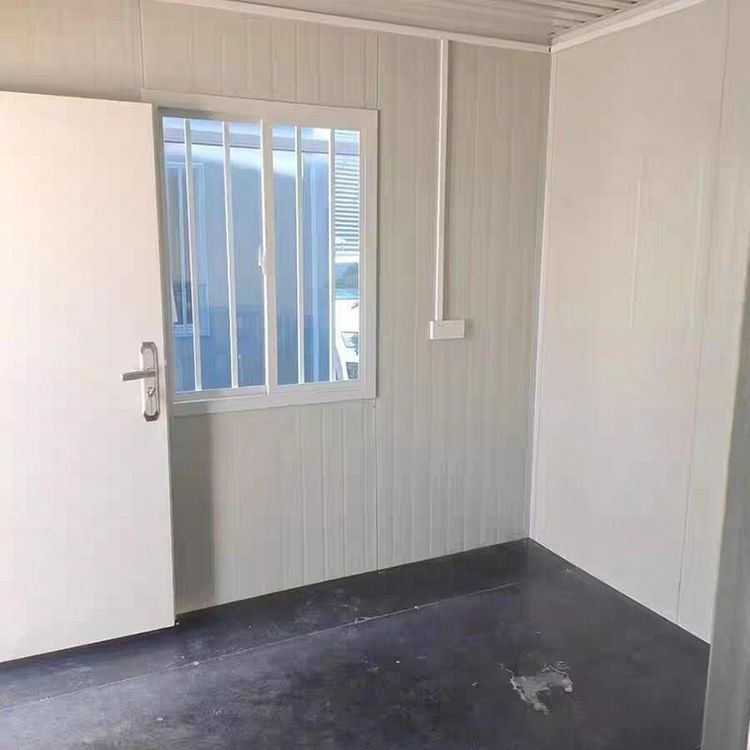
- Artificial Boards: Used as the main material instead of solid wood, reducing costs and avoiding cracking and deformation, while facilitating maintenance and replacement.
- Thermal Insulation Materials: Combined with boards to enhance indoor comfort.
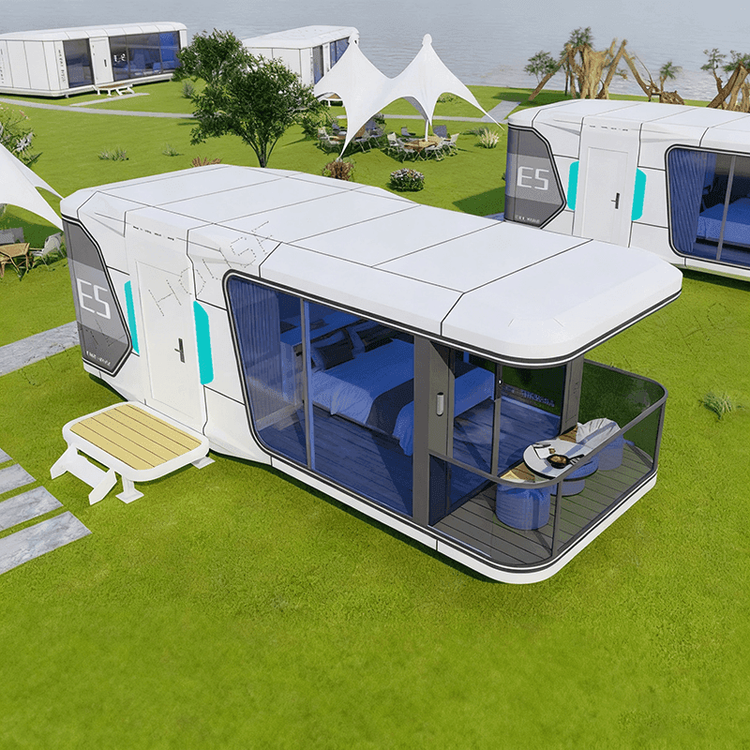
- Solar Panels: Installed on the roof to solve electricity supply issues.
- Double-Glazed Windows: Used for windows to improve sound insulation and thermal insulation performance.