Is Mobile Flushing Eco-Friendly Toilet Good?
Mobile flushing eco-friendly toilets generally perform well, offering multiple advantages in terms of environmental protection and convenience in daily life.

From the perspective of environmental protection:
Firstly, significant water-saving effects. Mobile eco-friendly public toilets adopt new water-saving technologies. By automatically collecting hand-washing water and adding special agents, they achieve a flushing effect with only 0.46 liters of water per person. Mobile toilets use "toilet flushing liquids" or "disinfecting and deodorizing liquids" instead of fresh water, consuming only 0.2 to 0.5 liters of liquid per use, while traditional flush toilets require 6 to 12 liters of fresh water per flush, resulting in a water-saving rate of over 90%. Secondly, efficient treatment of excreta. They employ "separated collection" or "centralized degradation" technologies: the separated collection method decomposes organic matter through microorganisms in an oxygen-deficient environment, with the residual volume being only 10% to 15% of the original; the centralized degradation method mixes excreta in a sewage storage tank, which is then extracted by professional vehicles and converted into organic fertilizer through high-temperature anaerobic digestion or composting processes, achieving resource recycling. Thirdly, environmentally friendly and durable materials. The outer shells are made of corrosion-resistant and easy-to-clean materials, with some having "heat recovery potential" to maintain the internal temperature and keep the microorganisms active; new products also fill the interlayer of the toilet body with phase-change materials, making the degradation process unaffected by seasons and reducing energy consumption.
From the perspective of daily life convenience:
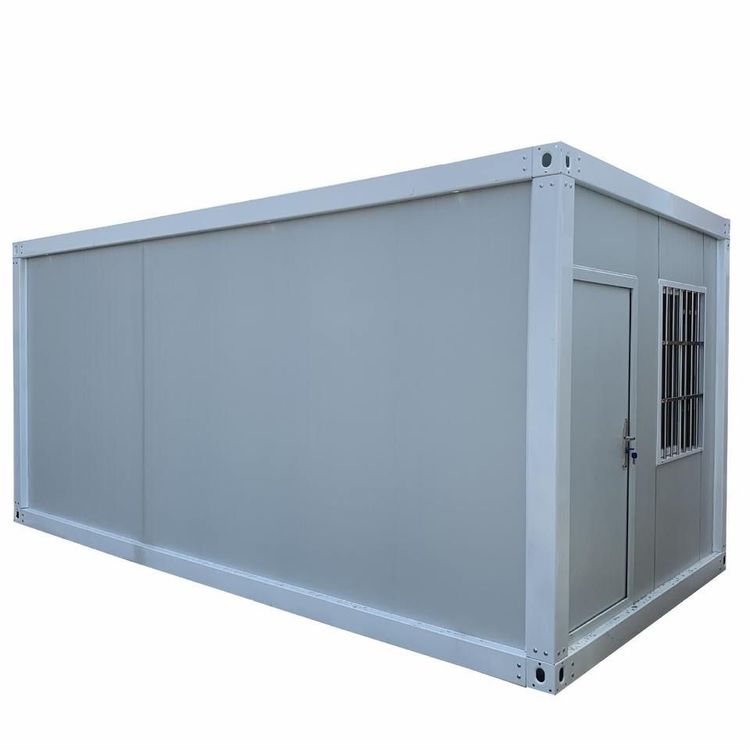
Firstly, optimized air quality. By integrating ventilation ducts with the squat toilet structure and utilizing natural convection or micro-fans to create negative pressure, the air flows downward instead of upward;缓释氧化剂 (slow-release oxidants) are added to the sewage storage tank to continuously neutralize sulfides, reducing the ammonia concentration inside the toilet to below 0.5 ppm, far lower than the national standard of 10 ppm, significantly improving the user experience. Secondly, reliable self-cleaning function. Relying on "nano-coatings" and "gravity diversion" technologies, they reduce dirt adhesion and lower the cleaning frequency. Thirdly, well-equipped facilities. Some mobile toilets are equipped with independent stalls, flushing devices, hand-washing basins, lighting facilities, etc., meeting the usage needs of temporary construction projects or public events for several months; they use high-standard materials, such as 100*100 galvanized square steel welded frames, ensuring structural stability and durability.
In conclusion, through technological innovation and scientific design, mobile flushing eco-friendly toilets perform excellently in water conservation, emission reduction, resource recycling, and user experience, making them modern sanitation facilities that balance environmental protection needs and practicality.