
Back to blog
Article
Construction of Mobile Toilets in Northeast China
Admin September 21, 2026
The construction of mobile toilets in Northeast China requires comprehensive consideration of climate adaptability, functional requirements, and scenario matching. The key points are as follows:
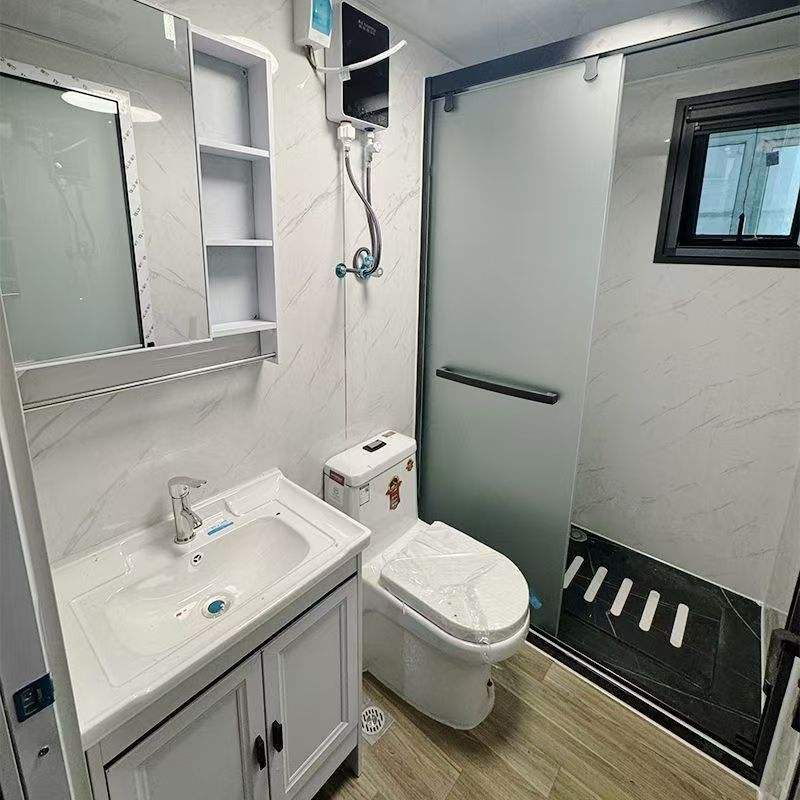
I. Climate Adaptability Design is Crucial
The climate in Northeast China, characterized by extremely cold winters (with minimum temperatures reaching below -30°C) and rainy summers, imposes strict requirements on the insulation, freeze-proofing, and corrosion resistance of mobile toilets.
- Insulation Performance: Polyurethane foam or rock wool should be used as the insulation layer, with a thickness typically not less than 50mm, to ensure that the internal temperature remains above 0°C. The piping system should be equipped with electric tracing heating devices to prevent water pipes from freezing due to low temperatures. For example, metal-clad panel mobile toilets, through their composite structure of metal base plates and decorative coatings, can effectively reduce heat loss and ensure the normal operation of the flushing system in environments as cold as -25°C.
- Corrosion Resistance: To address issues related to saline-alkali soil and corrosion from de-icing agents, the framework materials should be selected from hot-dip galvanized steel or 304 stainless steel, with surfaces coated with epoxy zinc-rich primer + polyurethane topcoat to form a dual protective layer. Metal component connections should be treated with sealant to prevent the infiltration of corrosive media.
II. Functional Design Should Balance Practicality and Hygiene
The internal structure of mobile toilets should meet ventilation, sewage disposal, and cleaning requirements to adapt to high-frequency usage scenarios.
- Ventilation System: Install bidirectional exhaust fans (with an air volume of ≥80m³/h), combined with top ventilation windows to form convection and reduce odor concentration. Some products adopt negative pressure fresh air systems to further improve air quality.
- Sewage Disposal Design: Use gravity sewage pipes (with a slope of ≥3%) to ensure smooth discharge of waste; the septic tank should have anti-leakage functionality, with its capacity dynamically adjusted according to the number of users (e.g., the capacity of a single-toilet septic tank should be ≥0.5m³).
- Cleaning Convenience: The inner wall materials should be selected from antibacterial PVC panels or stainless steel, with smooth surfaces that are easy to wipe clean; the floor should be laid with anti-slip tiles, with a slope of ≥2% to prevent water accumulation.
III. Scenario-Based Applications Should Match Demand Characteristics
The construction of mobile toilets should be deeply integrated with infrastructure development and temporary event economies in Northeast China.
- Temporary Event Scenarios: During exhibitions, sports events, and peak tourist seasons in spring and summer, compact portable restrooms (with single-toilet dimensions of ≤1.2m×1.2m) should be densely arranged around the venue to meet short-term high-traffic demands. For example, the Shenyang International Exhibition Center adds 50-80 mobile toilets during auto shows, with a service radius of each toilet controlled within 50 meters.
- Long-Term Fixed Scenarios: For winter heating stations, temporary guard posts, and other scenarios, cold-resistant metal-clad panel toilets should be equipped, integrating electric heated floors and constant temperature control systems to ensure 24-hour availability. The Shenyang Sanitation Department deploys 200-300 such products in key areas during winter, with a service period of up to 6 months.
- Home Use Scenarios: In rural areas or remote construction sites, home-use portable restrooms can be selected, which use biodegradation technology to treat feces without the need for connection to municipal sewage networks. The cost of a single toilet can be controlled between 3000-5000 yuan.



