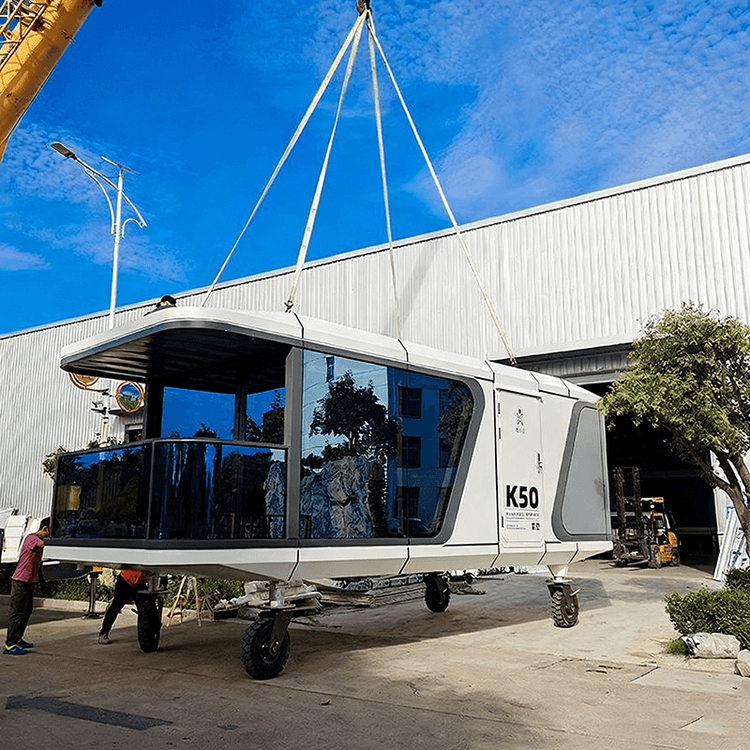
Non-slip Floor Tile Mobile Toilet
The application of non-slip floor tiles in mobile toilets and restrooms offers significant safety and practical advantages. The following elaborates on four aspects: material characteristics, safety performance, cleaning and maintenance, and design diversity.
1. Core Advantages of Non-slip Performance
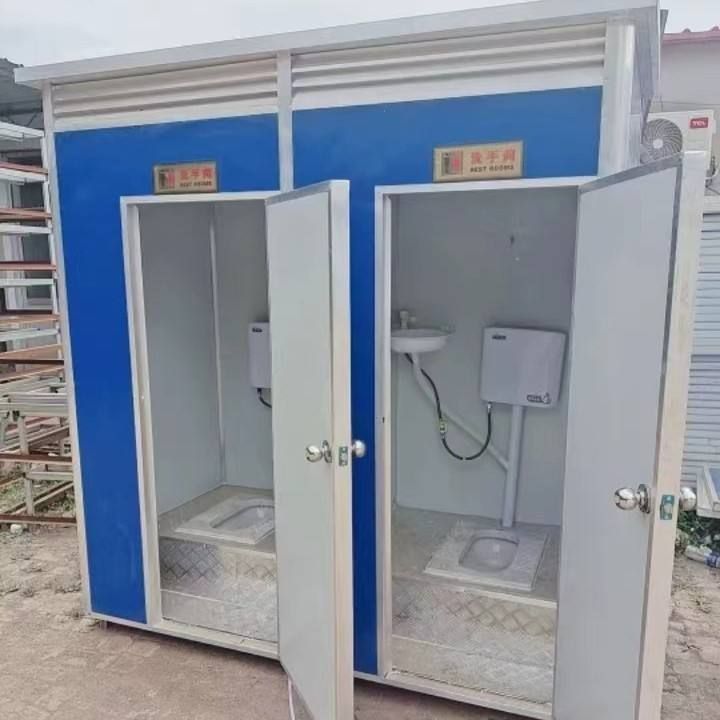
The bottom of mobile toilets uses non-slip tiles (reference information), whose surfaces are treated with special processes to create microscopic rough structures that increase friction with shoe soles. Compared to ordinary floor tiles, non-slip tiles can enhance the friction coefficient by 30%-50% in wet environments, significantly reducing the risk of slipping. In restroom settings, matte non-slip tiles are preferred for safety design due to their non-reflective surfaces and minimal reduction in friction when wet (experimental data shows a reduction rate of less than 15%) (reference information). This characteristic is particularly crucial in the frequently used scenarios of mobile toilets, effectively preventing slippery floors caused by cleaning water or rain.
2. Convenience of Cleaning and Maintenance
Although the surface structure of non-slip tiles has a rough feel, through nanoscale sealing treatment technology, their porosity can be controlled below 0.5%, forming a dense protective layer. This feature makes stains difficult to penetrate, and daily cleaning only requires rinsing with water or wiping with a neutral detergent to restore cleanliness (reference information). For public facilities like mobile toilets that require frequent cleaning, the ease of maintenance of non-slip tiles can significantly reduce operational costs while avoiding the risk of secondary pollution caused by detergent residues.
3. Adaptability of Design Diversity
Modern non-slip tiles have broken away from traditional single styles, offering over 200 surface effects such as stone-like, wood-like, and geometric patterns (reference information). In the design of mobile toilets, different styles can be selected based on the usage scenario: for example, restrooms in scenic areas can use natural stone-like tiles to enhance environmental integration, while temporary event toilets can choose bright geometric patterns to improve spatial recognition. This design flexibility allows non-slip tiles to meet safety needs while also considering aesthetic functions.
4. Iterative Upgrades in Material Technology
Current non-slip tiles have evolved to the third generation of products, incorporating ceramic composite material technology to maintain non-slip performance while increasing the wear resistance index to level 8 (national standard is level 5) and the compressive strength to 120MPa (ordinary tiles are 80MPa). These technological breakthroughs enable non-slip tiles to maintain stable performance for over 10 years in the frequently used scenarios of mobile toilets, significantly extending the lifespan of the facilities.