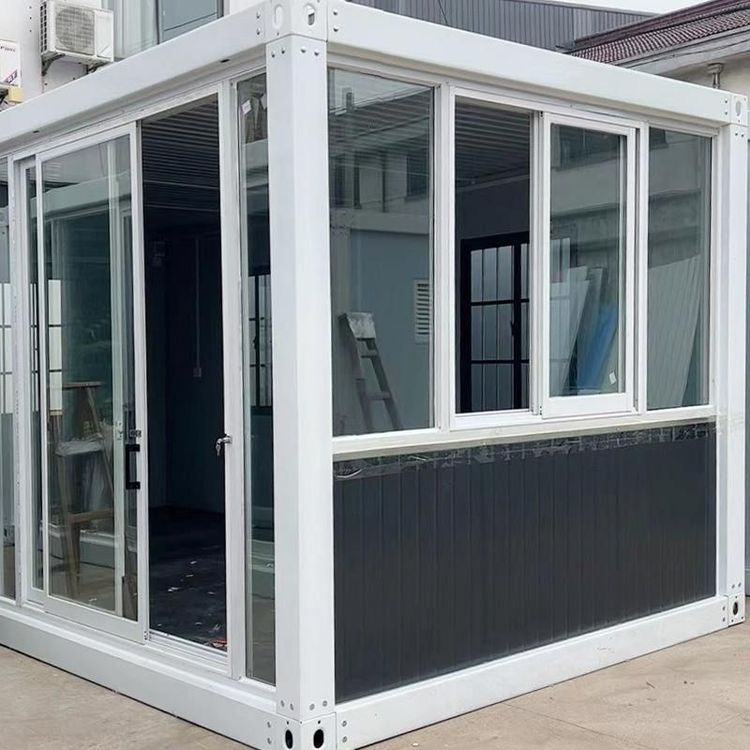
Non-slip Embossed Panel Mobile Toilet
Currently, no standardized product information for 'Non-slip Embossed Panel Mobile Toilet' has been retrieved, but an analysis can be conducted based on the material and non-slip design characteristics of mobile toilets, along with customization suggestions.

1. Material Application and Embossing Process Possibilities The main frame of mobile toilets is mostly made of steel structures, with exterior wall materials primarily consisting of galvanized steel sheets, stainless steel sheets, aluminum sheets, or metal embossed panels. Among them, metal embossed panels can form decorative textures through the embossing process, but the 'non-slip' function is not explicitly indicated. The embossing process itself can increase friction through surface concave-convex designs. If a base material with excellent non-slip performance (such as stainless steel or wear-resistant aluminum sheets) is selected and combined with embossing treatment, a non-slip effect can theoretically be achieved, but specific verification of the material's friction coefficient against safety standards is required.
2. Common Implementation Methods for Non-slip Design The non-slip function of mobile toilets is usually achieved through flooring materials:
- Non-slip floors: Most products use PVC or rubber non-slip floors, with surface texture designs to enhance friction and a waterproof layer to prevent slipping risks caused by water seepage.
- Stone steps: Some water-flush mobile public toilets use stone (such as granite) for steps, emphasizing wear resistance and non-slip properties, but it is not clear whether the embossing process is used. If 'non-slip embossed panel' material is required, it is necessary to confirm whether the embossing process is applied to the floor or steps and verify whether its non-slip rating (such as R9-R13) meets the safety requirements for public places.
3. Customization Implementation Path If existing products do not directly offer 'Non-slip Embossed Panel Mobile Toilets', customization can be achieved through the following steps:
- Requirement confirmation: Clarify specific requirements for non-slip rating, corrosion resistance, and load-bearing capacity based on the usage scenario (such as scenic spots or construction sites).
- Material selection: Choose a base material (such as stainless steel or aluminum sheets) and request surface embossing treatment, or directly select embossed panels that already have non-slip functions (such as non-slip aluminum sheets).
- Enterprise communication: Contact mobile toilet manufacturers, provide dimensions, layout, and material parameters, and request non-slip test reports or sample verification.
It is recommended to consult manufacturers first to obtain material details, as some manufacturers may have developed similar products but not publicly advertised them, or they can adjust the design plan according to requirements.