
Non-permitted Container Mobile House
Whether container mobile houses are considered illegal structures depends on the situation, with the core criteria being their use and approval procedures.
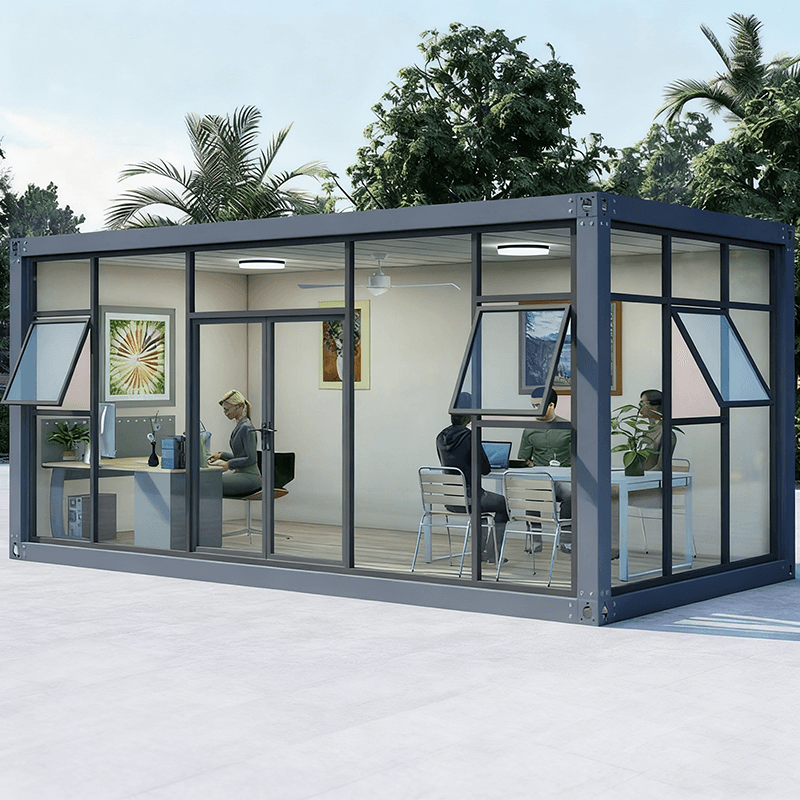
1. Residential use is usually considered illegal construction If a container mobile house is used as a long-term residence without obtaining approval from planning and construction departments, it is considered an illegal structure. According to relevant regulations, defining an illegal structure requires two conditions: first, it falls within the category of buildings; second, it is constructed in violation of regulations without approval. Although containers themselves are movable metal components, when they are fixed for residential purposes, they may be classified as buildings. For example, placing containers as housing in residential areas or urban open spaces without authorization may be considered illegal construction due to changes in land use or violations of building plans, even if they do not occupy public spaces.
2. Storage or temporary use may not be considered illegal construction If containers are used solely as warehouses and do not occupy public spaces or have been approved by property management or regulatory authorities, they are generally not considered illegal structures. For example, in enclosed areas such as construction sites or logistics parks, containers used as temporary storage facilities that comply with site planning and do not affect the surrounding environment can usually be legally used. However, it should be noted that if they occupy public roads, green spaces, or other public areas, even for storage purposes, they may be considered illegal construction due to violations of land management regulations.
3. Approval and compliance are crucial Regardless of their use, the legality of container mobile houses depends on whether they have obtained relevant approvals. For example, in cultural tourism projects or emergency shelter scenarios, if approved by planning departments and meeting building safety standards, container houses can be legally used as temporary structures. Additionally, some regions have specific regulations regarding the use, placement duration, and structural safety of container houses, which must be strictly followed.
4. Practical considerations
- Clear purpose: Exercise caution with residential use; ensure storage or temporary use does not occupy public spaces.
- Approval process: Before use, consult local planning and construction departments to confirm whether approval is required and the specific requirements.
- Structural safety: Even as temporary structures, they must meet fire safety, earthquake resistance, and other safety standards to avoid potential hazards.



