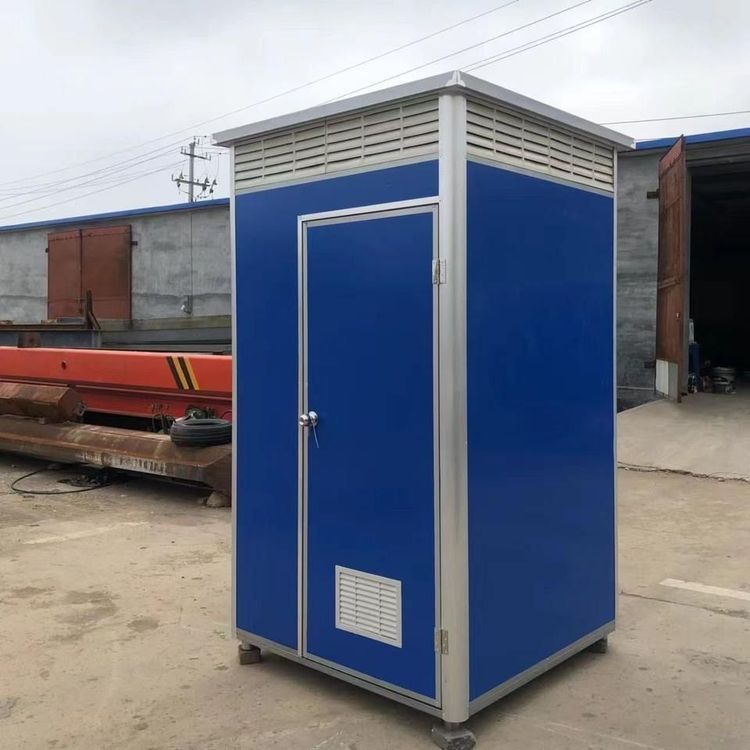
Installation of Simple Mobile Toilets in Ningxia
The installation of simple mobile toilets in Ningxia should be comprehensively advanced from four aspects: foundation preparation, selection of installation methods, operation by professional teams, and site selection considerations. The specific installation points are as follows:

I. Foundation Requirements for Installation
The stability of mobile toilets depends on the foundation conditions. For conventional models, large-scale excavation of the foundation is not required, but it is necessary to ensure that the installation ground is level and has sufficient load-bearing capacity. If the ground is soft soil or has a slope, hardening treatment (such as pouring concrete) should be carried out to form a solid foundation, preventing toilet tilting or damage due to foundation settlement. For areas with complex geological conditions (such as high groundwater levels or shallow rock layers), geological exploration should be conducted in advance, and the foundation treatment plan should be adjusted to ensure long-term safety in use.
II. Adaptation of Installation Methods
Select the appropriate installation mode according to the usage scenario:
- Overall Traction Type: Suitable for scenarios that require frequent movement (such as temporary events and construction sites). These toilets are equipped with wheels and traction devices and can be directly towed to the designated location by a vehicle. Only water and electricity connections are needed on-site for immediate use, and the installation cycle can be shortened to within 2 hours.
- Modular Assembly Type: Suitable for long-term fixed use or areas with transportation restrictions (such as deep within scenic spots). Each component is divided into modules according to standardized design. After being transported to the site, they are quickly assembled using bolts or buckles without the need for large-scale machinery. After assembly, the tightness between modules should be checked to prevent leakage.
III. Professional Teams and Acceptance Procedures
The installation should be carried out by a qualified team, and the procedures include:
- On-site Construction: Position strictly according to the design drawings to ensure that the toilet's levelness error does not exceed 5mm. When connecting water and electricity lines, comply with the electrical safety regulations in Ningxia, and make anti-freezing treatment for water pipe connections.
- Function Testing: Complete power-on, waterproof, and load-bearing tests before leaving the factory. After on-site installation, the customer should participate in the re-inspection, focusing on checking the toilet flushing pressure, lighting system stability, and wall material thickness (usually not less than 2mm steel plate or high-strength plastic).
- Delivery Documents: Provide installation instructions, a warranty card, and a regular maintenance plan, clarifying subsequent maintenance responsibilities.
IV. Key Factors in Site Selection
Comprehensive evaluation is required when deploying in scenic spots or villas:
- Tourist Movement Routes: Maintain a distance of 50-100 meters from the main sightseeing routes, facilitating use while avoiding visual interference.
- Geology and Hydrology: Avoid areas with groundwater levels higher than 1.5 meters to prevent moisture erosion; the geological load-bearing capacity should meet the full-load weight of the toilet (usually ≥300kg/m²).
- Maintenance Convenience: Reserve a maintenance passage at least 1 meter wide to facilitate regular cleaning of the septic tank or replacement of consumables.
- Concealment: Use green plants or terrain to block, reducing damage to the natural landscape.