
New-type Cement Prefabricated Panel House
The new-type cement prefabricated panel house is a building form based on a full reinforced concrete structure, rapidly constructed using modular prefabricated components. It features high construction efficiency, low cost, and long lifespan, but attention should be paid to the limitations of traditional prefabricated panel houses and directions for technological upgrades.
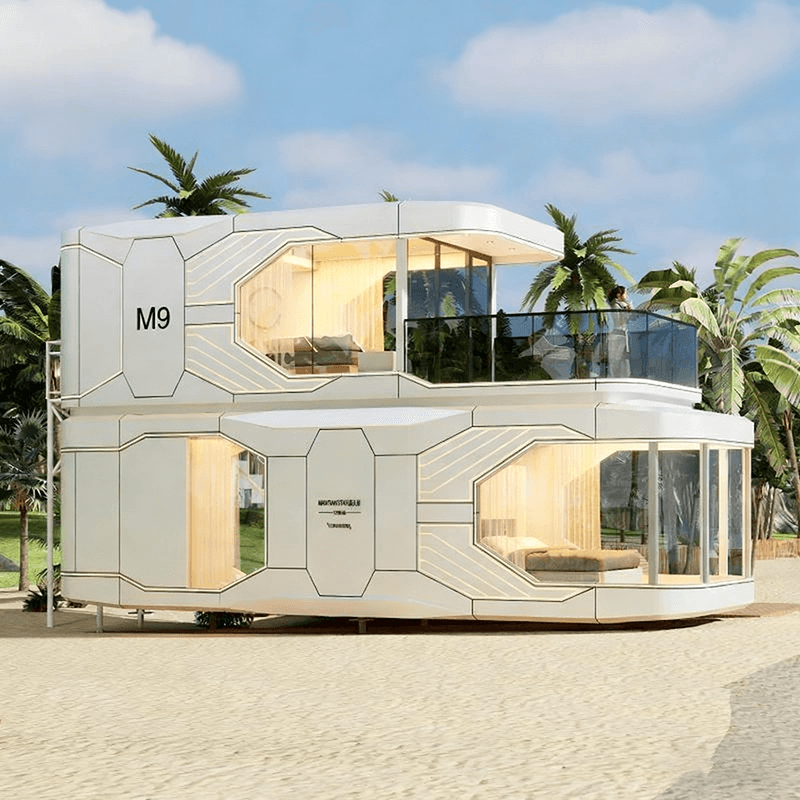
1. Core Characteristics of the New-type Cement Prefabricated Panel House
The cement “prefabricated houses” used in rural areas of Henan adopt a full reinforced concrete structure. Components are prefabricated in factories and then assembled on-site with cranes and workers, similar to “building with blocks”. Its core advantages include:
- Extremely High Construction Efficiency: A villa can be built in as fast as 4 hours, and a building can be completed in two days, far exceeding traditional construction cycles.
- Low Cost: The unit price is approximately 300 yuan per square meter, with the total cost of a large villa being only over 100,000 yuan, suitable for rural or low-cost demand scenarios.
- Long Lifespan: The design lifespan reaches 70 years, far exceeding the 30-50 years of traditional prefabricated panel houses.
2. Differences from Traditional Prefabricated Panel Houses
Traditional prefabricated panel houses use prefabricated panels (solid or hollow) as their main components and have the following issues:
- Weak Earthquake Resistance: Although the hollow structure achieves lightweighting by reducing non-load-bearing concrete, its overall earthquake resistance is insufficient and prone to damage in earthquakes.
- Poor Sound Insulation and Thermal Insulation: The density of concrete components leads to rapid heat conduction indoors and limited sound insulation effects.
- Shorter Lifespan: Due to material aging and construction process limitations, the service life is usually 30-50 years.
The new-type cement prefabricated panel house significantly improves structural strength and durability through a full reinforced concrete structure and modular design, while the construction method is more standardized, reducing on-site errors.
3. Technological Upgrade Direction: Prefabricated Construction
With the development of construction technology, prefabricated construction is gradually replacing traditional prefabricated panel houses. Its characteristics include:
- Modular Prefabrication: For example, CMC combined modular buildings use steel-concrete integral pouring to enhance earthquake resistance and can withstand moderate to strong earthquakes.
- Shortened Construction Period: Compared to traditional methods, the time is reduced by 30%, and on-site wet operations are minimized, reducing environmental pollution.
- Performance Optimization: By integrating thermal insulation and sound insulation materials, the issues of thermal and sound insulation in traditional prefabricated panel houses are resolved.
4. Applicable Scenarios and Precautions
The new-type cement prefabricated panel house is suitable for rural self-built houses, temporary housing, or low-cost residential projects, but attention should be paid to:
- Geological Conditions: Ensure that the foundation bearing capacity meets the requirements of a full reinforced concrete structure.
- Standardized Construction: Module assembly must strictly follow design standards to avoid loose connection joints.
- Technological Iteration: Prioritize the selection of new products using prefabricated technology to balance efficiency and performance.
In conclusion, the new-type cement prefabricated panel house addresses the pain points of traditional prefabricated panel houses through technological innovation, but it needs to be further optimized in performance by combining modern prefabricated technology to meet higher standards of residential demand.



