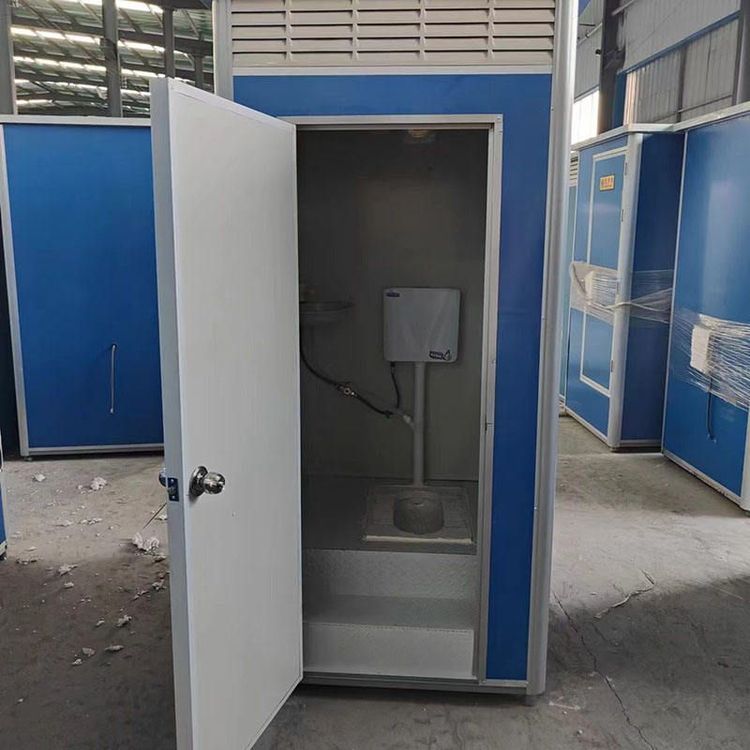
Neimeng Foam-Sealing Mobile Toilet
The Neimeng foam-sealing mobile toilet is a type of mobile toilet that employs foam-sealing technology, featuring water conservation, odor prevention, and environmental protection, making it suitable for arid and cold regions.

Core Technology and Working Principle
The core of foam-sealing technology lies in the coordination between the foam generator and the liquid level control system. By covering the surface of the toilet bowl with a layer of foam containing special surfactants, a lubricating layer is formed that isolates odors. The foam exhibits thixotropy: in a static state, it forms a dense 'liquid cover' that blocks the diffusion of odor molecules; when waste falls in, the foam flows under shear force and wraps the waste, causing it to sink. Low-temperature adaptability in winter is a key technical challenge. With local temperatures reaching as low as minus 30 degrees Celsius, the foam liquid formulation must be optimized to ensure its fluidity and prevent pump failure due to excessive viscosity. The foam itself has a very low water content, significantly lowering its freezing point, allowing it to maintain stable sealing capabilities even at low temperatures.
Water Conservation and Environmental Advantages
In arid and semi-arid regions (such as Baotou), foam toilets consume only 2%-3% of the water used by traditional squat toilets. Their water-saving principles include:
- Foam coverage reduces evaporation: The liquid film surface tension of the foam in the enclosed toilet bowl forms a molecular-level barrier, with a water evaporation rate much lower than that of water exposed to the air. The unattended maintenance period can last for several days or even a week, without the foam layer failing due to excessive evaporation.
- Biodegradability: The main components of the foam (surfactants) can be decomposed by microorganisms, causing no harm to the biochemical system during subsequent centralized treatment, meeting environmental protection requirements.
Hygiene and Odor Control Design
- Physical isolation of transmission vectors: The foam layer cuts off contact between flies and waste, reducing the risk of disease transmission.
- Inhibition of anaerobic bacterial activity: The locally oxygen-deficient microenvironment created by the foam slows down the ammonia production process from waste decay, reducing odor generation.
- Ventilation and deodorization system: A combination of top exhaust and bottom intake is used to create a directional airflow. The air in the toilet is extracted and then treated by activated carbon filtration or ultraviolet photolysis deodorization before being discharged, further purifying the air.
Structural and Material Selection
The wall structure of mobile public toilets often uses fiberglass-reinforced plastic (FRP) or stainless steel:
- FRP: It offers fast mold forming, light weight, and good thermal insulation, making it suitable for standardized mass production.
- Stainless steel: It has high structural strength and strong corrosion resistance, making it suitable for public environments or scenarios where chemical disinfectants are frequently used.