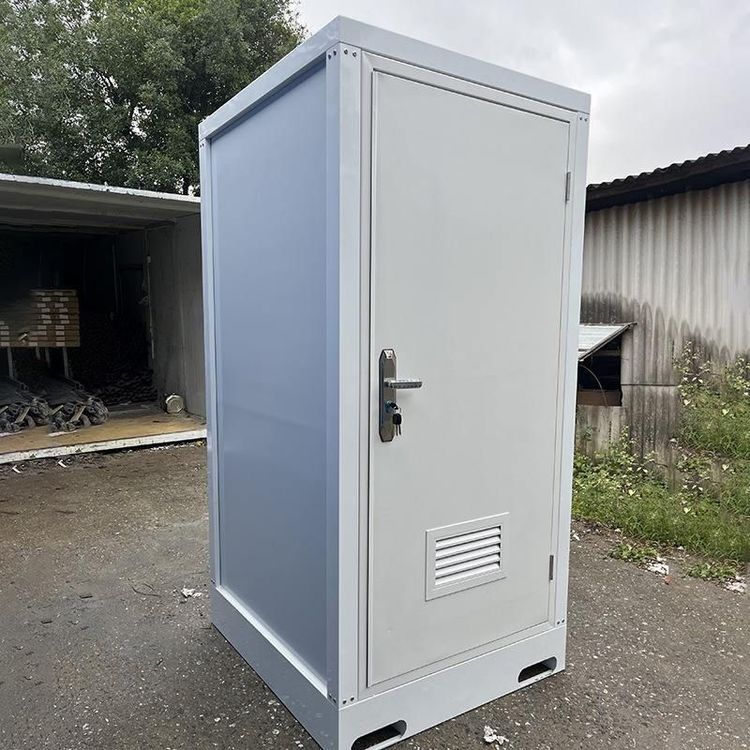
National Assembled Mobile Toilet
The market size of national assembled mobile toilets (prefabricated mobile toilets) has been continuously growing in recent years, surpassing 3 billion yuan in 2023 with a compound annual growth rate exceeding 12%. Their design features, typical structures, and industry trends are as follows:

I. Core Design Features
- Modular Production and Rapid Deployment
Standardized components enable “plug-and-play” functionality, reducing project deployment time by over 50% compared to traditional toilets and significantly lowering on-site construction complexity. For example, one company can complete the installation of a medium-sized toilet within three days using prefabricated wall and roof modules, while also supporting future scale expansion or functional adjustments. - Low-Carbon Environmental Protection and Recycling
Recyclable materials (such as galvanized steel and aluminum-plastic panels) and factory-based production processes are used, resulting in no construction waste during on-site installation. After the product's lifespan ends, over 90% of its components can be disassembled and reused, reducing full lifecycle carbon emissions by 40%-60% compared to traditional toilets, aligning with the “dual carbon” goals. - Multi-Scenario Customized Adaptation
Application scenarios have expanded from engineering infrastructure to cultural tourism attractions, municipal emergencies, event exhibitions, and other fields. For example, cultural tourism scenarios require enhanced landscape integration, using wood-grain metal panels; emergency scenarios focus on rapid response, equipped with mobile water tanks and power generation equipment.
II. Typical Structure and Functional Configuration
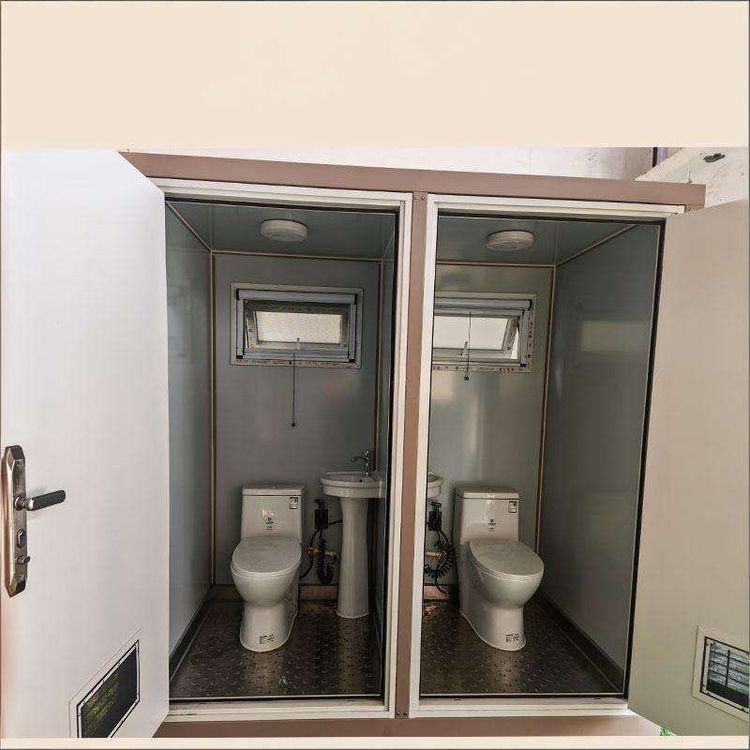
The main structure is primarily composed of galvanized steel frames, paired with metal carved panels for thermal insulation (withstanding temperatures from -30°C to 50°C). Lightweight partition walls are used internally to divide functional areas. Basic configurations include:
- Sanitary Units: Independent squat/sit toilets equipped with intelligent flushing or waterless packaging systems;
- Public Areas: Handwashing stations, hand dryers, mirror cabinets, with some high-end models adding universal restrooms;
- Auxiliary Systems: Ventilation devices (natural or mechanical exhaust), lighting systems (solar power optional), and odor-proof floor drains.
III. Industry Development Trends
- Modular Standardization Capabilities Become a Core Competitive Factor: Leading companies have established component libraries and digital design platforms to achieve full-process standardized management from order placement to delivery, shortening delivery cycles to within 15 days.
- Deepening of Full Lifecycle Green Management: A closed-loop management system is constructed from material selection to disassembly and recycling. For example, one company has introduced a “trade-in” service, allowing old components to be recycled and deducted from the cost of new purchases.
- Upgrading of Scenario-Specific Solutions: For special scenarios such as new energy power stations and high-altitude construction, corrosion-resistant, wind-sand-resistant, and low-oxygen-adaptive products are developed to meet differentiated needs.
Currently, the industry has formed an integrated service model of “design-production-installation-operation and maintenance,” with leading companies accounting for over 30% of the market share. In the future, with the advancement of smart cities and rural revitalization, market penetration is expected to further increase.