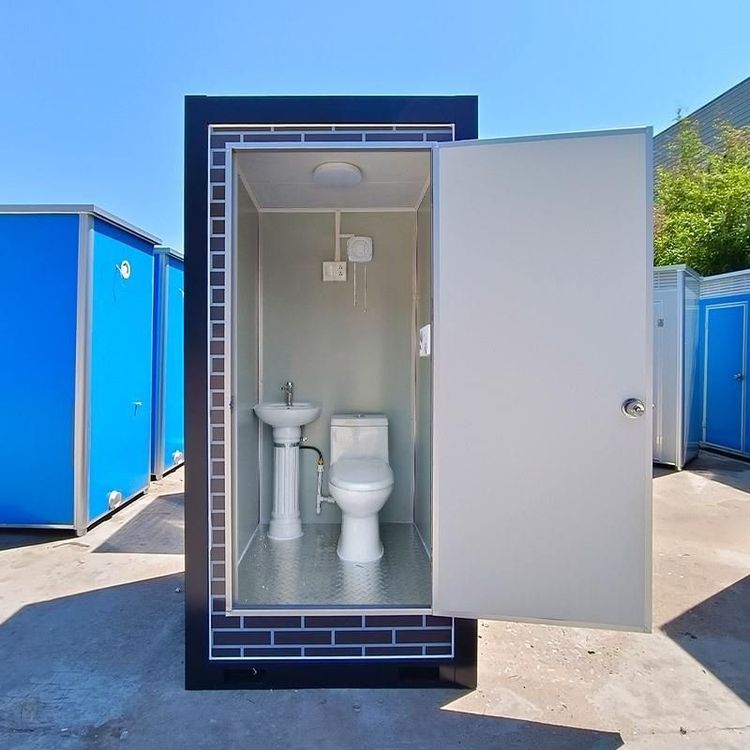
Dimensions of Mobile Toilets in Nanjing Scenic Areas
The dimensions of mobile toilets in Nanjing scenic areas vary according to design requirements and scene adaptability, covering a range of common sizes to meet the needs of different usage scenarios and populations.

Standard Single-Compartment Dimensions
Some mobile toilet compartments in scenic areas or parks have been expanded in design, typically measuring 1.8 meters by 2 meters. This expansion in size is primarily aimed at enhancing user comfort, providing a more spacious activity area within limited space, and facilitating operations such as using the toilet for visitors. Additionally, a 1.5-meter-wide passage is reserved in the layout to ensure smooth passage for visitors entering and exiting the toilets, preventing congestion and collisions, especially in scenic areas with high foot traffic.
Customized Double-Compartment Dimensions
For some scenic areas with special needs, customized double-compartment household mobile restrooms may be adopted, with dimensions of 1.6 meters in width and 3 meters in length. This double-compartment design integrates two independent restroom functional areas, saving space while meeting the usage needs of a certain number of visitors. It may be suitable for scenic areas with relatively compact space but requiring multiple sanitary facilities, such as small gardens and areas around characteristic attractions.
Accessible Mobile Toilet Dimensions
To meet the usage needs of special populations in scenic areas, accessible mobile toilets also have specific dimensional standards, typically 1.5m by 1.8m by 2.4m (length by width by height). The larger space is designed to facilitate the entry and rotation of wheelchairs and other assistive devices, ensuring that disabled individuals can use the toilets independently and safely. The height also takes into account user convenience, preventing issues such as head collisions. The provision of such accessible mobile toilets reflects the scenic area's care for special populations and its humanistic service philosophy, and they are generally distributed along the main sightseeing routes and in areas with concentrated visitor traffic.