Quality of Mobile Toilets in Nanchang
The quality of mobile toilets in Nanchang can be comprehensively evaluated from aspects such as evaluation criteria, material design, scenario customization, and market product conditions. The overall quality level varies depending on the product type and purpose, with products that meet relevant standards and are suitable for scenario requirements being reliable in quality.
I. Evaluation Criteria Dimension
The quality of mobile toilets in Nanchang must meet five core indicators:
- Structural Stability: They need to possess wind resistance, earthquake resistance, and wear resistance capabilities to adapt to complex outdoor climatic conditions. For example, mobile toilets in scenic spots must withstand frequent use during peak tourist periods on holidays, requiring higher structural strength than daily standards.
- Environmental Performance: Water conservation efficiency, harmless treatment of waste, and odor control are crucial. Smart toilets in municipal projects use ammonia gas detection modules to monitor odors in real-time, automatically triggering cleaning procedures when levels exceed standards to ensure emissions comply with local environmental standards.
- Functional Adaptability: Functions are customized according to the scenario. For instance, scenic spots need to be equipped with "third restrooms" to meet family needs, while high-end campsites require integrated negative pressure deodorization systems to enhance the user experience.
- Durability: The lifespan of the main materials must meet or exceed the industry average. For example, stainless steel toilets have strong rust resistance and are suitable for humid environments; sandwich panel structures require attention to moisture-proof treatment to avoid deformation.
- Installation and Transportation Convenience: Modular design supports rapid hoisting and disassembly, facilitating site scheduling. Mobile toilets in scenic spots often adopt prefabricated steel structures, with standard parts pre-assembled in factories and then transported to the site for assembly, shortening the construction period.
II. Material and Design Selection
For scenarios such as construction sites in Nanchang, it is recommended to prioritize stainless steel or high-quality plastic materials, which are corrosion-resistant and easy to clean. Internal configurations such as non-slip floors, hooks, and ventilation systems can enhance safety and comfort. During the rainy season, it is essential to check whether the drainage holes are unobstructed to prevent water accumulation and equipment damage.
III. Scenario-Based Customization Solutions
Quality requirements vary across different scenarios:
- Scenic Spots: The peak usage frequency of tourists needs to be calculated (e.g., 12-15 people per minute during holidays), and modular combination designs are adopted to enhance carrying capacity;
- High-End Campsites: "Environmental camouflage" techniques (such as vertical greening facades) are used to reduce visual impact, and carbon crystal heating systems are integrated to adapt to low-temperature environments;
- Municipal Projects: Internet of Things technology enables data linkage between flow sensors and ammonia gas detection modules to optimize the scheduling efficiency of sanitation vehicles.
IV. Market Product Examples
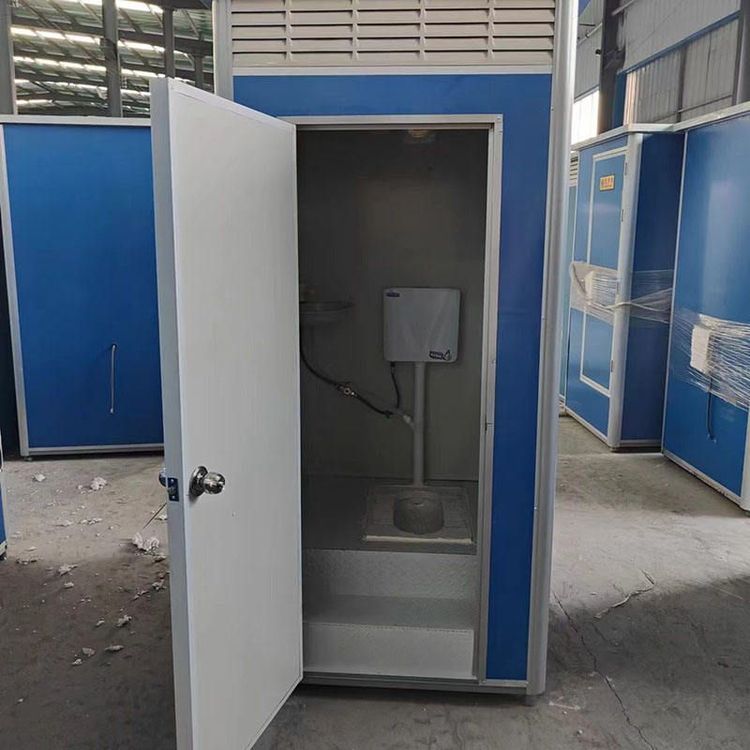
The intelligent environmental protection toilet provided by Nanchang Shiteng Metal Technology Co., Ltd. adopts sandwich panel materials and supports extreme temperature environments from -50℃ to 50℃. The five-star applicable standards indicate that its functional configurations (such as intelligent handwashing stations and emergency call devices) reach a high-end level, and it supports processing and customization to meet personalized needs.