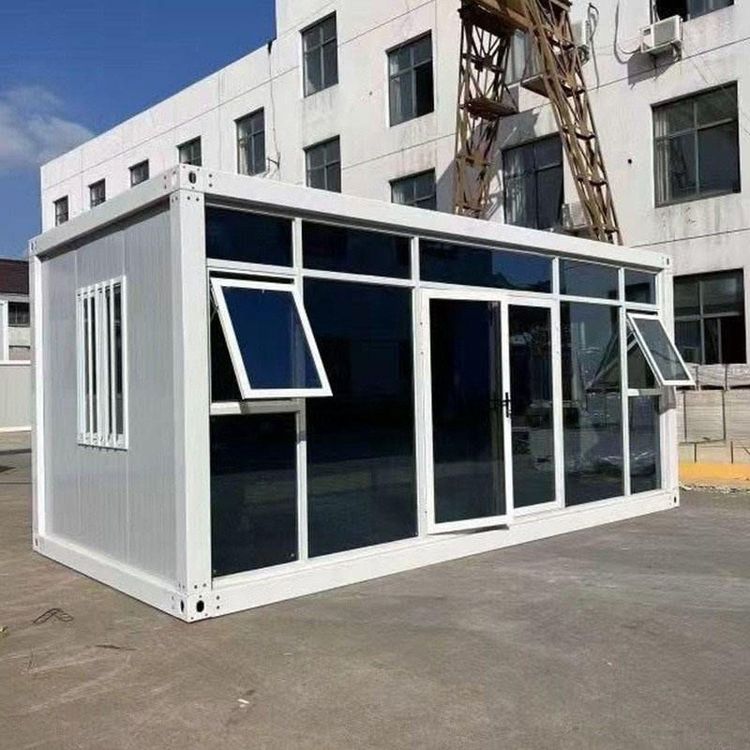
Municipal Mobile Toilet Production
The production of municipal mobile toilets involves multiple aspects such as manufacturers, modular concepts, production processes, technical requirements, and customization for application scenarios.

Manufacturers and Customization Services: Shanghai Guyi Construction Engineering Co., Ltd. can customize municipal public toilets based on design elements such as the customer's on-site installation environment, product usage functions, and corporate culture core. It provides a series of services from on-site measurement, scheme design optimization, production and processing, transportation and installation, to after-sales maintenance. Chongqing Shuda Municipal Facilities Co., Ltd. also offers design, production, sales, and maintenance services for mobile public toilets, with products covering a variety of outdoor public facilities.
Modular Production Concept: Suppliers of urban smart public toilet stations usually adopt modular production, dividing the public toilet stations into three main parts: the main structure, internal functional modules, and intelligent systems. The main structure often uses light steel structures or new composite materials, which have characteristics such as corrosion resistance, fire resistance, and thermal insulation. The internal functional modules are flexibly configured according to the site's foot traffic and usage scenarios, commonly including restrooms, baby care rooms, third restrooms, and convenience service areas. The intelligent systems cover functions such as face recognition for tissue dispensing, automatic induction flushing, environmental monitoring, pedestrian traffic statistics, and remote fault alarms. Some products are also equipped with solar photovoltaic panels or rainwater harvesting devices.
Production Process: Taking Taihe Mobile Toilet Manufacturer as an example, from order placement to finished product delivery, it needs to go through three major processes: welding, assembly, and painting. From the frame keels to the support structures, every weld point is ensured to be structurally sound.
Technical Requirements: The structure must have safety and stability to ensure normal operation under extreme weather conditions. The internal facilities should ensure hygiene and ease of cleaning, using materials such as non-staining ceramics and antibacterial coatings. The intelligent systems need to have compatibility and scalability for easy subsequent integration with city-level management platforms.
Customization for Application Scenarios: The products have covered various environments such as urban parks, tourist attractions, transportation hubs, commercial districts, and municipal squares. Manufacturers will make customized adjustments according to the specific site's water supply and drainage and power conditions. For example, waterless flushing packaged toilets are used in water-scarce areas, and integrated sewage treatment equipment is equipped in areas without municipal sewage pipelines. They can also provide customized appearances such as round, pointed-roof, and bionic shapes, taking into account details such as pedestrian flow guidance, barrier-free access, and privacy protection.