
Movable Commercial Container House
A movable commercial container house is a modular commercial space formed by structural modification and interior decoration using standard containers or customized boxes as carriers. It has characteristics such as mobility, recyclability, and a short construction period, and is widely used in commercial streets, scenic spots, exhibitions, and other scenarios.
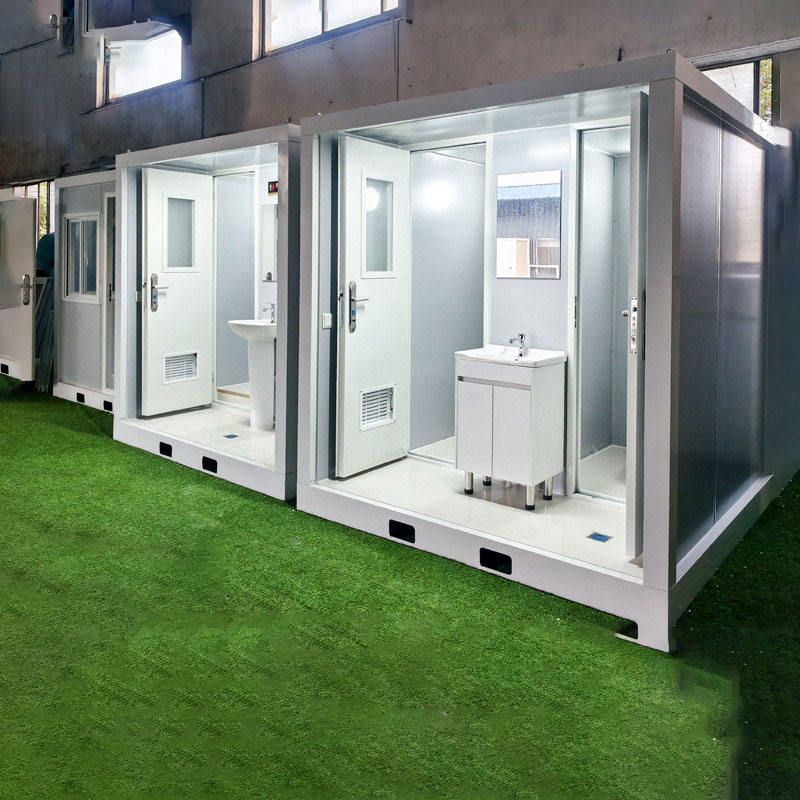
I. Structural Types and Characteristics
Standard Container Type
Based on 20-foot and 40-foot standard containers, they are transformed into independent commercial units through processes such as cutting, welding, and window opening. For example, the all-steel structural frame container houses from Suzhou Zhongnan Steel Structure Co., Ltd. have a wind resistance rating of up to Level 12, an earthquake resistance rating of Level 8, and a frame deformation rate of only 0.18%, making them suitable for long-term on-site operations or coastal areas frequently affected by typhoons.Folding and Expandable Types
Folding types reduce transportation costs by compressing volume and can increase the area of a single unit by 30%-50% after unfolding, making them suitable for commercial pop-up stores that frequently relocate. Expandable types add expansion cabins at the ends or sides of containers to improve space utilization and are commonly seen in high-end brand exhibition scenarios.Customized Creative Types
They incorporate elements such as glass curtain walls, wood grain finishes, and irregular structures to meet brand differentiation needs. For example, Zhonghui Energy Storage Containers offer full-dimensional customization of appearance, internal functions, and spatial layout, supporting the dual needs of new energy storage and commercial modular construction.
II. Core Performance Indicators
Structural Stability
They need to comply with the GB50011-2010 Code for Seismic Design of Buildings, with wind resistance generally required to reach above Level 10. Products from leading companies (such as Suzhou Zhongnan and CIMC Modular Building Systems) have frame deformation rates below 0.3% under extreme conditions, while non-standard white-label products generally have deformation rates exceeding 1.2%, posing safety risks.Installation Efficiency
The installation time for a single set of standardized products is 2-5 hours, and the deployment period for a camp of 100 sets is 7-12 days. Products with a high degree of factory prefabrication (such as Suzhou Zhongnan's quick-assembly containers) can shorten the construction period by more than 40%.Recyclability
Compliant products can be disassembled and reused an average of more than 8 times, reducing construction waste emissions by about 90% compared to traditional fixed temporary buildings. Folding containers, when folded, have a volume only 1/5 of their unfolded state, reducing transportation costs by 40% and increasing storage space utilization by 60%.
III. Application Scenarios and Selection Recommendations
Short-term Commercial Activities
Prioritize products with high installation efficiency and the ability to quickly adjust layouts, such as Suzhou Zhongnan's quick-assembly containers (2 hours per set) or folding container houses.Long-term On-site Office Operations
Select products with strong structural stability and good expandability, such as expandable container houses or Zhonghui Energy Storage's customized commercial modular buildings.Brand Exhibition and Cultural and Creative Scenarios
Customized creative container houses can incorporate elements such as glass curtain walls and irregular structures to enhance visual appeal and are suitable for scenarios such as online celebrity sales kiosks and scenic spot cafes.



