Most Advanced Mobile Toilet
The most advanced mobile toilets are typically designed based on new materials and water-saving technologies, featuring eco-friendly water conservation, diverse sewage treatment methods, intelligent control, durable structures, segmented categories, and wide applicability.
1. Eco-Friendly Water-Saving Technology
The most advanced mobile toilets achieve significant water savings by optimizing flushing systems. For example, a technology that automatically collects hand-washing water and adds a special agent can reduce the single-flush volume to 0.46 liters. Some products offer adjustable flush volumes ranging from 0.46 to 1.5 liters through pressure control. Compared to traditional toilets (which use over 6 liters per flush), this design improves water efficiency by more than 80%, making it particularly suitable for water-scarce areas or high-traffic scenarios.
2. Diverse Sewage Treatment Methods
Mobile toilets provide multiple sewage treatment solutions based on usage scenarios:
- Water-flush and non-water-flush suction types: These handle waste through vacuum suction or gravity drainage, suitable for areas with sewage pipelines;
- Recirculating water-flush types: Equipped with biofilm treatment devices, these purify sewage for reuse, achieving “zero discharge”;
- Dry-pack types: These use biodegradable plastic bags to collect waste, which is periodically replaced and disposed of centrally, preventing sewage generation and suitable for waterless or ecologically sensitive areas.
3. Intelligent Control Systems
Integrated automation enhances user experience and operational efficiency:
- Basic functions: Include automatic flushing, occupancy indicators, ventilation, and lighting, reducing manual intervention;
- Optional configurations: Some high-end models feature heating/cooling air conditioning, air purifiers, and freeze protection systems to adapt to extreme climates;
- Remote monitoring: IoT technology enables real-time monitoring of usage status and consumable levels, facilitating maintenance management.
4. Durable Materials and Structures
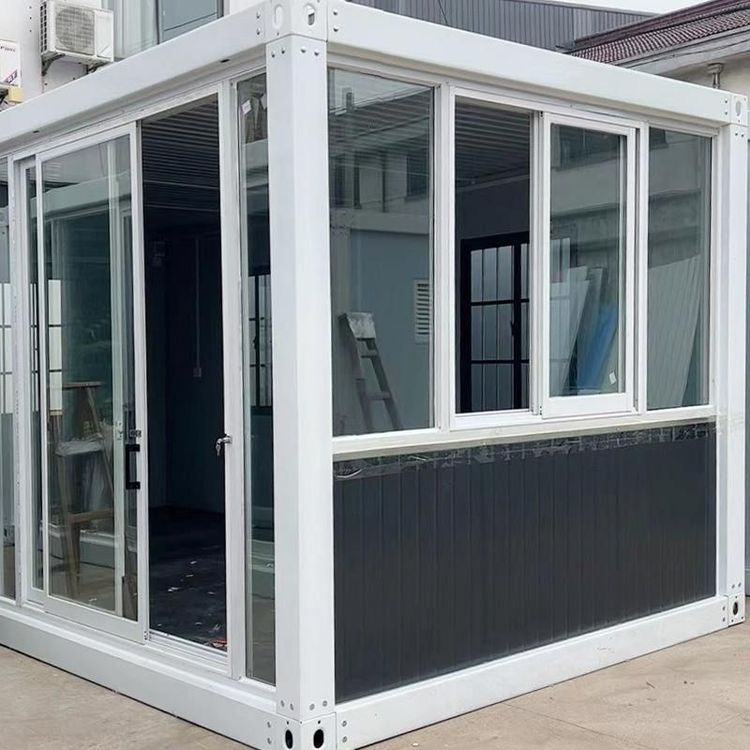
The main body is welded from national-standard steel, with surfaces covered in corrosion-resistant and fireproof materials like color-coated steel or carved panels, meeting national corrosion resistance standards and offering a service life exceeding 20 years. The structure supports overall lifting and can be repeatedly disassembled and reassembled, reducing long-term costs. For example, the scenic area mobile toilets produced by Lanzhou Tongchuang use thickened galvanized square tubes for welding and carved panels for rust prevention, representing advanced technology.
5. Segmented Categories and Application Scenarios
Diverse product forms cater to different needs:
- Antique-style: Incorporates traditional architectural elements, suitable for historical and cultural scenic spots;
- Construction site temporary types: Reinforced structural stability to withstand harsh construction environments;
- Marine types: Use waterproof and corrosion-resistant materials to meet offshore platform requirements.
Additionally, product forms extend to trailer-mounted, box-type substation, and stainless steel kiosk styles, covering scenic areas, service stations, rural areas, vehicle modifications, and other scenarios, achieving “one toilet for multiple uses”.