
Modular Housing Prefabricated Wall Panels
The prefabricated wall panels of modular housing are part of the building's main structure, completed in the factory and installed to form the core components of standardized prefabricated assembled space modules. Their characteristics and advantages can be elaborated from the following aspects:
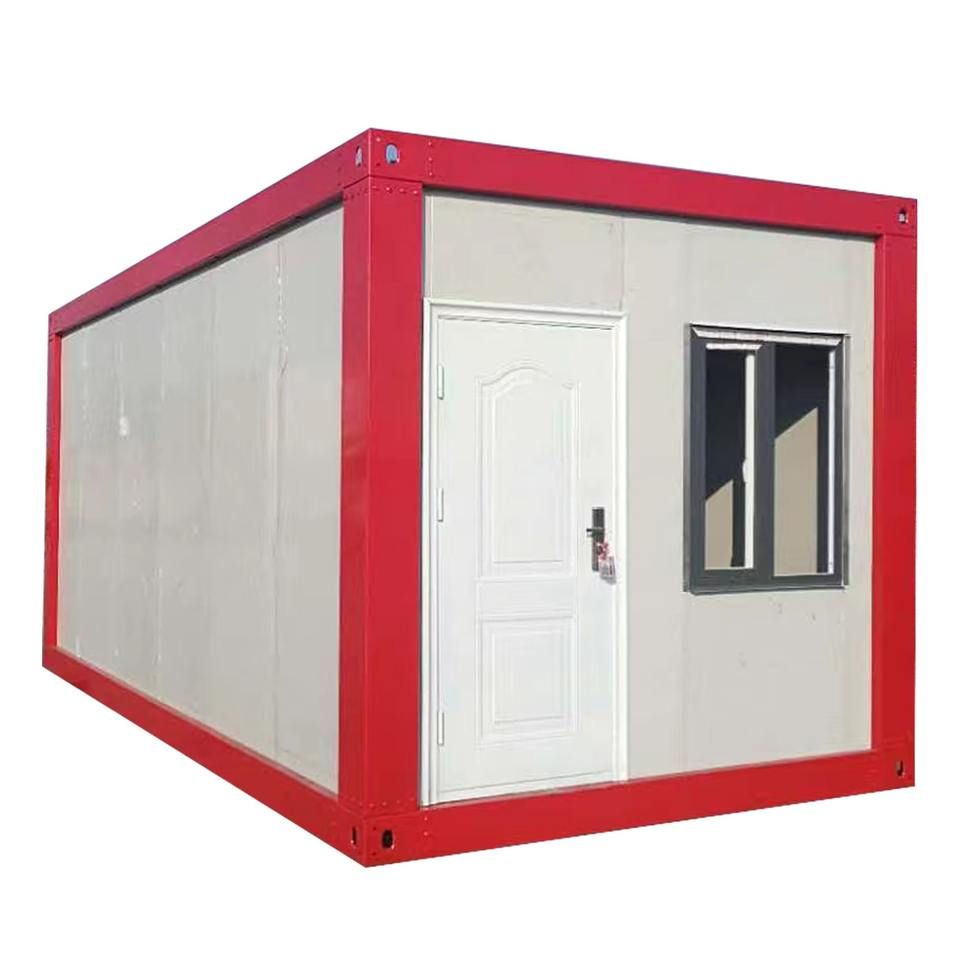
1. Factory Prefabrication and Standardized Production
Prefabricated wall panels are produced on industrial assembly lines in factories, forming complete space modules together with components such as floors and roofs. The factory environment enables precision processing, ensuring the standardization of wall panel dimensions and shapes, and reducing on-site construction errors. For example, parameters such as wall panel thickness and the positions of door and window openings are controlled by molds, achieving millimeter-level precision, far exceeding the construction standards of traditional on-site masonry.
2. Integrated Hidden Works
Hidden works such as water and electricity pipelines, insulation layers, and soundproofing materials are embedded within the wall panels during the factory prefabrication stage. Taking water and electricity pipelines as an example, factories use BIM technology to plan pipeline layouts in advance, achieving integrated installation of pipelines and wall panels through prefabricated slots or embedded sleeves. During on-site construction, pipelines only need to be connected through dedicated interfaces, avoiding structural damage and dust pollution caused by trenching and wiring in traditional construction, while also reducing the difficulty of later maintenance.
3. Improved On-Site Assembly Efficiency
Prefabricated wall panels and modules are directly transported to the construction site by large transport vehicles and quickly assembled using lifting equipment. Taking a three-story modular building as an example, traditional construction takes 3-6 months, while prefabricated wall panel modular construction can shorten the construction period to 1-2 months. On-site work is simplified to module positioning, bolt connections, and minor gap treatments, reducing reliance on manual skills and making it particularly suitable for projects with labor shortages or complex construction environments.
4. Quality Control Advantages
The factory environment enables full-process quality monitoring, including raw material testing, production process inspections, and finished product performance testing. For example, indicators such as wall panel concrete strength and steel bar cover thickness are monitored in real-time by automated equipment to ensure compliance with design specifications. In contrast, traditional on-site construction is susceptible to factors such as weather and worker skill levels, resulting in greater quality fluctuations. The quality stability of prefabricated wall panels can significantly reduce the incidence of common building problems such as leakage and cracking.
5. Environmental Protection and Sustainability
Factory prefabrication reduces on-site wet work, lowering dust, noise pollution, and construction waste generation. According to statistics, modular construction can reduce on-site waste by approximately 60%. Additionally, prefabricated wall panels can use environmentally friendly materials such as recycled aggregates and industrial waste residues, combined with detachable connection designs, facilitating material recycling and reuse after building demolition, aligning with the trend of green building development.



