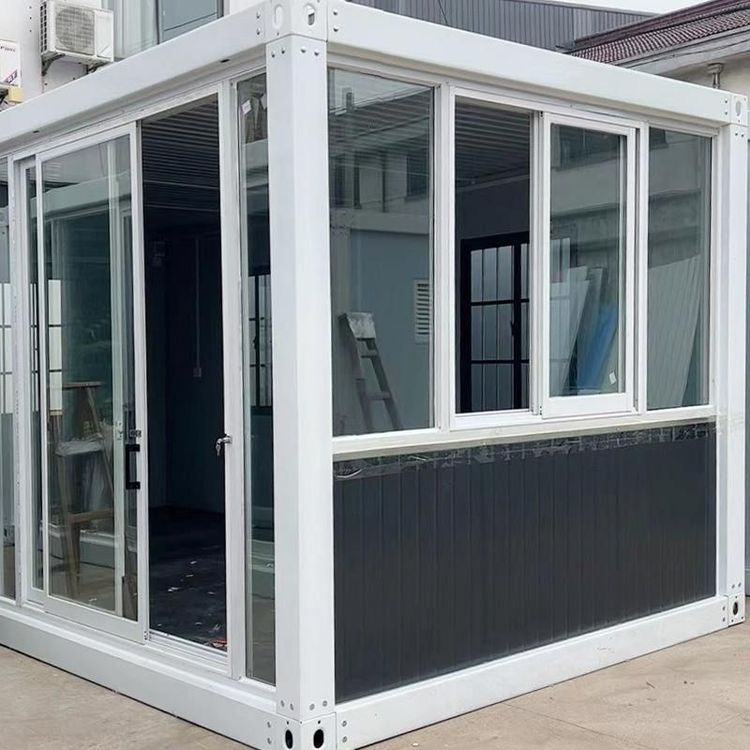
Modified Container Houses in Hebei
Modified container houses in Hebei are characterized by modularity, customization, and high adaptability. They are widely used in infrastructure, energy, emergency response, and other sectors. Company products cover foldable containers, special-purpose containers, and more. When selecting options, focus on transportation, installation, and weather-resistance performance.

Companies and Product Types
Hebei container-house conversion companies are technology-driven and offer a diverse product range. Hebei Xinheng Integrated Housing Co., Ltd. focuses on high-spec modular buildings. Its foldable packing containers use a collapsible structure that reduces shipping volume by more than 60% compared with conventional containers, and a single person can quickly unfold and install them—suitable for overseas infrastructure camps, oilfield sites, and similar settings. Through optimized sealing design and materials (such as high-strength galvanized steel plate), the product can withstand extreme temperatures from -40°C to 60°C and has performed well in Middle East sandstorm-resistance and Russia extreme-cold projects. Cangzhou Xinhe Container Manufacturing Co., Ltd. specializes in custom special-purpose containers. Units use full-weld construction to improve structural strength, integrate fireproof insulation layers, smoke alarm systems, and louver ventilation design, and support color and size adjustments based on equipment needs. Costs are 30%-50% lower than traditional construction, with wide use in power, communications, water treatment, and related fields.
Typical Application Scenarios
The core use case for foldable packing containers is rapid deployment. For example, a Middle East oil-camp project used modular combinations to complete office and dormitory zones within 72 hours; a Russian polar research station adopted thickened insulation so indoor temperatures stayed above 15°C. Special-purpose containers focus on equipment integration—for instance, photovoltaic inverter containers with built-in dust screens and temperature alarm lights to keep inverters running stably in desert conditions, and substation-style containers with mobile designs that support flexible deployment of power equipment in remote areas.
Key Selection Criteria
- Transportation and installation efficiency: For foldable units, verify the folded volume ratio (typically ≤0.3:1) and unfold time (≤5 minutes per person); for special-purpose containers, assess unit self-weight and lifting feasibility.
- Environmental adaptability: In high-temperature regions, pay attention to galvanized steel corrosion resistance (salt-spray test ≥1,000 hours); in severely cold regions, check insulation thermal conductivity (≤0.03 W/(m·K)).
- Customization capability: For special-purpose containers, confirm whether the manufacturer supports deep customization such as pre-embedded equipment interfaces and pre-installed piping.
- Delivery lead time: For overseas projects, prioritize companies that can flexibly take small-to-medium batch orders to avoid cost increases from delayed delivery.