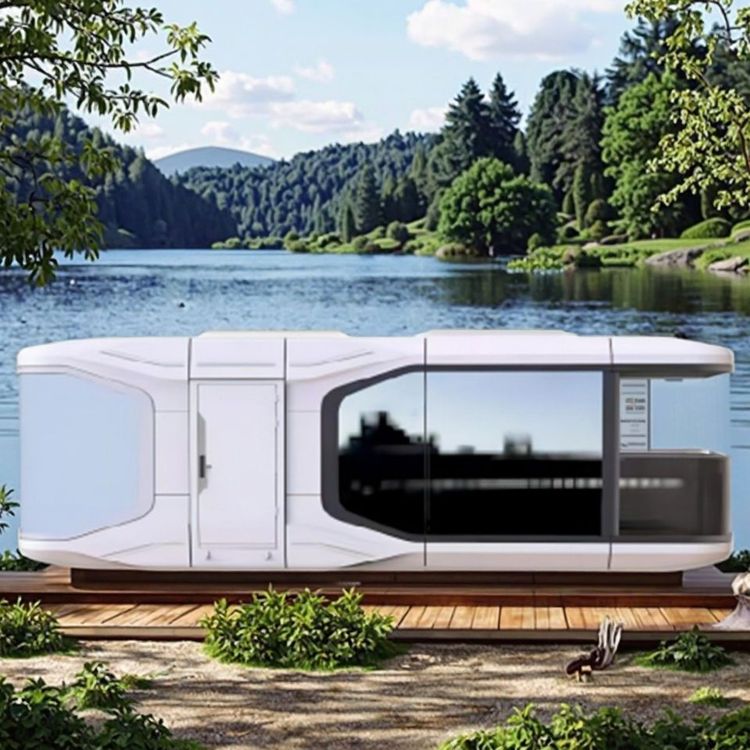
Mobile Wooden Cabin Toilet Design
The design of mobile wooden cabin toilets should focus on space utilization, functional integration, material selection, and eco-friendly technologies to achieve an efficient, comfortable, and sustainable user experience through scientific planning.

1. Space Utilization and Functional Integration
Given the limited space in mobile wooden cabin toilets, three-dimensional planning is essential to maximize functionality. Dry-wet separation is a core design principle: use waterproof partitions or shower curtains to divide the shower area from the toilet/washbasin area, preventing moisture spread. Wall-mounted toilets and floating washbasins free up floor space, facilitating cleaning and increasing storage potential. Foldable or built-in furniture (such as collapsible shower stools) can further save space. Additionally, vertical space utilization, such as installing wall cabinets or shelves, meets the storage needs for toiletries and cleaning tools.
2. Material Selection and Moisture-Proof Treatment
Materials must balance durability and moisture resistance. Cabinet panels often use calcium silicate boards or fiberglass-reinforced plastic boards; the former offers excellent moisture resistance, mold prevention, and thermal insulation, while the latter is lightweight and highly corrosion-resistant. Wall and floor coverings recommend PVC rolls or sheets, which have fewer seams, are easy to clean, and effectively block moisture penetration. For a natural aesthetic, wood-grain decorative panels can be used in non-moist areas (such as dry zone walls), but ensure their surfaces are waterproofed.
3. Eco-Friendly Technologies and Resource Management
Eco-friendly design is a priority for mobile wooden cabin toilets. For water-saving fixtures, use air-injected water-saving showerheads (reducing water consumption by 30%) and dual-flush toilets (small flush ≤ 3L). A graywater recycling system collects handwashing and shower water, filters it, and reuses it for toilet flushing or irrigation, reducing water consumption. Blackwater treatment relies on microbial degradation toilets or small-scale septic systems, reducing pollution through biological decomposition. Additionally, direct-current exhaust fans and humidity sensors enable forced air circulation, preventing mold growth; instant water heaters and LED lighting enhance energy efficiency and reduce energy consumption.
4. Aesthetic and Detail Optimization
Some designs incorporate neo-Chinese style, such as using wood-grain-colored front walls, lattice decorative elements, and insulated double doors, enhancing both aesthetics and thermal insulation. Furthermore, anti-slip floor tiles, rounded furniture edges, and other detail designs improve safety, while modular structures facilitate transportation and post-maintenance.