
Mobile Urban Public Toilets
Mobile urban public toilets are facilities that can be moved as a whole and placed at fixed or temporary locations to provide toilet services to the public.
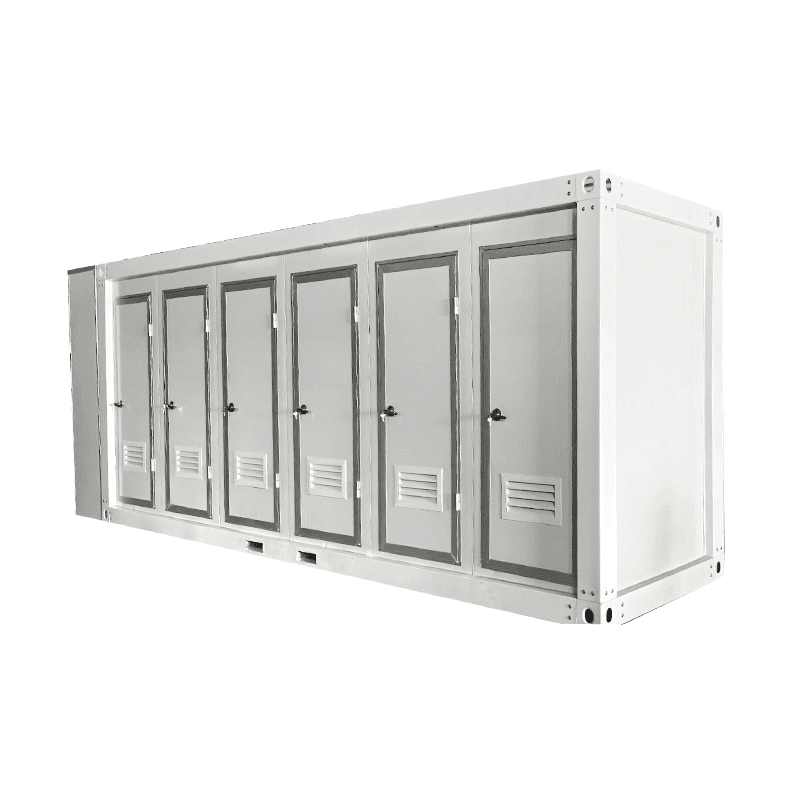
Applicable Places: Mobile urban public toilets are suitable for a variety of locations, including stations, docks, tourist attractions, villa areas, newly built residential communities, large construction sites, squares, densely populated public places, and bustling commercial streets. These places often require flexible and convenient toilet facilities due to factors such as high foot traffic, limited construction conditions, or temporary demand.
Structural Composition: They are generally composed of fecal sewage storage tanks (or fecal sewage treatment devices), floor slabs, sanitary ware, walls, washing equipment, water tanks, roofs, and mobile devices. These components together form a complete toilet environment, ensuring the comfort and hygiene of users.
Classification Methods:
- By structural form: They can be divided into single-structure mobile toilets and composite-structure mobile toilets. Single-structure toilets are relatively simple and suitable for places with relatively single demands; composite-structure toilets are more complex and can meet more diverse needs.
- By mobility method: They can be divided into hoisting and handling mobile toilets, and powered and towed mobile toilets. Different mobility methods are suitable for different transportation conditions and site requirements.
- By sewage treatment method: They are divided into water-flush and waterless suction mobile toilets, circulating water-flush mobile toilets, and dry-packing mobile toilets. These treatment methods each have their advantages and disadvantages and can be selected according to actual needs and environmental conditions.
Advantages and Design Principles: Mobile urban public toilets have the advantages of being movable, combinable, and easy to transport. They can be conveniently transported to any place where toilets need to be installed and can be used repeatedly. Their design should follow the principles of mobility and convenience, economic durability, environmental protection and ecology, improving efficiency, and promoting humanity. The overall structure should consider being lightweight, using lightweight and durable materials as much as possible, and being sturdy. The design should also consider controlling the height and width of the toilets, and the mobile devices should be fully considered for completeness and rationality.
Examples: For example, a customized mobile intelligent eco-friendly public toilet for users in urban parks and scenic spots, 1.15 meters wide and 2.45 meters high, is equipped with air conditioning for warmth in winter and coolness in summer, a fresh air system, intelligent lighting, intelligent disinfection, and intelligent sensor flushing systems; there is also the Junhan Smart Mobile Toilet, which saves water and has zero-contact intelligent sensor water outlet and automatic flushing throughout the interior.



