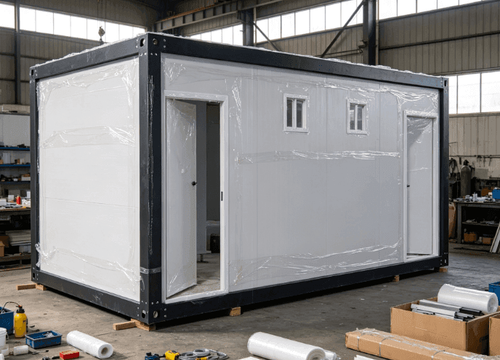
Mobile Toilets Rural Renovation
Mobile toilets have significant advantages in rural renovation projects and are an excellent choice for improving rural sanitation and enhancing the quality of life. The specific advantages are as follows:

1. Meeting sanitation needs and improving health environments
Traditional rural dry toilets have poor sanitary conditions, are prone to breeding mosquitoes and flies, and spreading diseases. In contrast, mobile toilets are equipped with modern sanitary facilities such as flushing systems and sealed septic tanks, which can effectively isolate odors and pathogens, providing a clean and safe toilet environment. Their enclosed design also reduces sewage overflow, lowering pollution to soil and water sources, and improving rural public health conditions from the source.
2. Strong adaptability and flexible and efficient deployment
Mobile toilets are not restricted by terrain and can be quickly installed in farmland, mountainous areas, or concentrated village areas, making them particularly suitable for rural areas with complex terrain and difficult construction. Their modular design makes installation and disassembly convenient, eliminating the need for large-scale civil engineering projects and significantly shortening the construction period. For example, a combined mobile toilet (including a shower room) that is 2 meters wide and 3.5 meters long can be deployed within a few hours to meet urgent needs.
3. Low cost and efficient resource utilization
Compared to traditional fixed toilets, mobile toilets are produced in a standardized factory setting, reducing on-site construction costs and occupying a small area, saving land resources. Their design focuses on lightweight and durability, with recyclable materials, further reducing long-term maintenance costs. For example, new-type dry toilets do not require water and electricity connections, making them suitable for remote areas and resulting in lower long-term usage costs.
4. Environmentally friendly and energy-saving, promoting sustainable development
Mobile toilets generally adopt water-saving technologies (such as micro-flushing or foam sealing) and ecological septic tanks, reducing water consumption and fecal pollution. Some models (such as waterless dry toilets) achieve zero emissions through biodegradation technology, avoiding secondary pollution to the environment caused by traditional toilets. Their materials (such as metal carved panels and aluminum alloys) are corrosion-resistant and have a long lifespan, reducing waste generation.
5. Enhancing image and boosting rural tourism development
Clean mobile toilets can significantly improve the overall appearance of rural areas, enhance the tourist experience, and become a plus for rural tourism. For example, mobile toilets equipped with shower rooms and makeup mirrors can meet the diverse needs of tourists, attracting more urban residents to visit rural areas for leisure and sightseeing, and driving local economic growth.
6. Convenient management and reduced maintenance costs
Mobile toilets have a simple structure, and daily cleaning and disinfection can be carried out by villagers themselves. Their modular design makes fault repairs more efficient (such as replacing squat pans or door locks). Some models are also equipped with intelligent monitoring systems that can provide real-time feedback on usage status, facilitating managers to coordinate and dispatch resources, further optimizing resource allocation.