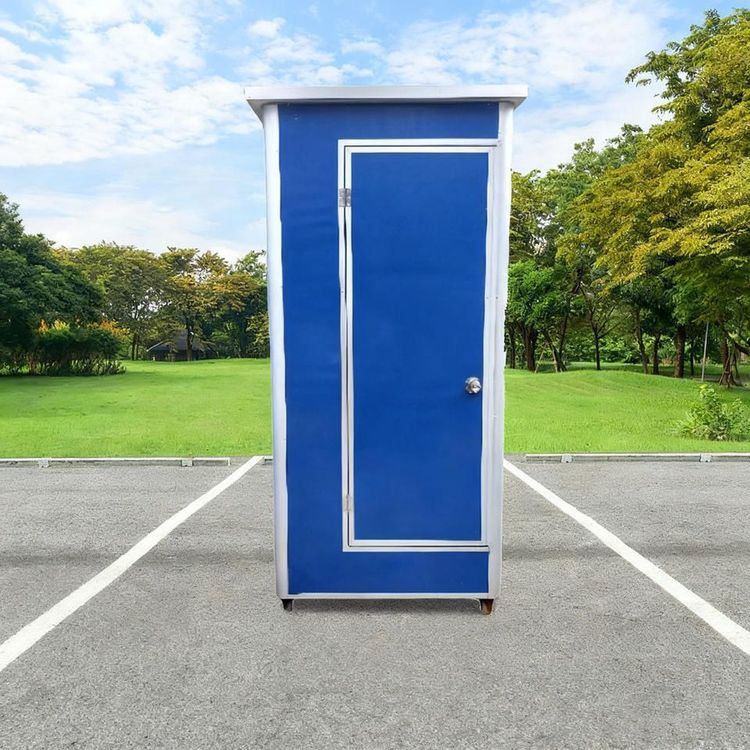
Mobile Toilets in Conference Rooms
Mobile toilets can be temporarily installed in conference rooms as a flexible sanitation solution, particularly suitable for large events, construction renovations, or scenarios where existing facilities are insufficient. The modular design of mobile toilets allows for rapid deployment to meet temporary needs, and the choice of type should be based on the specific conditions and usage requirements of the conference room.

The core characteristic of mobile toilets is their adaptability to temporary, mobile, or locations lacking fixed sewage disposal facilities. If a conference room experiences a surge in personnel due to large conferences, exhibitions, or temporary events, and the existing fixed toilets cannot meet the demand, mobile toilets can quickly expand capacity through modular combinations (e.g., multiple toilet modules + sinks). For conference rooms undergoing construction renovations, mobile toilets can prevent interruptions to sanitation facilities caused by pipeline maintenance, ensuring basic usage needs are met.
According to conference room scenarios, mobile toilets can be classified into three categories:
- Waterless Flush Type: Utilizes biodegradable bacteria or physical adsorption materials to treat waste, requiring no water connection. It is suitable for water-scarce regions or meetings with high environmental protection requirements (e.g., green forums, outdoor seminars). Its sealed design effectively controls odors, but the degradation materials need to be replaced regularly.
- Water Flush Type: Achieves flushing through water tank storage or connection to municipal water supplies, providing a user experience close to that of traditional toilets. It is suitable for scenarios with high hygiene requirements (e.g., business summits, high-end forums). Note that it relies on a water source, and water pipe connections need to be planned in advance.
- Eco-Friendly Type: Integrates solar panels for power supply, rainwater collection systems, or microbial decomposition technology to achieve resource recycling. It is suitable for long-term deployments (e.g., multi-day academic conferences) or high-end meetings (e.g., international summits), but the cost is relatively high.
In terms of spatial adaptation, if the conference room has limited space, single-unit mobile toilets (independent compartments occupying approximately 1-2 square meters) or dual-toilet modular combinations can be selected. For multifunctional configurations, customized combination units including accessible toilets and母婴室 (nursing rooms) can be designed, with adjustments to door and window positions to match the indoor layout. In terms of materials, steel frames and anti-slip floors ensure safety, while aluminum alloy doors and windows enhance durability.
Usage Precautions: Before installation, ensure the site is level. Water flush types require reserved water pipe connections, and eco-friendly types require an assessment of lighting conditions. After use, daily cleaning of toilet fixtures, replacement of degradation materials (for waterless flush types), or emptying of sewage tanks (for water flush types) is necessary to prevent blockages or odor diffusion.