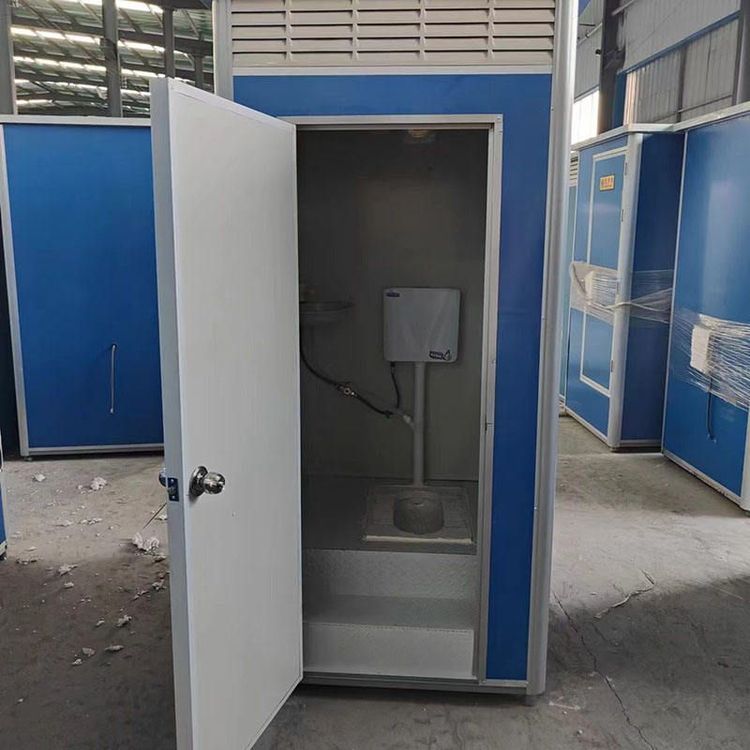
Mobile Toilet Without Bathroom
If a residence lacks a bathroom but has ample space, mobile toilets can be implemented using toilet movers or portable commodes, but attention must be paid to legality and usage scenario restrictions.
I. Alternatives to Mobile Toilets
Toilet Movers
A toilet mover is a portable, simple toilet device typically consisting of a waste storage container, a toilet seat, and a supporting structure. Its core advantage lies in flexibility: users can place it anywhere within the residence as needed (such as in a bedroom corner or on a balcony) and move it outdoors for cleaning after use. This type of equipment is suitable for scenarios with large spaces but no fixed bathrooms, such as during the transition period before renovating an old house or in temporary living spaces. However, it should be noted that the waste storage container has a limited capacity and requires regular cleaning to prevent odor spread.Portable Commodes
Portable commodes feature an installation-free design, requiring no drilling or water pipe connections, and can be used immediately upon placement. They are applicable in a wide range of scenarios, including during马桶 (toilet) maintenance periods, in old houses without independent bathrooms, in poorly-conditioned rental properties, and in temporary dormitories on construction sites. Some high-end models are equipped with sealed lids and odor-proof designs to reduce odor issues. Additionally, their lightweight nature (typically weighing between 5-10 kilograms) makes them easy to carry, suitable for users who need to frequently move the usage location.
II. Legality and Usage Restrictions
Legality of Installation in Rental Properties
Caution should be exercised when installing mobile toilets in rental properties. According to the Measures for the Administration of Commercial Housing Leasing and relevant regulations, unauthorized alteration of the housing structure (such as adding a toilet) without the consent of the lessor may violate the lease contract or building safety regulations. If the lessor explicitly prohibits such alterations, tenants may face liability for breach of contract or administrative penalties. It is recommended to consult with the lessor and obtain written consent before use.Reasonableness of Usage Scenarios
The applicability of mobile toilets is restricted by space, ventilation, and cleaning conditions. For example, long-term use in a confined, small room may lead to air pollution; if not cleaned promptly, bacteria may breed. Therefore, it is essential to ensure good ventilation in the usage area and regularly disinfect the waste storage container. Additionally, some cities have strict regulations on the discharge of temporary toilets, and local environmental protection requirements must be followed.
III. Selection Recommendations
For long-term use, prioritize portable commodes with sealed designs and pair them with deodorizers; for short-term transitions, toilet movers are more cost-effective but require frequent cleaning. Regardless of the chosen option, it is necessary to evaluate space, ventilation, and legal risks in advance to avoid subsequent disputes.