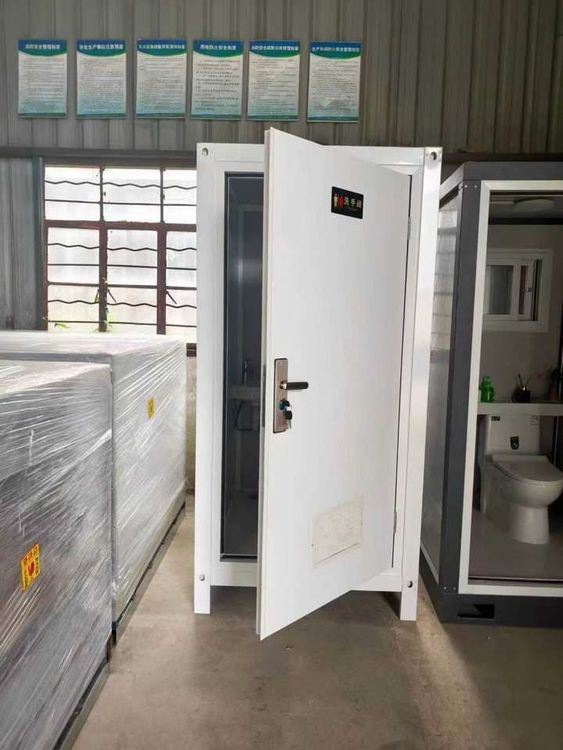
Mobile Toilet Waterproof Glue
The waterproof glue for mobile toilets should be selected according to specific scenario requirements. Some general-purpose waterproof coatings or customized solutions can meet their waterproofing needs.

Due to the special usage scenarios of mobile toilets, there are high requirements for the adhesive properties, weather resistance, environmental friendliness, and construction convenience of the waterproof glue. Although there are relatively few dedicated waterproof glue products directly targeted at 'mobile toilets', the following adaptive solutions can be referred to:
I. Adaptive Scenarios for General-Purpose Waterproof Coatings
Some non-demolition waterproof coatings (such as polyurethane-based and acrylic-based ones) can form an elastic waterproof membrane through brushing, which is suitable for anti-leakage treatment of gaps on the floors or walls of mobile toilets. These products usually have the following characteristics:
- Convenient Construction: There is no need to demolish the original structure. They can be directly brushed on the surface, which is suitable for quick repair scenarios of mobile toilets.
- Strong Weather Resistance: They can resist ultraviolet rays and temperature changes, extending the service life of mobile toilets.
- Environmental Friendliness: Some products have passed environmental certifications, reducing odors and the release of harmful substances.
For example, a certain brand of non-demolition waterproof coating is labeled as suitable for humid environments such as bathrooms and balconies. Its waterproof layer can withstand long-term water immersion and can theoretically meet the waterproofing needs of mobile toilets. However, it should be noted that if mobile toilets are frequently moved or come into contact with sharp objects, products with stronger puncture resistance should be selected.
II. Customized Waterproof Glue Services
Some manufacturers offer services to customize waterproof glue according to usage scenarios. They can adjust the formula based on the material of the mobile toilet (such as metal, plastic, fiberglass, etc.), usage frequency, and environmental conditions (such as high temperature, low temperature, salt spray, etc.). For example:
- Metal-structured Mobile Toilets: Waterproof glue with corrosion resistance and anti-aging properties should be selected to prevent the glue layer from cracking due to long-term exposure.
- Mobile Toilets in Cold Regions: Products with good low-temperature toughness should be selected to avoid low-temperature embrittlement.
- Mobile Toilets in Coastal Areas: Waterproof glue with salt spray resistance and ultraviolet resistance should be selected to prevent salt erosion.
III. Selection Precautions
- Adhesive Property Test: Give priority to products with good compatibility with the material of the mobile toilet. The adhesive effect can be confirmed through a small-area trial.
- Water Resistance Verification: Check the water resistance parameters of the product (such as water absorption rate and water pressure resistance) to ensure no leakage during long-term use.
- Environmental Certification: Select products that have passed national environmental standards (such as GB 18583 - 2008) to reduce harm to users and the environment.
- Construction Guidance: Consult the manufacturer or supplier to obtain a construction plan specific to mobile toilets (such as brushing thickness and drying time).
If existing products cannot fully meet the needs, it is recommended to contact professional waterproof glue manufacturers, provide specific parameters of the mobile toilet (such as size, material, usage environment, etc.), and customize a more adaptive solution.