
Mobile Toilet Production
Mobile toilets are facilities characterized by their mobility, modularity, and ease of transportation, designed to meet sanitation needs in temporary or mobile settings. Here is a detailed introduction from multiple aspects:
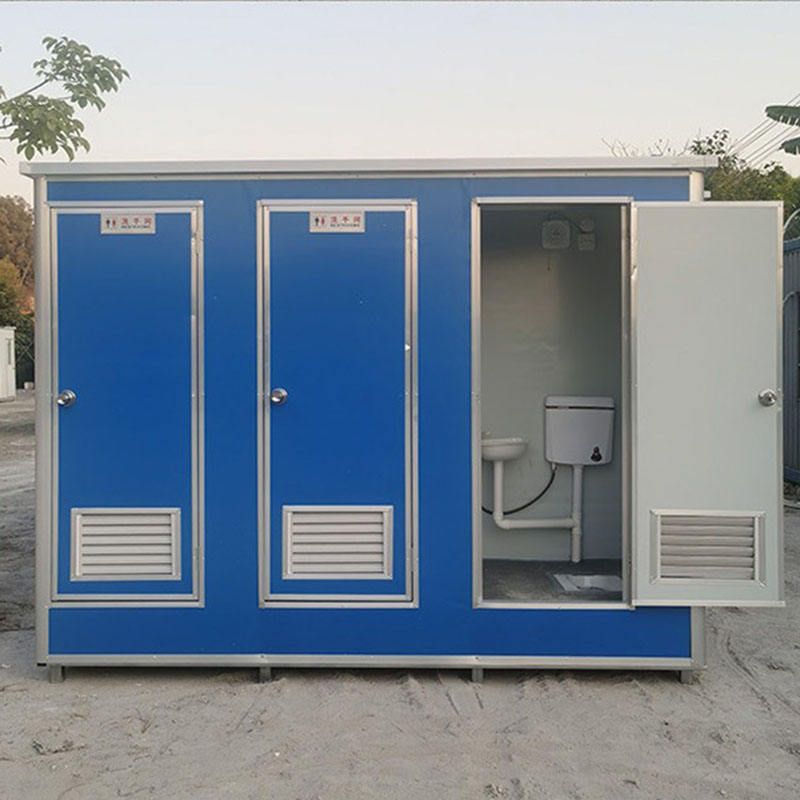
Materials and Structure: Early mobile toilets often used materials like wood, with simple construction and functions, easily absorbing odors. With technological advancements, materials such as fiberglass and polyethylene have gradually been adopted. They generally consist of a fecal sewage storage tank (or disposal unit), flooring, sanitary fixtures, walls, washing facilities, water tanks, roofs, and mobile units.
Structural Form Classification: Mobile toilets are divided into single-unit and composite-structure types. Single-unit structures are relatively simple and independent; composite structures may be composed of multiple parts, offering more complex and diverse functions.
Mobility Classification: There are lifting and handling-type mobile toilets, which rely on lifting equipment or manual handling for movement; and powered and towed-type mobile toilets, which can be moved using powered devices or vehicles, offering higher flexibility.
Sewage Treatment Classification: Water-flush and non-water-flush suction-type mobile toilets—the former uses water for flushing, while the latter treats feces through suction; recirculating water-flush mobile toilets, which recycle flushing water to conserve water resources; and dry-packing mobile toilets, which package feces for disposal without water.
Design Principles: Adhere to principles of mobility, convenience, economic durability; environmental protection, ecological friendliness; and enhancing efficiency and promoting humanitarianism. The overall structure should be lightweight, using durable yet lightweight materials while remaining sturdy; control the height and width of the toilet; and ensure the mobile unit is complete and reasonable.
Production Examples: A young man used a water storage tank to create a mobile toilet, splitting the tank, fixing universal wheels to wooden boards, increasing height with wooden strips and screws, installing a door frame and walls on the side, using the upper part as a roof, and also installing drainage pipes, a bath heater, a toilet, and a sink. Another young man, named Xiaoshuai, used a water storage tank to create a solar-powered mobile toilet, making full use of solar energy resources.


