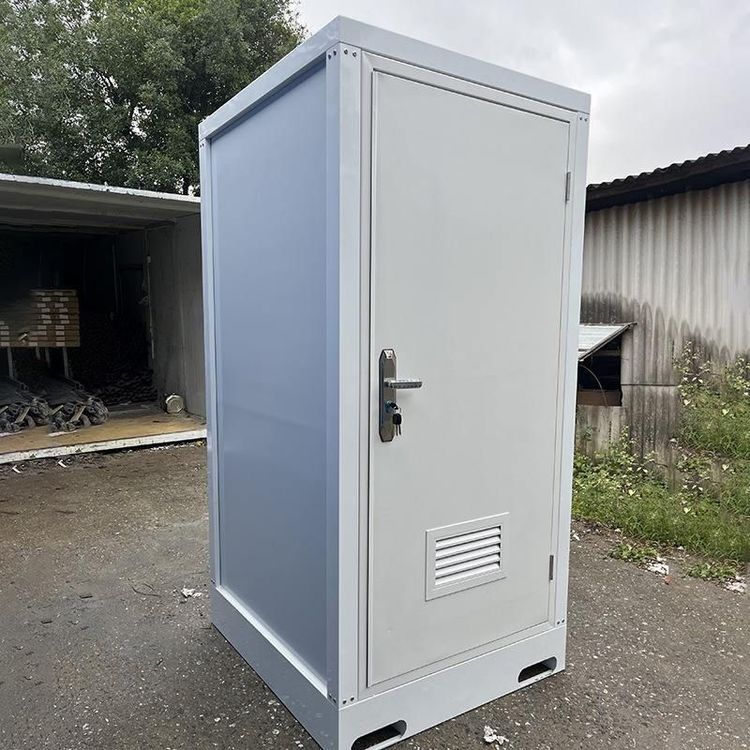
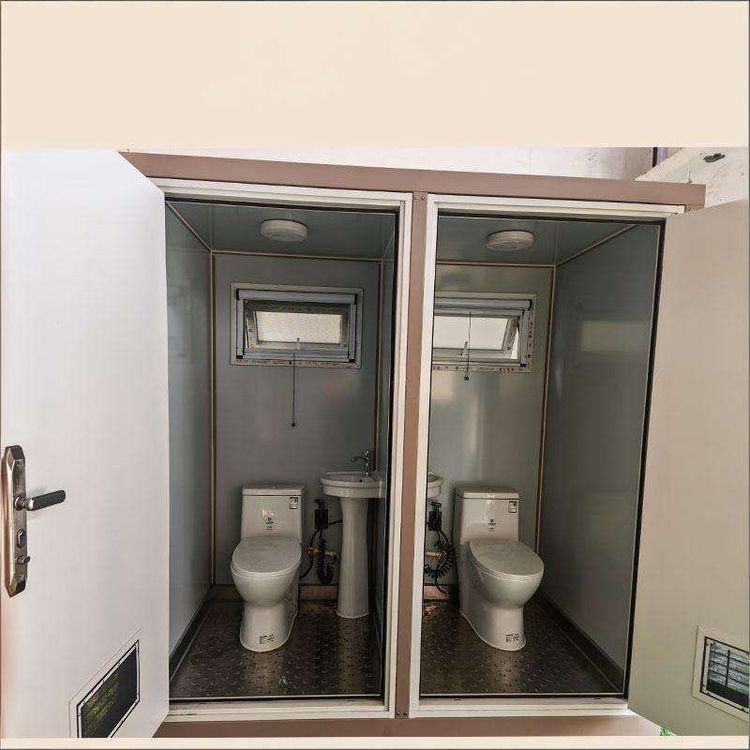
Mobile Toilet Water and Electricity Support
The water and electricity support for mobile toilets depends on their type and configuration, mainly falling into three categories: those that do not require external connections, those that do, and those that partially rely on external water and electricity.
Mobile toilets without external water and electricity connections: Ecological mobile toilets using microbial degradation technology are representative of this type. These toilets decompose waste through an built-in microbial treatment system, eliminating the need for external water pipes for drainage or electrical wires for power. Their advantage lies in their strong environmental adaptability, making them particularly suitable for locations where water and electricity access is inconvenient, such as remote areas in parks and scenic spots. They effectively address the challenge of setting up traditional toilets in these areas due to limited water and electricity conditions.
Mobile toilets requiring external water and electricity connections: Water-flush mobile toilets are a typical example. They require an external water pipe to provide flushing water, ensuring normal flushing functions and maintaining toilet hygiene. Simultaneously, they need an external electrical wire to power lighting and ventilation equipment, ensuring normal operation at night or when ventilation is needed. This type of mobile toilet is suitable for construction sites, large event venues, and other densely populated areas with high water and electricity demands, meeting the usage needs of a large number of people and providing a relatively comfortable and hygienic restroom environment.
Mobile toilets partially relying on external water and electricity: These mobile toilets are equipped with solar power systems and water storage tanks. The solar power system can meet some of the electricity needs, such as powering lighting and ventilation equipment, while the water storage tank can store a certain amount of water for daily toilet use. However, under special weather conditions, such as continuous rainy days, solar power may not meet all electricity needs; during peak water usage times, the water in the storage tank may also be insufficient. Therefore, in such cases, external water and electricity connections are still required as supplements to ensure the normal operation of the mobile toilets. When renting mobile toilets for construction sites in Nanchang, temporary power supply options include connecting to the 220V mains or using a solar power system (suitable for remote construction sites); for drainage, a clog-resistant biodegradable system is recommended to reduce pipe cleaning frequency, and for projects with conditions, a water storage tank can be configured to cope with temporary water outages.