
Mobile Toilet with Water and Electricity Available
Mobile toilets can generally be used after connecting to water and electricity, but not all types require simultaneous access to both, depending on the toilet type and functional requirements. The following explains the water and electricity requirements of different types of mobile toilets:
1. Typical mobile toilets that can be used after connecting to water and electricity
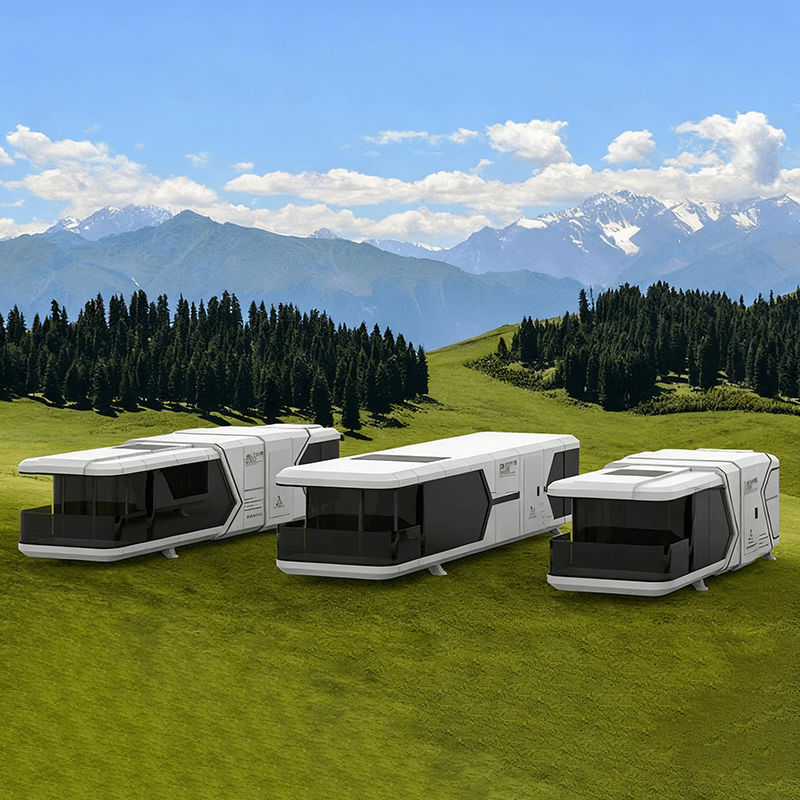
Some simple mobile toilets or single-unit mobile restrooms are designed as a "plug-and-play" model, requiring only access to water and power to be put into use. For example, a single-unit mobile restroom measuring 1.5×1.5 meters can be equipped with a squat toilet, a sit toilet, or a shower room inside, with waterproof and anti-slip floor coverings, and facilities such as a sink, exhaust fan, and lighting. These toilets rely on external water and power supplies to maintain basic functions: water for flushing or hand washing, and power for lighting, ventilation, and other equipment. Their advantage lies in easy installation, suitable for temporary events, construction sites, and other scenarios, but it is necessary to ensure that the site has access to water and electricity.
2. Water-flush mobile public toilets that must be connected to water and electricity
Water-flush mobile public toilets are mobile versions of traditional public toilets, operating on the same principle as fixed water-flush toilets. They require a water pipe connection to complete the flushing process and rely on the power grid to drive systems such as water pumps, lighting, and ventilation. Without access to water and electricity, these toilets will not function properly, so they are usually deployed in areas with complete municipal water and electricity infrastructure, such as city streets and parks.
3. Waterless mobile public toilets that do not require water connection
Waterless mobile public toilets use biodegradation, foam sealing, or packaging technology to treat waste, eliminating the need for water flushing throughout the process and thus not requiring access to a water source. Their power requirements are also low, with some models only needing a small amount of power for lighting or ventilation, or even being self-sufficient through solar panels. These toilets are suitable for water-scarce areas, outdoor expeditions, or temporary emergency scenarios, but require regular cleaning of the waste tank or replacement of degradation materials.
4. Solar-powered mobile public toilets
Some high-end mobile public toilets integrate solar power systems, converting light energy into electrical energy through photovoltaic panels to power lighting, ventilation, and other equipment, thereby eliminating reliance on the power grid. These toilets still require access to a water source (if they are water-flush types), but their power supply can be self-sufficient, making them suitable for remote areas without grid coverage or scenarios with high environmental protection requirements.



