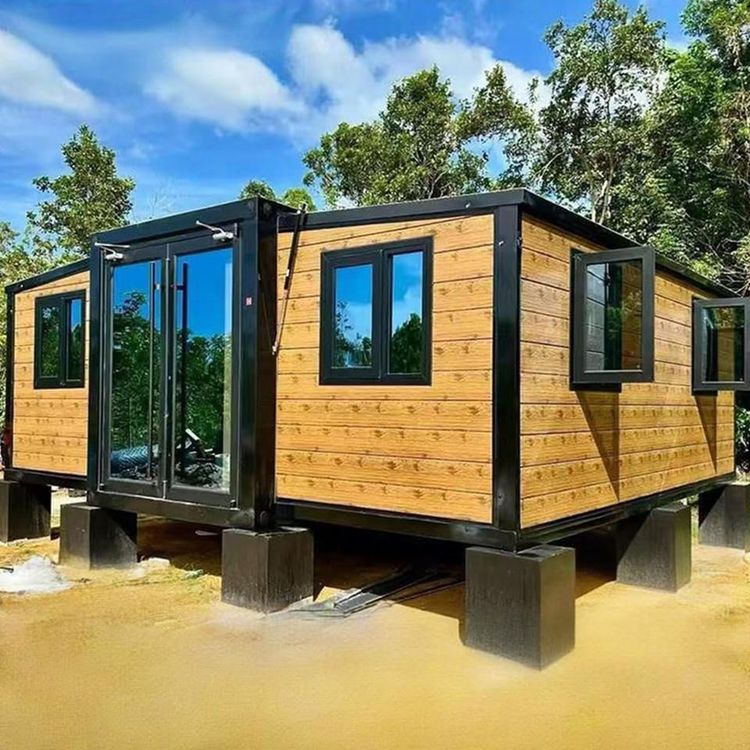
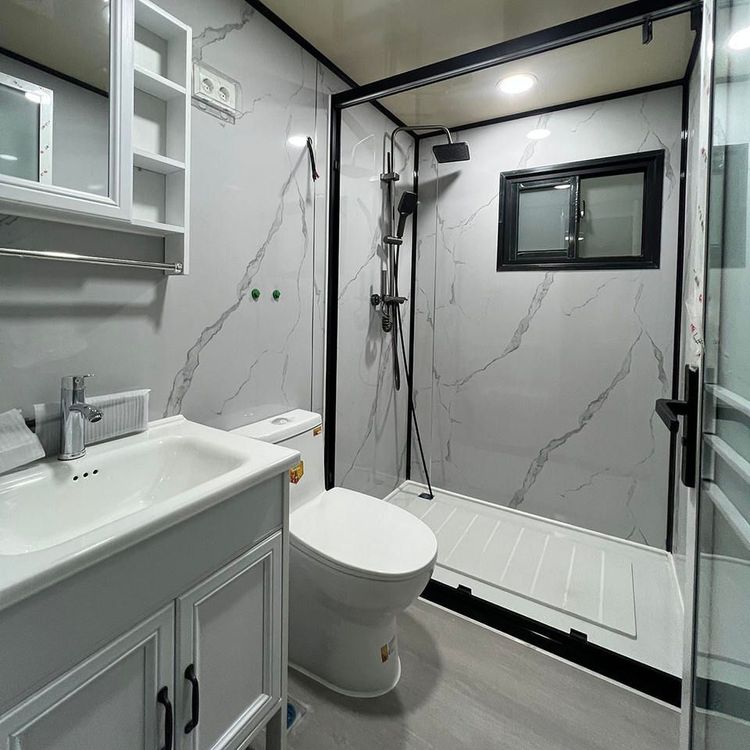
Double-Occupancy Small Mobile Toilet
A double-occupancy small mobile toilet is a facility that can be moved as a whole, providing toilet services to the public and customers, suitable for locations or venues with fixed or temporary needs.

I. Basic Characteristics Double-occupancy small mobile toilets typically use lightweight materials such as metal carved panels or stainless aluminum steel, featuring a compact structure and light weight, which facilitates overall movement and installation. Their design is primarily based on a single-unit structure, with some products supporting customization to meet different scenario requirements. For example, the model produced by Henan Qiantong Environmental Protection Equipment Co., Ltd. has an applicable temperature range of -25°C to 40°C, a voltage of 220V, and a product number QT-0013. It can operate independently of a power source, has low energy consumption and operating costs, effectively saving social resources.
II. Classification Methods
- By structural form: They are divided into single-unit structure mobile toilets and composite-structure mobile toilets. Single-unit structures have strong independence and are suitable for scattered layouts; composite structures are composed of multiple modules and can expand capacity.
- By movement method: They include lifting and handling types (relying on manual or mechanical handling) and powered towing types (equipped with power devices for towing movement), adapting to different terrains and transportation conditions.
- By sewage treatment method:
- Water-flush and non-water-flush suction types: Water-flush types require a water connection and have high cleanliness; non-water-flush types use vacuum suction to treat excreta, suitable for water-scarce environments.
- Recirculating water-flush types: They use biodegradation or chemical treatment technologies to achieve water resource recycling and reduce emissions.
- Dry-packing types: They use degradable bags to collect excreta, requiring no water source and being easy to operate, suitable for temporary events or remote areas.
III. Application Scenarios Double-occupancy small mobile toilets are widely used in areas with environmental or conditional constraints, such as large conference venues, squares, tourist attractions, and construction sites. Their flexibility and convenience can quickly meet temporary toilet needs, improve work efficiency, and reduce dependence on fixed infrastructure. For example, on construction sites, mobile toilets can be adjusted according to construction progress to solve workers' toilet difficulties; in tourist attractions, they can alleviate peak-time visitor queuing pressure and enhance service experiences.
IV. Advantage Summary This type of toilet achieves resource conservation and efficient utilization through modular design and low-energy-consumption technologies. Its mobility enables it to quickly respond to temporary needs, while its diverse sewage treatment methods adapt to different environmental conditions, combining environmental protection with practicality.