Lifespan of Mobile Toilet Walls
The lifespan of mobile toilet walls is influenced by material, craftsmanship, usage environment, and maintenance level, with significant differences in lifespan among different materials. The lifespan range for conventional materials is 3–50 years, and high-quality materials combined with professional maintenance can significantly extend the service life.

Among conventional materials, plastic materials (such as polyethylene) offer an overall lifespan of 5–8 years for mobile toilets. Their advantages include low cost and light weight, but they have weak weather resistance and are prone to aging and cracking when exposed to ultraviolet light, temperature variations, or chemical corrosion for extended periods, leading to a decline in wall structural stability.
Fiberglass-reinforced plastic (FRP) materials exhibit significant lifespan variations: low-end, simple models may develop cracks or leakage issues after about 3 years of outdoor sun exposure, primarily due to resin matrix aging or failure at the interface between the fiber layer and the matrix; whereas higher-quality FRP materials, through optimized resin formulations, increased fiber content, or the use of weather-resistant coatings, can achieve an overall lifespan of 8–12 years, suitable for scenarios with mild climates and timely maintenance.
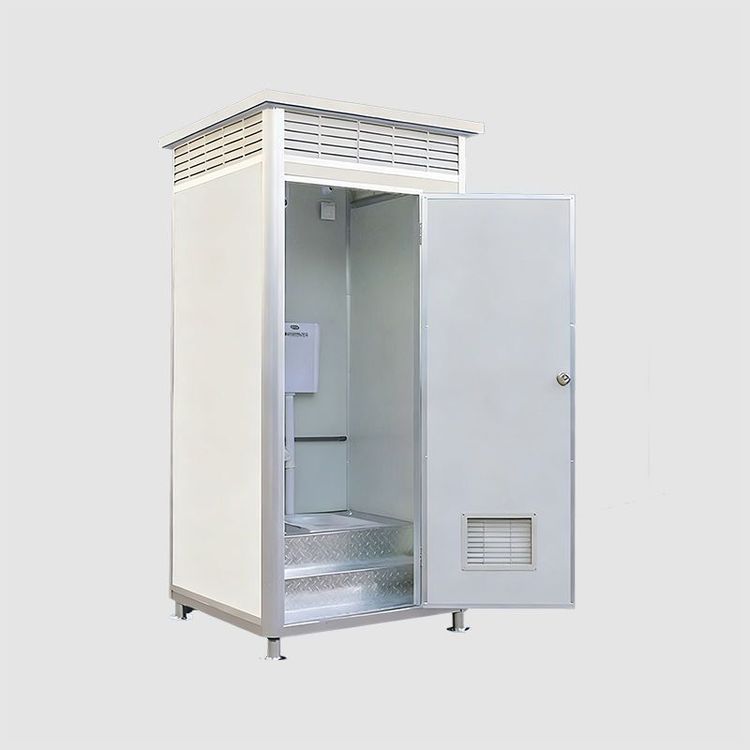
Metal materials (stainless steel/aluminum alloy) generally have a longer lifespan, typically exceeding 10 years. Among them, high-quality steel frame structures (such as national standard hot-dip galvanized steel frames) paired with anti-corrosion wall panels can achieve a lifespan of 15–20 years or even longer with proper maintenance. The hot-dip galvanizing process effectively isolates corrosive media by forming a zinc-iron alloy layer, while aluminum alloys, due to their naturally corrosion-resistant surface oxide film, offer more stable lifespans.
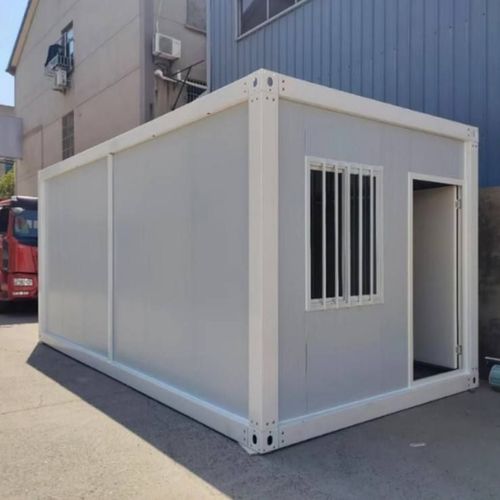
If the wall selects composite materials such as polyurethane sandwich color steel plates or metal embossed panels (with a thickness of ≥1mm), their fire resistance, corrosion resistance, and sound insulation properties are significantly enhanced. Combined with professional maintenance such as regular inspection of sealant strips and cleaning of surface stains, the lifespan can be further extended. These materials disperse stress through a multi-layer structure, reducing direct damage to the wall from environmental factors.
Light steel composite walls, which combine galvanized light steel studs with high-density panels (such as calcium silicate boards) and are maintained professionally (e.g., rust prevention treatment, structural reinforcement), can have a maximum lifespan of up to 50 years. Their core advantages lie in the high strength of the stud system and the durability of the panels, but strict avoidance of water accumulation inside the wall or prolonged exposure to humid environments is necessary to prevent stud corrosion or panel deformation.