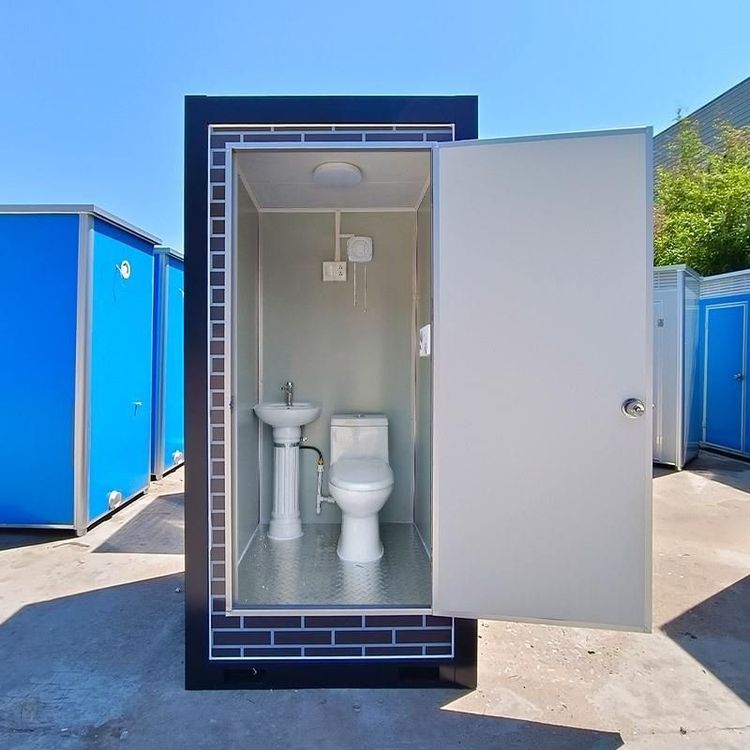
What is the Principle of Mobile Toilet Vehicles
The principle of mobile toilet vehicles involves an integrated design of 'chassis + functional cabin', modularizing toilet functions and mounting them on vehicles. They rely on systems for collection and storage, water treatment, power, and sewage disposal to function, featuring high mobility, environmental friendliness, and a high degree of customization.

Collection and Storage System
Mobile toilet vehicles use vacuum suction or recirculating water flushing technology to collect waste. Vacuum suction rapidly draws waste through negative pressure pipes into an onboard sewage treatment tank, preventing external pollution. Recirculating water flushing uses recycled water to flush the toilet, also collecting waste in the treatment tank. Some models use biodegradable plastic bags to collect waste, automatically replacing them after each use to further reduce pollution risks.
Water Treatment System
High-end mobile toilet vehicles are equipped with water recycling systems that achieve efficient water use through filtration and disinfection. For example, intermittent aerobic and anaerobic treatment units accelerate the fermentation and decomposition of fecal sewage, with the treated water recycled for toilet flushing, significantly conserving water resources. This design allows mobile toilet vehicles to operate normally in water-scarce environments.
Power System
Mobile toilet vehicles utilize the vehicle's own electricity or onboard batteries to power equipment such as vacuum pumps, agitators, and automatic flushing devices. Some models also integrate solar panels to provide independent power for lighting, ventilation, and other systems, further reducing energy consumption and enhancing environmental friendliness.
Sewage Disposal Technology
Vacuum sewage disposal technology reduces odor diffusion through negative pressure suction, ensuring a comfortable usage environment. Meanwhile, chemical agents or biodegradation technologies convert waste into harmless liquids, reducing pollution to soil and water sources. These technologies make mobile toilet vehicles perform excellently in terms of environmental protection.
Modular Design
The sanitary units of mobile toilet vehicles adopt a modular design, allowing for quick disassembly and replacement, facilitating maintenance and upgrades. According to the needs of different scenarios, the number of toilet stalls, flushing methods (such as foam-type, recirculating water-type), or the integration of additional functions like air conditioning and handwashing stations can be flexibly adjusted to enhance the user experience and applicability.
These principles work together to endow mobile toilet vehicles with high mobility, environmental friendliness, and a high degree of customization, making them widely applicable in construction sites, large-scale events, post-disaster relief, and other scenarios.