Mobile Toilet Trend
The trend of mobile toilets is reflected in multiple aspects such as design innovation, urban event applications, and the promotion of eco-friendly technologies.

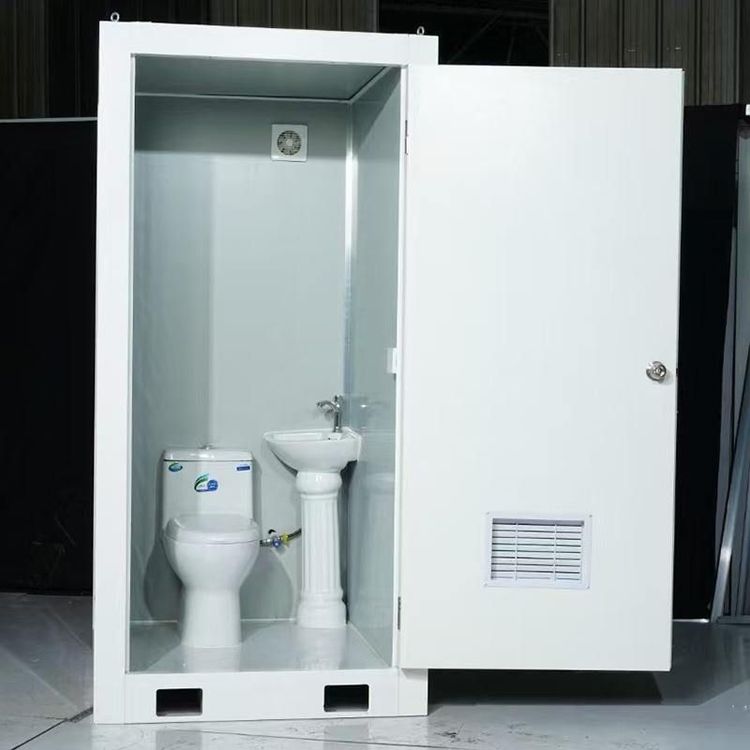
Firstly, design focuses on mosquito prevention, ventilation, and freshness, becoming a new trend in home renovation and transformation. Traditional toilets often suffer from poor ventilation and mosquito infestations, affecting the user experience. Modern mobile toilets, however, address these issues through optimized structural designs, incorporating mosquito nets, efficient ventilation systems, and air fresheners. For example, some mobile toilets are equipped with intelligent air exchange systems that monitor air quality in real-time and automatically adjust ventilation rates, while using natural deodorizers to reduce chemical pollution. This not only enhances user comfort but also aligns with healthy and eco-friendly home concepts. Such design innovations have transformed mobile toilets from “temporary facilities” into “part of home aesthetics,” particularly favored in settings like villas and courtyards.
Secondly, modularity and mobility drive a new trend in urban events and environmental protection. In large urban events (such as music festivals and sports competitions), traditional fixed toilets often lead to long queues due to inadequate planning or result in resource waste from overconstruction. Mobile toilet rental services, through modular designs, can flexibly adjust the quantity and layout based on event scale, duration, and site conditions, achieving “on-demand allocation.” For instance, a music festival rented 50 mobile toilets, completing deployment in just 2 hours and quickly removing them after the event, avoiding ecological damage from land hardening and reducing long-term maintenance costs. This “dynamic resource management” model has become a benchmark for refined urban governance.
Finally, biodegradable technology leads the popularization of eco-friendly trends. Traditional mobile toilets rely on septic tanks or transportation for waste disposal, often causing secondary pollution. In contrast, biodegradable mobile toilets use microbial decomposition technology to convert waste into harmless organic fertilizer, achieving “zero emissions.” For example, a biodegradable toilet used in a scenic area can process waste from 200 people per day without external water or electricity connections, requiring only periodic addition of microbial strains for operation. This technology not only reduces sewage discharge but also provides organic fertilizer for agriculture, forming an “ecological loop” and promoting the “toilet revolution” toward green and low-carbon development.
In summary, through triple innovations in design, functionality, and technology, mobile toilets are transforming from “emergency tools” into “carriers of lifestyle trends,” enhancing convenience while offering new ideas for sustainable development.