
Overview of Mobile Toilet Styles
Mobile toilets come in a variety of styles, including economical and practical models, classic prefabricated models, and various styles classified by structure, mobility, and sewage treatment methods.
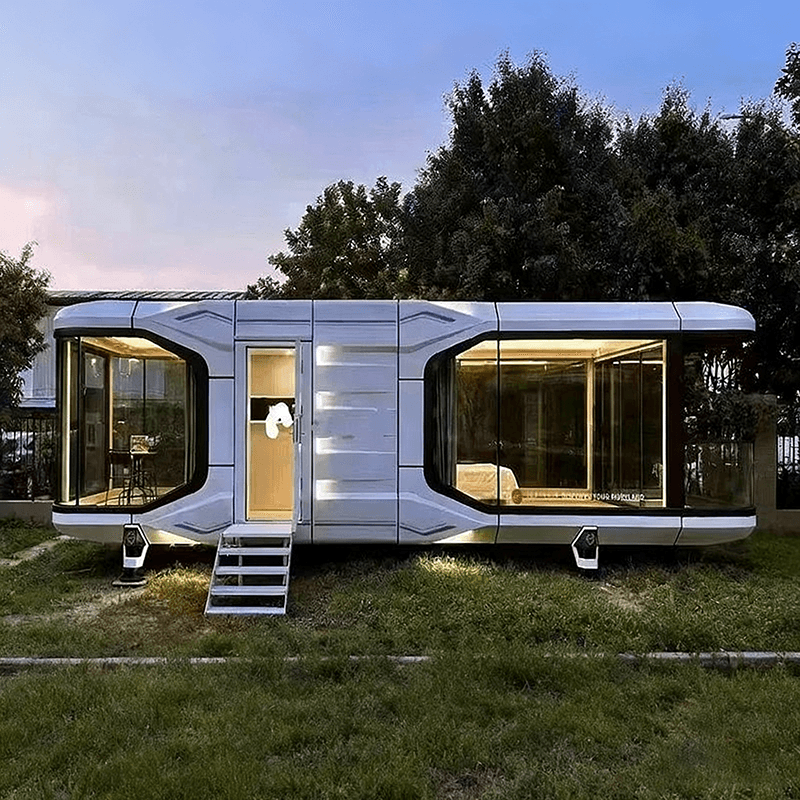
Economical and practical mobile toilets typically feature a gray and white metal carved panel exterior with a practical design. They generally have multiple squatting positions, such as eight, with separate entrance doors for men and women, facilitating use by different genders. The front wall is designed with sliding windows and stone wall lamps, ensuring ventilation and lighting while adding aesthetic appeal. The toilet compartments are designed with independent squatting positions, enhancing privacy and comfort during use.
Classic prefabricated toilets are more suitable for outdoor settings such as campsites, parks, and scenic areas. They typically measure 8 meters in length and 3 meters in width, with a front wall featuring a color-block design for a stylish and modern appearance. The front is equipped with translucent windows to ensure ample interior lighting. The central area is designated as a public handwashing area, facilitating hand cleaning for users and improving hygiene standards.
Classified by structural form, mobile toilets can be divided into single-structure mobile toilets and composite-structure mobile toilets. Single-structure mobile toilets have a simple structure, making them easy to install and dismantle, suitable for temporary use or locations with limited space. Composite-structure mobile toilets combine multiple materials and technologies, offering higher stability and durability, suitable for long-term use or locations with high toilet performance requirements.
Classified by mobility, mobile toilets can be divided into hoisting and handling mobile toilets and powered and towed mobile toilets. Hoisting and handling mobile toilets are primarily transported and installed using cranes or manual labor, suitable for locations requiring frequent relocation or with fixed positions. Powered and towed mobile toilets are equipped with power systems or towing devices, allowing them to move independently or be towed by vehicles, providing greater flexibility and convenience.
Classified by sewage treatment method, mobile toilets can be divided into water-flush and waterless suction mobile toilets, circulating water-flush mobile toilets, and dry-packing mobile toilets. Water-flush and waterless suction mobile toilets treat feces through water flushing or suction, ensuring cleanliness and hygiene but requiring a certain amount of water resources. Circulating water-flush mobile toilets treat feces through a circulating water system, conserving water resources and being environmentally friendly. Dry-packing mobile toilets use dry-packing technology to treat feces, eliminating the need for water resources and facilitating easy cleaning and transportation.



