
Mobile Toilet and Smart Trash Room
Mobile toilets and smart trash rooms are two independent types of public environmental protection facilities, but some manufacturers can provide customized services or integrated solutions simultaneously. The following provides an explanation from three aspects: product types, functional characteristics, and service models.
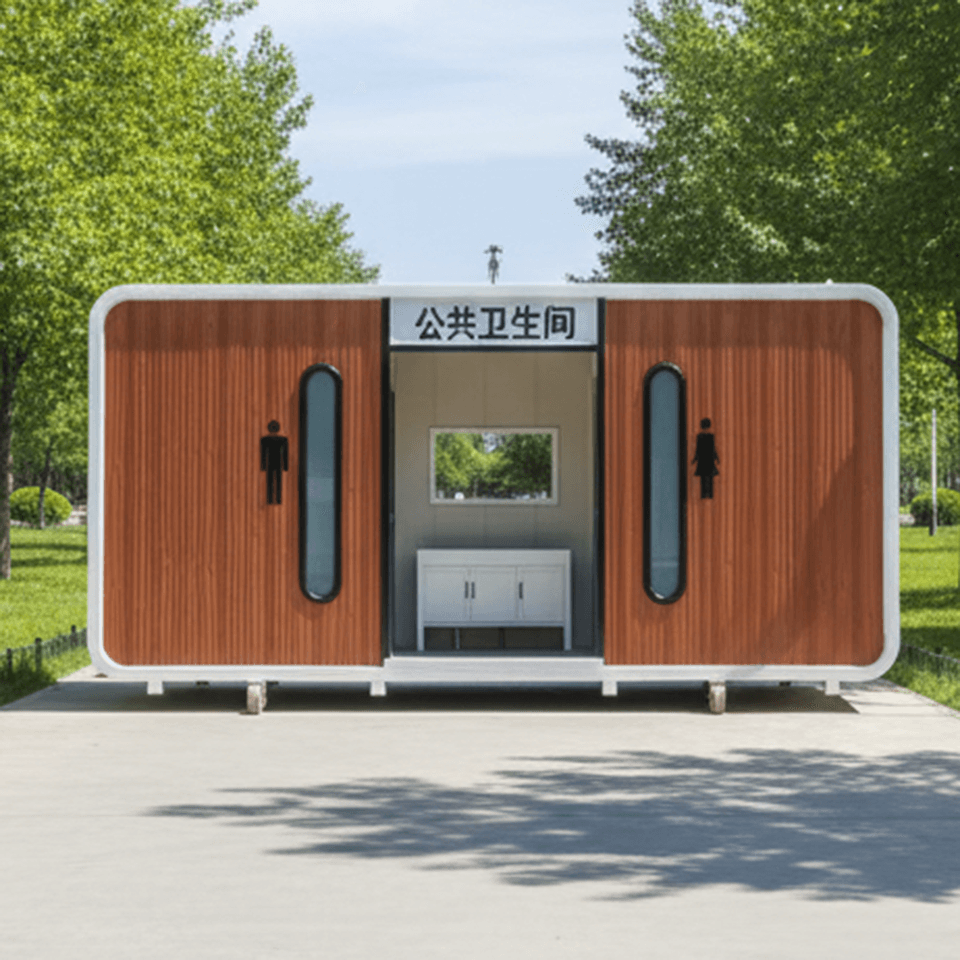
I. Product Types and Functional Characteristics Mobile toilets primarily address the need for restroom facilities in temporary or mobile scenarios. Common types include high-end mobile toilet shower rooms and eco-friendly public toilets in scenic areas. Their functional designs emphasize environmental protection and intelligence. For example, the smart mobile toilets from Pengcheng Zhixun Workshop adopt a U-shaped apple pod structure, equipped with a feces collection box and a fluorocarbon-painted aluminum exterior wall (highly corrosion-resistant), and integrate sensor-activated handwashing and smart lighting systems to enhance user convenience. Wuhan Longao Environmental Protection Technology offers water treatment solutions such as direct discharge, foam sealing, or microbial degradation to meet sewage treatment needs under different environmental conditions.
Smart trash rooms focus on waste classification and resource utilization. Typical products include sanitation smart waste classification rooms and outdoor smart waste classification rooms. Their functions emphasize scenario adaptability. For example, Wuhan Longao Environmental Protection Technology designs waste classification houses according to the needs of communities, business districts, and scenic areas, which may include modules such as overflow alarms, automatic compaction, and deodorization and disinfection. The products from Jiangsu Zhongxiangyun Environmental Technology guide users in correct disposal through intelligent recognition technologies (such as QR code scanning and AI classification) to improve classification efficiency.
II. Service Models and Manufacturer Resources Some manufacturers possess cross-category R&D capabilities and can provide comprehensive services. For example, Jiangsu Zhongxiangyun Environmental Technology covers both the R&D and production of mobile toilets and smart trash rooms, with price ranges of 76.00-130.00 yuan (mobile toilets) and 85.50-123.50 yuan (smart trash rooms), suitable for small and medium-sized projects with limited budgets. Wuhan Longao Environmental Protection Technology specializes in customized services, integrating water treatment solutions (mobile toilets) with scenario-based waste classification house designs (smart trash rooms) according to customer needs, suitable for projects with high requirements for functional integration. Additionally, enterprises such as Dezhou Dunyuan Environmental Protection Technology and Jiangsu Zhonggong Intelligent Equipment Research Institute are also involved in the field of smart waste classification rooms, further enriching market choices.
III. Application Scenarios and Selection Recommendations Mobile toilets are suitable for scenarios such as temporary events, scenic areas, and remote regions. When selecting, it is essential to consider sewage treatment methods (e.g., microbial degradation is suitable for environments without sewers), usage frequency, and mobility convenience. Smart trash rooms are more suitable for densely populated areas, where selection should focus on classification accuracy, capacity matching, and maintenance costs. If a project requires the simultaneous deployment of both types of facilities, it is advisable to prioritize manufacturers with integrated solutions (such as Jiangsu Zhongxiangyun and Wuhan Longao) to reduce communication costs and ensure a unified design style.



