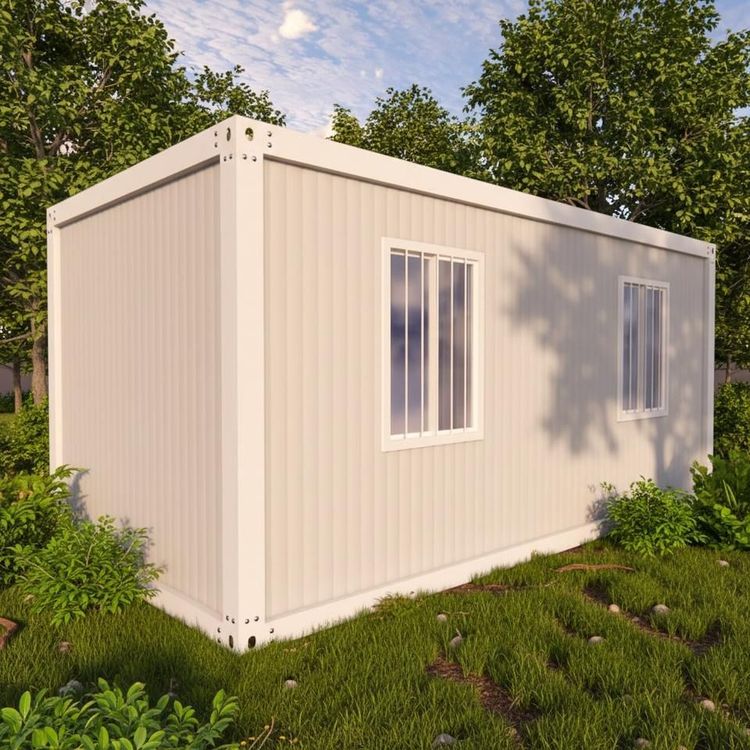
Small Mobile Toilet
The small version of mobile toilets features cost-effectiveness, comprehensive internal facilities, robust durability, and strong mobility.

Cost-Effectiveness and Internal Facilities
The primary advantage of small mobile toilets lies in their cost-effectiveness, with designs that balance functionality and cost control. For example, the gray-series Apple Cabin mobile toilets utilize sheet metal spraying processes and are paired with thickened and reinforced multi-silver square steel welded frames, reducing material costs while ensuring structural strength. In terms of internal configurations, some models integrate intelligent waste collection systems, handwashing stations, water tanks, and other facilities. These can be directly put into use after factory prefabrication, reducing the complexity and time costs of on-site construction. Additionally, eco-friendly mobile public toilets achieve functional completeness within limited volumes by optimizing spatial layouts, making them suitable for temporary events, scenic spots, or remote areas, further enhancing cost-effectiveness.
Durability and Environmental Adaptability
The durability of small mobile toilets is reflected in material selection and structural design. Taking the Apple Cabin as an example, its steel structure double doors and thickened square steel frames can withstand long-term outdoor use, with official data indicating an outdoor lifespan of over 15 years. This design not only resists wind and rain erosion but also reduces maintenance frequency through modular structures. Meanwhile, some models feature anti-corrosion coatings and waterproof roofs, adapting to different climatic conditions and ensuring stable operation in high-temperature, humid, or cold environments.
Mobility and Functional Expandability
The core advantage of mobile toilets lies in their flexibility. Their components, including fecal wastewater storage tanks, floor slabs, sanitary fixtures, walls, water tanks, roofs, and mobile devices, can be quickly assembled or disassembled through standardized interfaces. This design supports scalability based on needs, such as achieving single or multiple toilet combinations by adding or removing modules to meet the demands of different foot traffic scenarios. During transportation, the entire structure can be disassembled into flat-packed components, reducing logistics costs and facilitating rapid deployment to temporary event sites, disaster areas, or remote construction sites.
Application Scenarios and Environmental Value
Small mobile toilets are widely used in temporary exhibitions, music festivals, construction sites, and other scenarios. Their independence from municipal sewer networks makes them ideal for areas without fixed infrastructure. Some models are equipped with biodegradation or chemical treatment devices, enabling harmless disposal of fecal matter, reducing environmental pollution, and aligning with sustainable development principles.