Mobile Toilet Sewage Installation
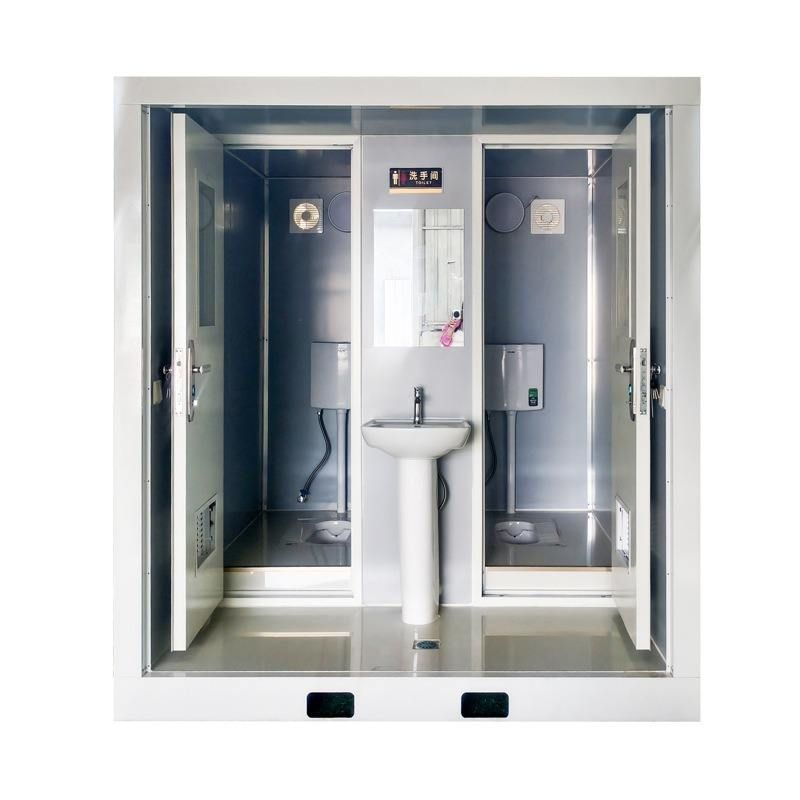
The installation of sewage for mobile toilets requires connecting the sewage outlet to the corresponding sewer network. The core steps include sewage pipe connection, ground treatment, and water inlet and electrical wire connection. The specific operations are as follows:
1. Sewage Pipe Connection
The sewage outlet of a mobile toilet is usually located at the rear of the equipment and needs to be connected using a PVC sewage pipe with a diameter of 110 millimeters. Before connection, check the relative position of the sewage outlet and the sewer network. If the PVC pipe of the sewage outlet is higher or lower than the ground, use cutting tools to level the excess part or use materials such as cement or pads to fill it up to be flush with the ground, ensuring a seamless connection between the sewage pipe and the ground. When connecting, use special glue or hot-melt technology to fix the pipe fittings to prevent leakage, and maintain a pipe slope (usually 2%-3%) to facilitate the smooth discharge of sewage. If the sewage pipe needs to be connected to the municipal sewer network or a septic tank, confirm the interface position and pipe diameter compatibility in advance, and install conversion joints if necessary.
2. Water Inlet Connection
A mobile toilet needs to be connected to a water inlet pipe with a diameter of 25 millimeters to supply flushing water. The water inlet pipe is generally led out from a water source (such as a tap water pipe) and connected to the water inlet of the toilet tank through a PPR pipe or a metal hose. When connecting, pay attention to the following:
- Water Pressure Adaptation: If the water source pressure is too high, install a pressure relief valve to prevent equipment damage; if the pressure is insufficient, install a booster pump.
- Sealing Treatment: Wrap the pipe fittings with Teflon tape or use sealing rings to prevent water leakage.
- Anti-freezing Measures: In cold regions, the water inlet pipe should be wrapped with insulation materials or buried underground to prevent freezing and cracking.
3. Electrical Wire Connection
The lighting, ventilation, heating, and other functions of a mobile toilet rely on electrical power support. Electric wires need to be led out from a nearby power source (such as a distribution box) and connected to the internal distribution box of the toilet. The operation points include:
- Wire Diameter Matching: Select wires with an appropriate cross-sectional area (such as 2.5 square millimeter copper wires) according to the equipment power to avoid overheating due to overload.
- Waterproof Treatment: Outdoor wires should be protected by PVC pipes, and the joints should be wrapped with waterproof tape to prevent short circuits.
- Grounding Protection: Equipment with a metal shell should be reliably grounded to ensure electrical safety.
4. Acceptance and Debugging
After the installation is completed, a comprehensive inspection should be carried out:
- Water Flow Test: Open the water inlet valve and check whether the water tank, flushing system, and sewage pipe are leaking.
- Power-on Test: Start electrical appliances such as lighting and ventilation to confirm that they are operating normally and without abnormal noise.
- Sewage Discharge Test: Simulate usage scenarios and observe whether the sewage discharge is smooth and whether the sewer network interface is stable.
Precautions: Before installation, confirm the site conditions (such as ground flatness and power source location) and plan the sewer network route in advance. If it involves connection to the municipal sewer network, report to the relevant departments and comply with the regulations.