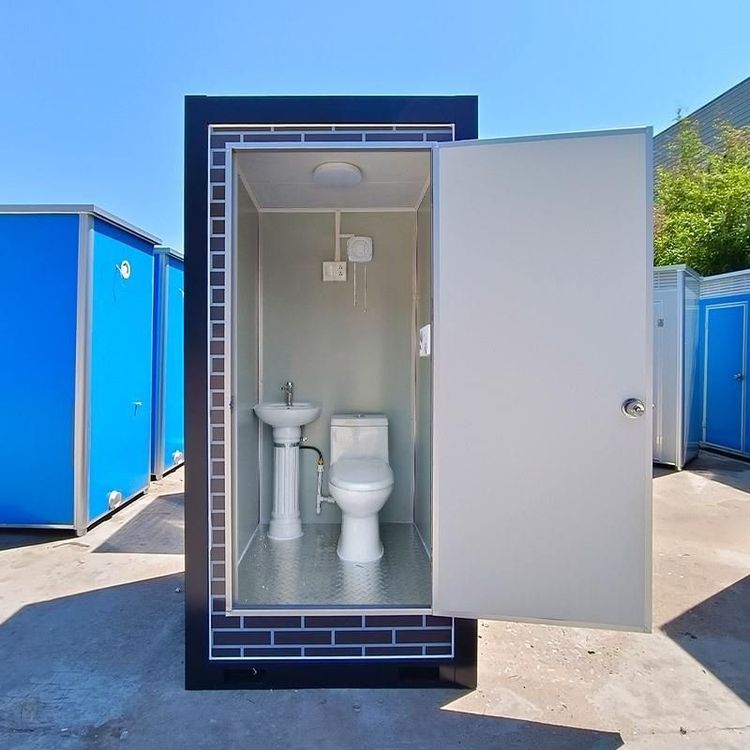
Mobile Toilet Rental Market
The overall outlook for the mobile toilet rental market is stable, with strong rigid demand. The rental model offers more long-term value compared to simply selling equipment. The following is an introduction from four aspects: market demand, market status, business model, and core risks and challenges.

Market Demand: There is rigid demand across multiple scenarios. Construction sites, due to mandatory regulations, are long-term stable customers, typically renting on a monthly basis with stable payment collection. Cultural tourism attractions, camping sites, music festivals, etc., experience a surge in short-term rental demand during peak seasons, with higher premiums. During tourism peaks, it is necessary to reserve toilet units in advance. Municipal emergency scenarios such as urban renovation and flood prevention and disaster relief involve numerous government procurement projects. In areas without sewer networks, such as mines, wilderness projects, and remote villages, eco-friendly mobile toilets are popular. Meanwhile, policies like the 'Toilet Revolution' encourage modular and movable public toilets, with penalties for non-compliance. The model of combining rental and operation and maintenance procurement in sanitation projects is also becoming increasingly popular.
Market Status: In terms of regional distribution, taking Hebei as an example, there is a pattern of 'stronger in the south and stable in the north'. Cities like Shijiazhuang and Tangshan have denser service coverage, while third- and fourth-tier cities mainly offer basic models. In terms of product features, environmentally friendly foam-sealing toilets and water-saving flushing toilets account for over 60% of the market. Functions such as smart sensor doors and deodorization systems are gradually becoming widespread, with some high-end attractions adopting biodegradable material toilets. Technologically, there is a trend towards low-carbon development, with solar-powered toilets being piloted in many places and IoT technology enabling remote monitoring of equipment status. In terms of services, customization has become a new direction, with some companies offering different service plans, hygiene products, and cleaning services based on customer needs.
Business Model: Rental operation is the mainstream in the industry, accounting for over 60% of the market. Equipment is invested in once and rented out repeatedly, combined with sewage pumping, cleaning, and operation and maintenance, providing a continuous cash flow. Equipment sales generate one-time revenue, with fierce competition and obvious price wars. Government-enterprise entrusted operation and maintenance can secure long-term stable orders.
Core Risks and Challenges: In terms of compliance thresholds, fecal sludge removal is the biggest bottleneck, requiring it to be handled by qualified units and proper removal records to be kept. The industry is highly homogeneous, with many manufacturers of ordinary simple mobile toilets, resulting in low gross profits from equipment sales. Seasonal fluctuations are significant, with events and tourism concentrated in spring, summer, and autumn, leading to fewer orders in the winter off-season. Operation costs are high, including various expenses such as equipment depreciation. In terms of customer payment terms, municipal and large project customers have relatively long payment cycles, requiring upfront funding.