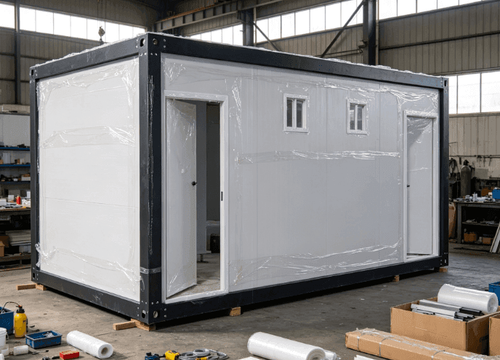
Mobile Toilet Renovation
Mobile toilet renovation features high flexibility, diverse treatment methods, and convenient construction.

High Flexibility
The greatest advantage of mobile toilets lies in their mobility, allowing them to be flexibly adjusted according to site changes. For example, during peak tourist seasons, Dalian City deploys mobile public toilets to areas with high foot traffic, effectively alleviating toilet pressure. Shanxi Jinci Scenic Area, during the May Day holiday in 2026, flexibly allocated buses as mobile men's toilets and temporarily converted fixed men's toilets into women's toilets, significantly increasing the average daily reception capacity of restrooms in the area. This flexibility not only adapts to short-term passenger flow changes but also reduces resource waste caused by the demolition of fixed facilities, making it particularly suitable for temporary events, scenic spots, construction sites, and other scenarios.
Diverse Treatment Methods
The sewage treatment technology of mobile toilets can be selected based on the usage environment, including water flushing, packaging, foaming, microbial decomposition, and other methods. For example, water flushing is suitable for areas with water sources and sewage pipelines; packaging collects feces using biodegradable materials without the need for an external water source, making it suitable for water-scarce or sewage-free locations; foaming reduces water consumption by utilizing foam, offering both environmental protection and water-saving benefits; microbial decomposition uses specific bacteria to decompose feces, achieving harmless treatment. These technologies meet environmental protection and hygiene needs in various scenarios.
Convenient and Efficient Construction
Mobile toilets are typically prefabricated in factories and can be installed and used on-site, eliminating the complex processes of site selection, material procurement, and construction associated with traditional toilets, significantly shortening the construction cycle. Some mobile toilets adopt an overall steel frame structure with hooks on the top, allowing for integral lifting and movement, occupying a small area and saving a significant amount of land resources compared to traditional public toilets. Additionally, individuals can also create simple mobile restrooms using materials such as water storage tanks and pallets, for example, by fixing universal wheels and installing toilets and sinks to achieve a low-cost and practical solution.
Mobile toilet renovation provides an efficient and environmentally friendly alternative for public restroom construction through its flexibility, technological diversity, and construction convenience, making it particularly suitable for scenarios with high temporary or mobile demands.