
Mobile Toilet Production Configuration
The production configuration of mobile toilets covers multiple aspects such as structural form, mobility method, sewage treatment method, materials, internal facilities, and other configurations.
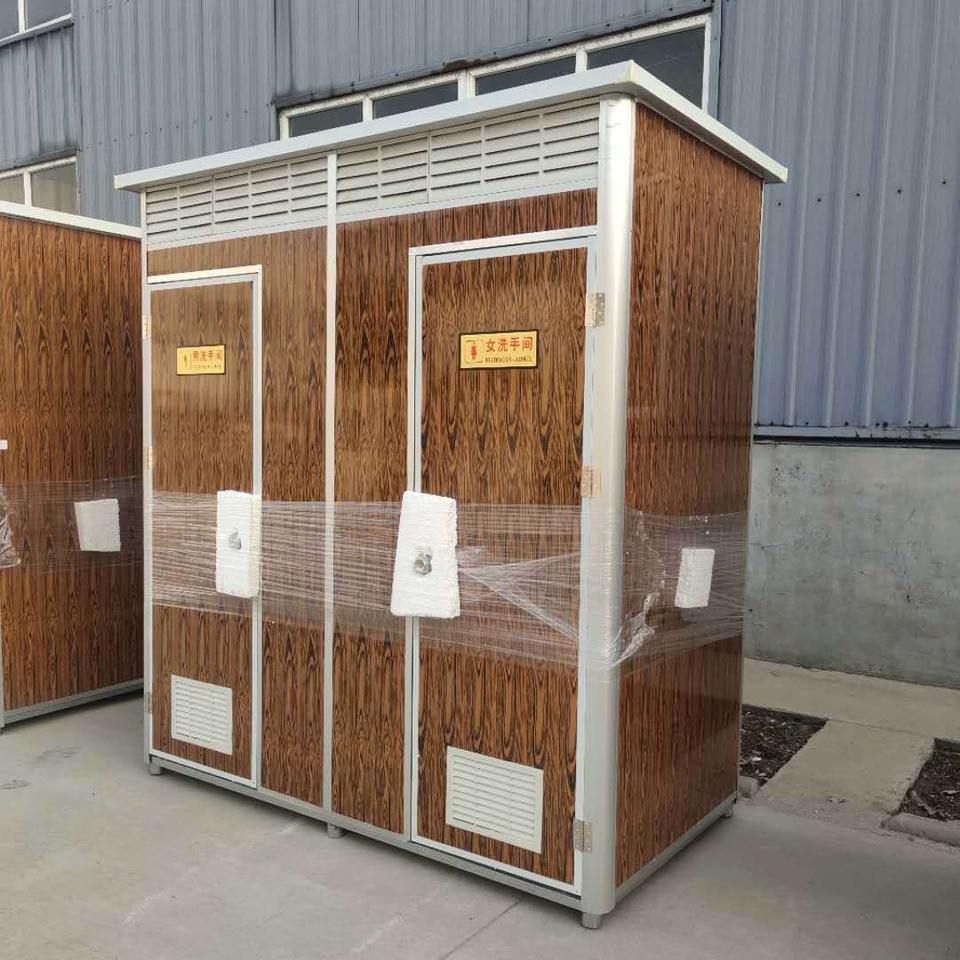
Structural Form: Mobile toilets can be divided into single-structure mobile toilets and composite-structure mobile toilets based on their structural form. Single-structure toilets are relatively simple and suitable for places with smaller space requirements and simpler usage scenarios. Composite-structure toilets are more complex, usually composed of multiple functional modules, and can meet more complex usage needs. For example, at large event sites or scenic spots, different functional areas can be flexibly combined according to actual needs.
Mobility Method: Based on mobility method, mobile toilets can be classified as lifting/handling mobile toilets and powered/trailer-mounted mobile toilets. Lifting/handling mobile toilets mainly rely on lifting equipment or manual handling for movement and are suitable for scenarios with lower mobility frequency and shorter distances. Powered/trailer-mounted mobile toilets have their own power or can be towed by vehicles, making movement more convenient and suitable for situations requiring frequent movement or long-distance transportation.
Sewage Treatment Method: Mobile toilets can be divided into water-flush and waterless suction-type mobile toilets, and circulating water-flush mobile toilets. Water-flush mobile toilets use water to flush excrement, providing good cleaning effects but requiring a water connection. Waterless suction-type mobile toilets handle excrement through vacuum suction and other methods without using water, making them suitable for water-scarce areas. Circulating water-flush mobile toilets purify and reuse sewage, saving water resources while ensuring a certain level of cleanliness.
Materials: The overall frame is welded from galvanized square steel, which is sturdy and durable, capable of withstanding a certain amount of external impact. The exterior wall material is all thermal-insulating metal carved panels with a thickness of up to eight centimeters, featuring thermal insulation and rust resistance. The service life can reach twenty years, effectively adapting to different climatic environments.
Internal Facilities: The men's toilet area can be equipped with 3 urinals, 3 independent squatting stalls, and an open marble countertop sink. Some mobile toilets are equipped with squat toilets, water tanks, water heaters, and showerheads inside to meet the usage needs of different groups. Scenic spot toilets may also have ceramic sensor-type storage shelves, independent partitions, ceramic squatting pits, flush tanks, and other configurations to enhance the user experience.
Other Configurations: The voltage is 220 volts, and the power is 50 watts. It is equipped with a sound insulation system to reduce noise interference during use. It adopts a water-saving design to reduce water consumption. The gable roof design is conducive to drainage. The applicable temperature range is minus forty degrees Celsius, allowing normal use in cold environments. The external dimensions and inlet dimensions can meet the needs of different scenarios and can be flexibly customized.
You may also like

Portable Toilet Eco-Friendly: MOQ, Samples & Quotation Guide
Read More
Top Portable Toilet Color Steel Manufacturers: How to Choose a Factory Partner
Read MorePortable Toilet Picture: Types, Features & Buying Tips
Read More