
Overall Renovation of Mobile Toilets
The overall renovation of mobile toilets can be approached from the aspects of structural materials, functional facilities, customization, and creative design, achieving performance enhancement and scenario adaptation through hardware upgrades, functional optimization, or innovative designs.
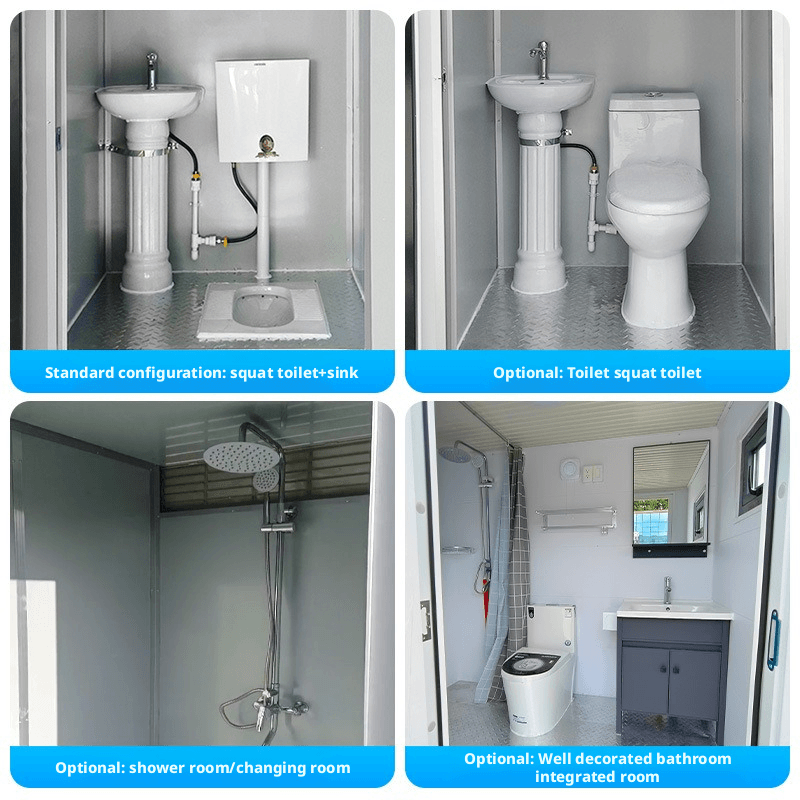
1. Structural and Material Renovation
The structural stability and material durability of mobile toilets directly affect their service life. Galvanized steel frame structures are a common choice due to their strong corrosion resistance, which can support the overall framework of the toilet. For exterior walls, insulated metal carved panels can be selected, which not only improve thermal insulation performance but also meet aesthetic needs through color customization. If extreme temperature environments need to be accommodated, processing and fabrication with color-coated steel sheets or metal carved panels are superior options, with a temperature range of -35℃ to 100℃, suitable for use in extremely cold or hot regions. Additionally, material selection should balance lightweight properties with load-bearing capacity to ensure easy mobility and structural stability.
2. Functional and Facility Upgrades
Functional improvement is the core goal of renovation. In terms of infrastructure additions, public handwashing areas, rain-proof corridors, and aluminum alloy toilet doors can be added to enhance convenience and hygiene. Functional facility expansions include showerheads, toilets, floor drains, and water pipe connectors to meet diverse needs. For example, mobile toilets in scenic spots can add shower areas to provide temporary cleaning services for tourists, while construction site toilets need to strengthen the sewage system to ensure the sealing of floor drains and water pipe connectors, preventing sewage leakage. Facility layout should be reasonably planned to avoid space wastage while reserving inspection ports for easy maintenance.
3. Customized Renovation
Adjusting specifications and dimensions according to scenario requirements is key to customized renovation. Customization of the number of squatting positions can flexibly match foot traffic, such as 4-squatting-position toilets suitable for small events or temporary construction sites. Dimension adjustments need to consider transportation restrictions and usage space, such as selecting narrow designs for narrow streets and expanding internal areas for large exhibitions to accommodate more facilities. Customization should also incorporate functional needs, such as adding barrier-free facilities for medical rescue scenarios or simplifying structures to reduce costs for household use.
4. Creative Renovation
Low-cost creative renovations are suitable for scenarios with limited budgets or temporary use. For example, using buckets or water storage tanks as water storage devices and fixing them with pallets to form simple toilets, or cutting and assembling materials to create self-made rain shelters for basic functionality. Such renovations should prioritize safety, ensuring that fixed structures are stable and materials are non-toxic and environmentally friendly. Although creative renovations are flexible, their long-term usability should be evaluated to avoid frequent repairs affecting the user experience.
You may also like

Portable Toilet Custom Explained: How to Choose the Right One
Read More
Top Portable Toilet Smart Manufacturers: How to Choose a Factory Partner
Read More
Portable Toilet Picture: Top Options & Considerations
Read More