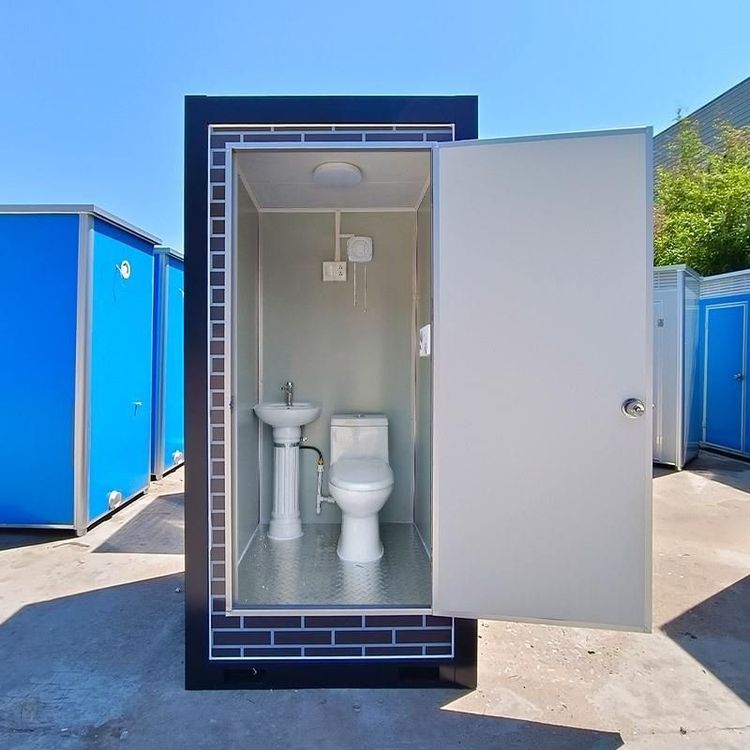
Mobile Toilet Magnetic Levitation Door
It is feasible for mobile toilets to use magnetic levitation doors, but specific conditions must be met and the pros and cons weighed carefully. The technical characteristics and application scenarios of magnetic levitation automatic doors offer innovative solutions for mobile toilets, with core advantages and potential issues that can be analyzed from the following aspects:
1. Technical Characteristics and Advantages
Magnetic levitation automatic doors achieve non-contact suspension and drive through linear motor technology, allowing the door panels to move smoothly along the guide rails without friction or noise. This characteristic provides three core advantages:
- Quiet and Stable Operation: Electromagnetic drive eliminates mechanical friction, resulting in operating noise below 40 decibels, suitable for scenarios requiring high environmental quietness;
- Low Mechanical Wear: The design without physical contact extends the lifespan of the door body, with maintenance cycles that can be extended to 2-3 times those of traditional doors;
- Outstanding Safety Performance: Equipped with dual sensors—microwave radar and infrared light curtains—it can detect obstacles in real-time and trigger anti-pinch mechanisms. In emergencies, the door can be forced open by pressing the close button for 3 seconds and then pressing the open button five times, ensuring personnel safety.
2. Applicable Scenarios and Experience Enhancement
In mobile toilets, magnetic levitation doors can significantly enhance the user experience:
- Technological Sense and Hygiene: Supporting zero-contact switching methods such as hand-wave induction reduces the risk of bacterial cross-infection, meeting the needs of public health scenarios;
- Space Adaptability: The door body is 30% thinner than traditional doors, suitable for the layout of mobile toilets with limited space;
- Energy Efficiency: Standby power consumption is below 10W, meeting the strict energy consumption limits of mobile equipment.
3. Installation and Maintenance Requirements
Magnetic levitation doors have stringent requirements for the installation environment:
- Ground Conditions: The ground levelness error must be ≤2mm/m; otherwise, magnetic imbalance can cause door vibration or jamming, requiring laser surveying and reinforcement in advance;
- Maintenance Professionalism: Fault diagnosis requires specialized diagnostic instruments. For example, guide rail deformation must be repaired through laser calibration, which is difficult for ordinary maintenance personnel to perform and requires reliance on manufacturer technical support.
4. Cost and Limitations
The initial purchase cost is approximately 50%-80% higher than that of traditional doors, and ongoing maintenance requires a professional team, so the comprehensive cost must be included in the project budget. If the mobile toilet has low usage frequency or a limited budget, traditional automatic doors may be a more economical choice.
Conclusion: Magnetic levitation doors are suitable for high-end mobile toilet projects with high demands for quietness, hygiene, and technological sense, but ground conditions and long-term maintenance costs must be carefully evaluated.