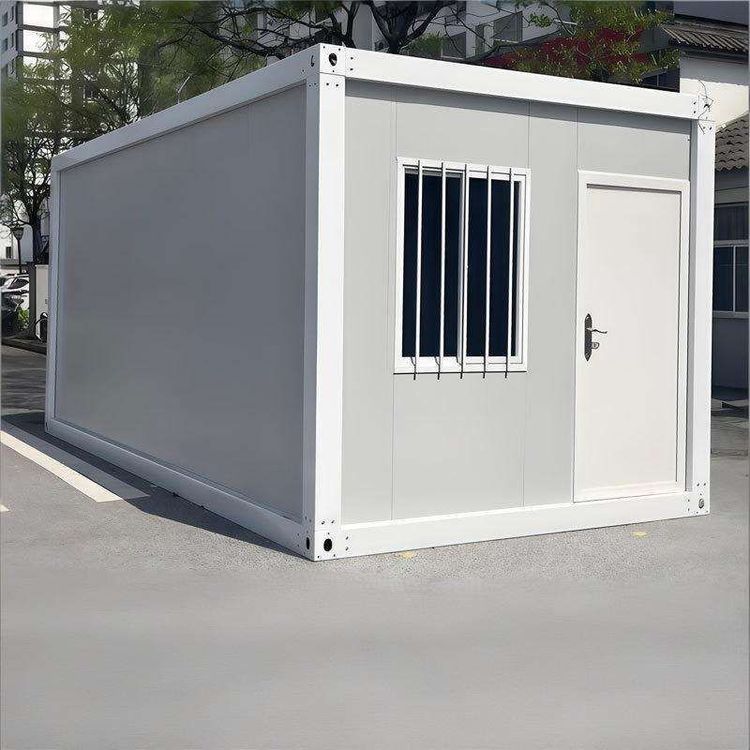
Load-Bearing Test for Mobile Toilets
The load-bearing test for mobile toilets primarily uses pressure equipment to assess structural strength, ensuring safety and stability under maximum loads. Typically, a single mobile toilet can bear between 1.5 and 3 tons, complying with the national standard GB/T 18092-2008.

Test Methods
Load-bearing tests for mobile toilets are categorized into static load tests and dynamic load tests. Static load tests apply static pressure to key structures such as floors, chassis, and support beams using pressure testing equipment, simulating long-term load conditions. Dynamic load tests focus on areas prone to external impacts, such as door and window frames, assessing their impact resistance through dynamic loading. For example, some tests involve placing a 1000 kg weight on the toilet's roof and continuously observing frame deformation.
Test Standards
- Load Capacity Range: The maximum load capacity of a single mobile toilet typically ranges from 1.5 to 3 tons, depending on materials (e.g., stainless steel, fiberglass-reinforced plastic), structural design (e.g., frame density, connection methods), and usage scenarios (e.g., tourist attractions, construction sites). For instance, toilets made of high-density fiberglass-reinforced plastic can have a load capacity of up to 3 tons due to their lightweight and high strength.
- National Standard Requirements: According to GB/T 18092-2008 General Technical Conditions for Mobile Toilets, load-bearing design must consider the number and frequency of users. For example, a toilet used by 200 people daily must withstand an instantaneous floor load of at least 2 tons.
- Deformation Limits: In practical tests, some products exhibit a frame deformation of only 0.2 mm when loaded with 1000 kg on the roof, well below the national standard limit of 1 mm, indicating satisfactory structural stability.
Test Objectives
The primary goal of load-bearing tests is to verify the safety of mobile toilets under extreme loads. By detecting structural issues such as deformation, cracks, or loose connections, these tests ensure the toilet can withstand human weight, equipment weight, and external impacts (e.g., wind, collisions) over the long term, preventing collapse or operational failures due to structural failure. For example, mobile toilets used on construction sites must pass more stringent dynamic load tests to withstand vibrations from heavy machinery.
Summary: Load-bearing tests are crucial for ensuring the safety of mobile toilets. Test plans must be tailored to materials, design, and usage scenarios, strictly adhering to national standards to guarantee structural stability and safety under maximum loads.